
Living Topography: A Landscape Photographer’s Journey Through the Subantarctic
In February 2026, I travelled south from New Zealand toward the Ross Sea region of Antarctica, beginning with a passage through the remote Subantarctic Islands. Scattered across the Southern Ocean, these islands—raw, isolated, and shaped by wind and sea—form one of the most extraordinary wildlife and landscape environments on Earth. This first chapter traces that journey through a series of images, exploring the interplay of light, land, and life at the edge of the world.
The Subantarctic Islands of New Zealand and Australia
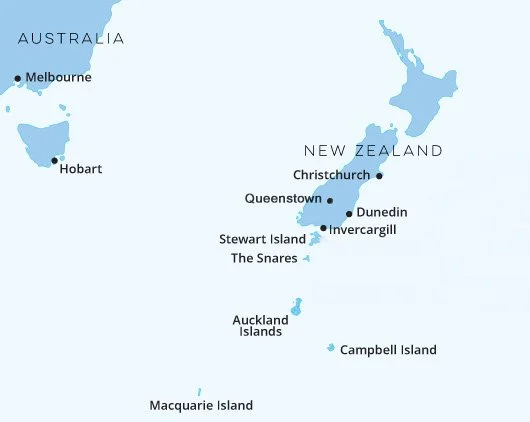
Our route followed a chain of remote islands south of New Zealand: the Snares Islands, Auckland Islands, and Campbell Island, before continuing to Macquarie Island, Australia. These islands sit in the path of the Southern Ocean’s prevailing winds, forming rugged landscapes of cliffs, tussock, megaherbs, and wildlife colonies.
While my previous landscape practice was grounded in stillness—calm, deliberate, and often tripod-based—these islands offer no such stability. I arrived expecting to find wildlife set against static geological forms, but instead encountered a world where weather, light, and life exist in a state of constant, fluid motion and where terrain and wildlife are two parts of the same dramatic whole.
The challenge was finding any sense of order in what I was seeing.
Subantarctic Landscapes – Light, Weather, and Isolation
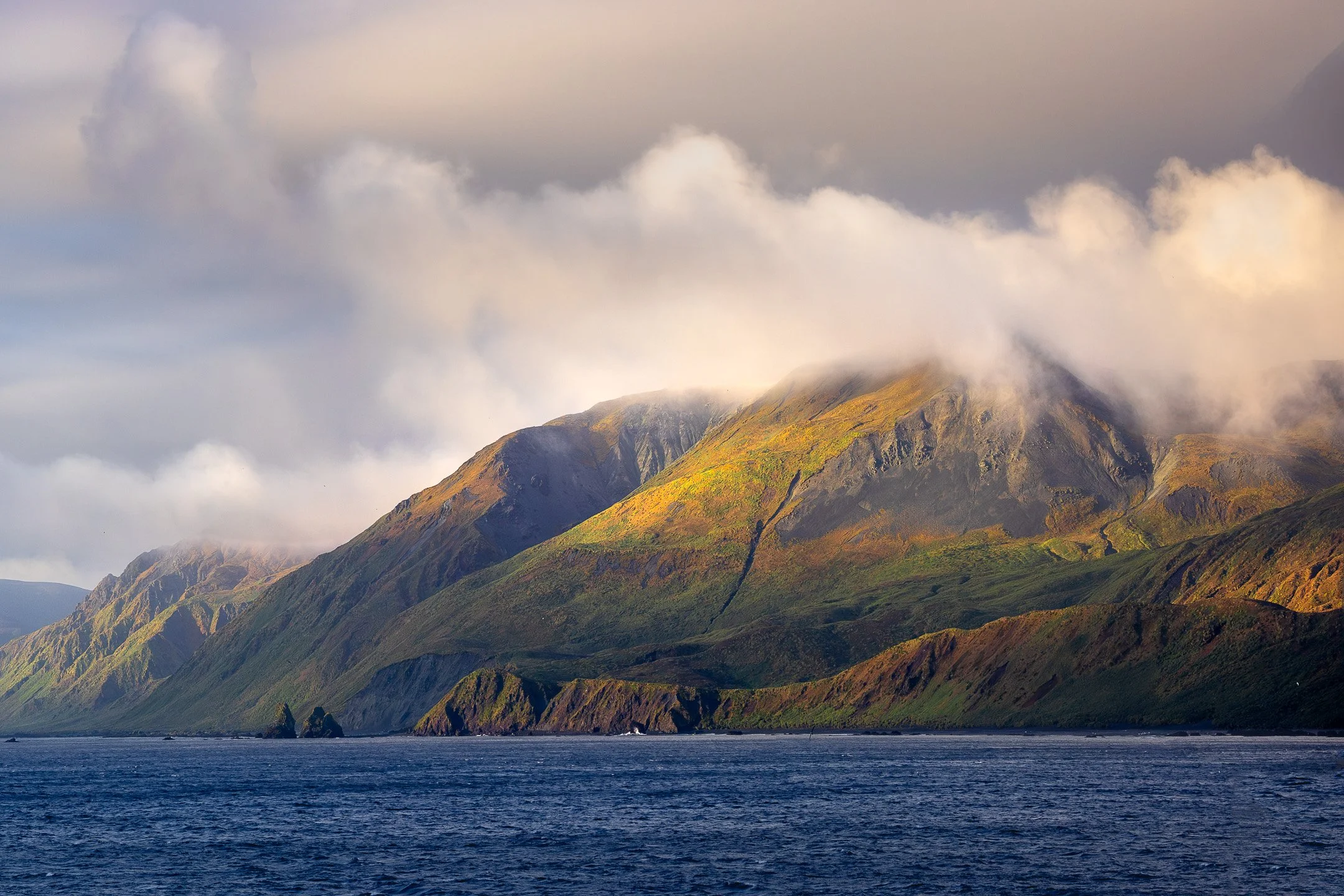
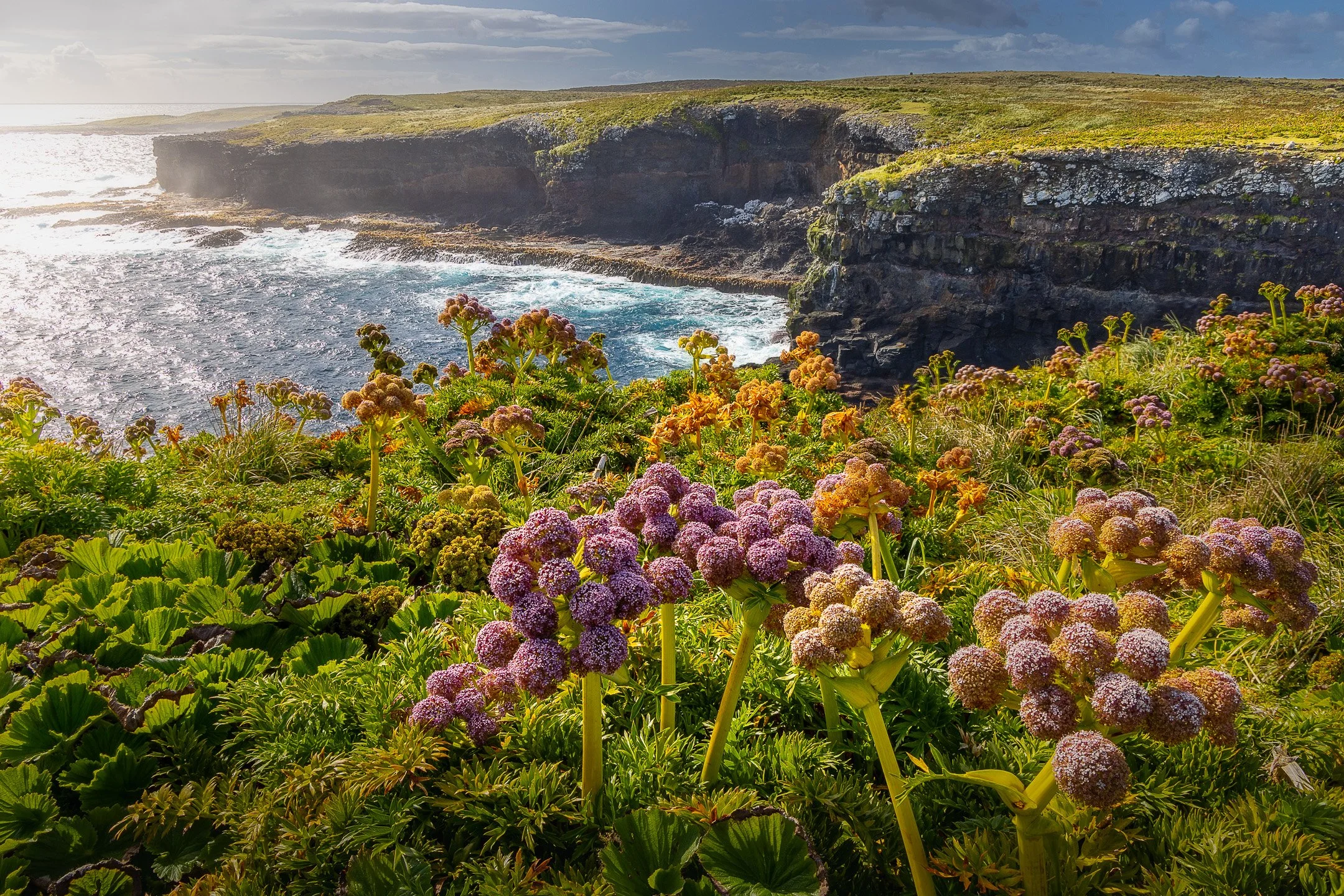
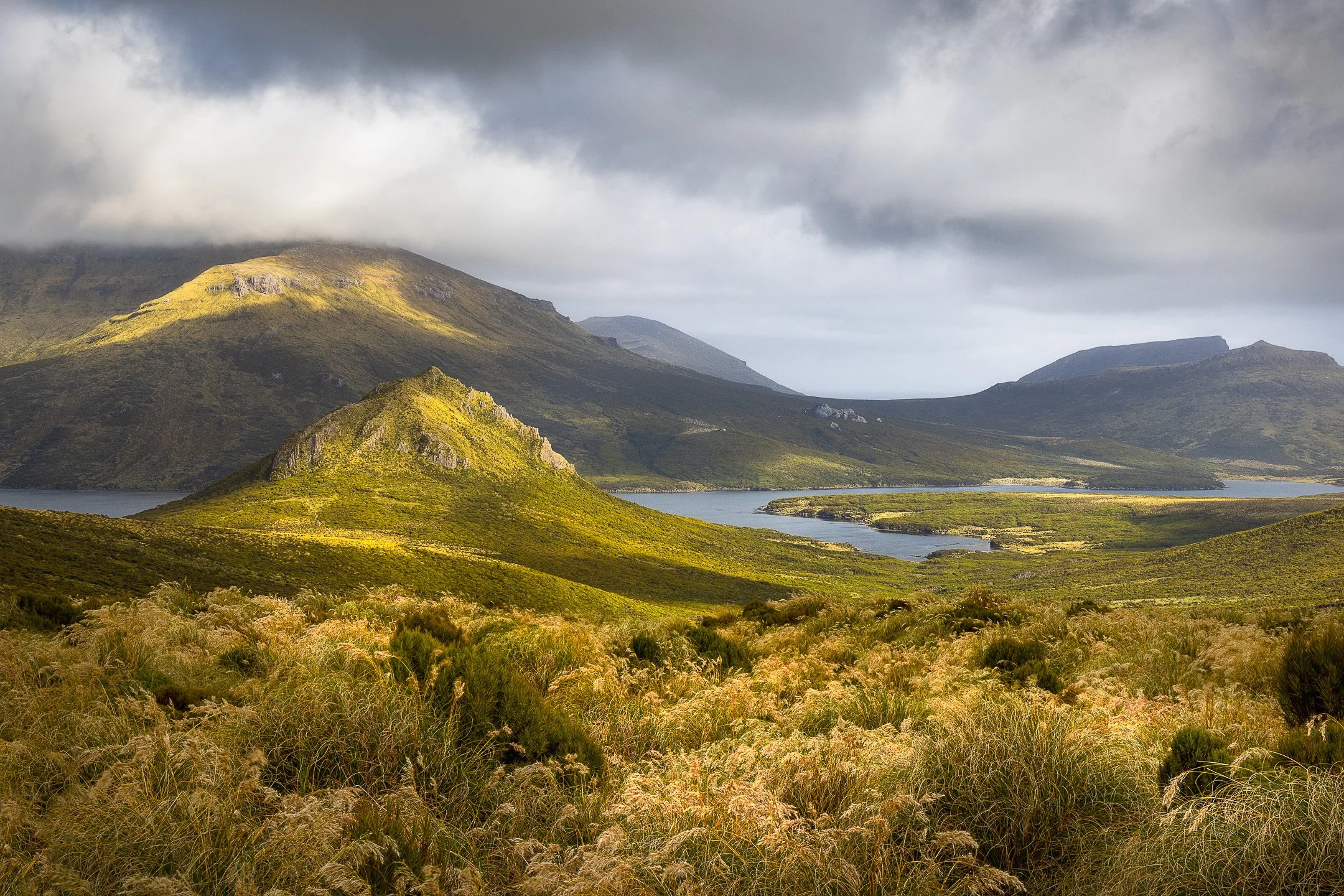
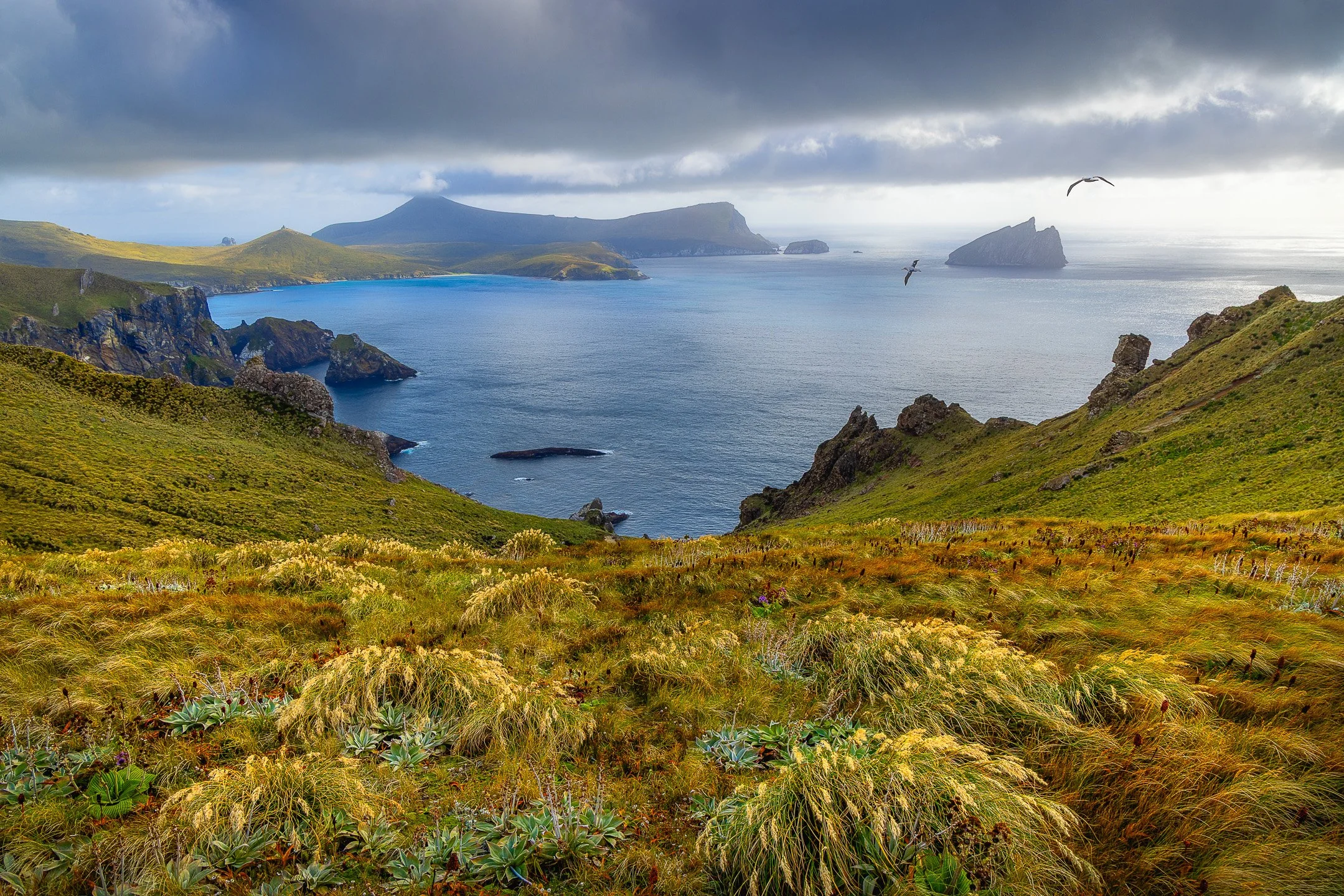
The Subantarctic landscape is defined by constant, fluid change. Weather moves quickly across the islands. Light shifts with it—revealing and concealing the landscape in rapid succession. It is a terrain of extremes, where vertical cliffs fall sharply into restless seas, while inland areas soften into rolling vegetation and saturated peat bogs.
For a landscape photographer, these conditions demand a new level of responsiveness. The landscape is never truly static; instead, it reveals its character in fleeting fragments.
Here, the landscape is not a surface—it is a system in motion.
Fleeting Light at the Southern Threshold - Macquarie Island, Australia
Megaherbs on Enderby Island - Auckland Islands
Fragments of a Shifting Sky - Campbell Island
Animate Geography - Campbell Island
Atmospheric Strata – Seabirds and the Coastal Horizon
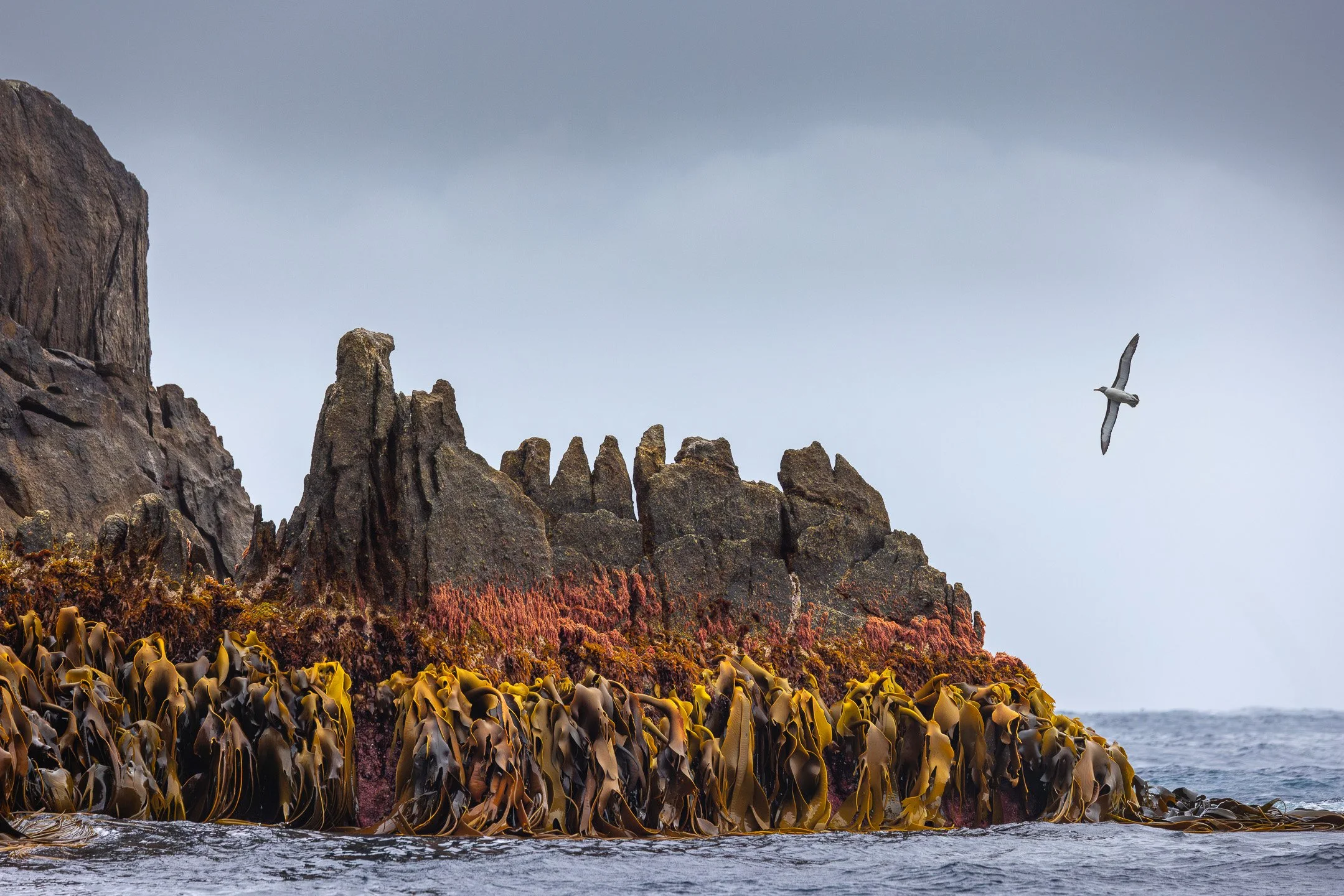
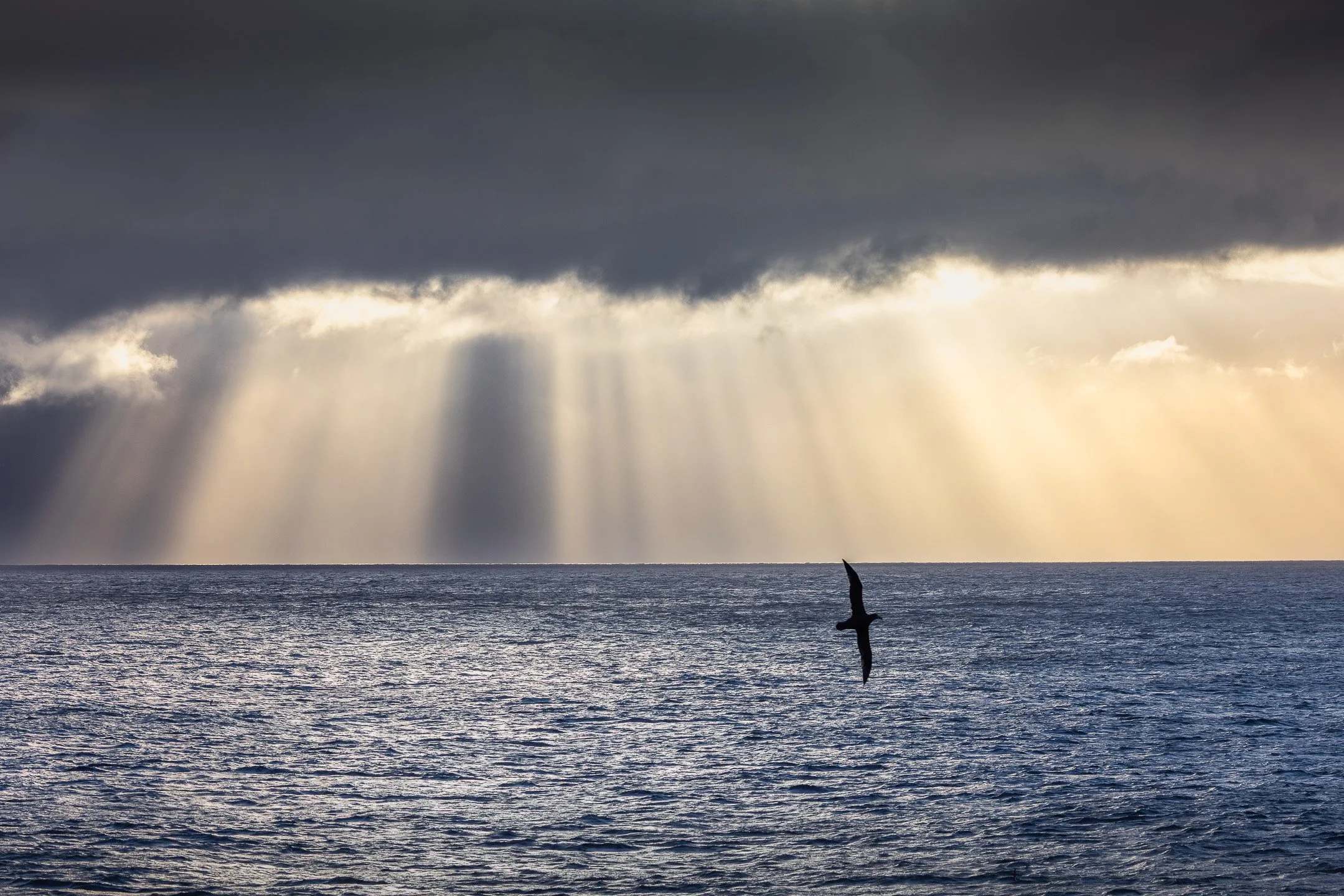
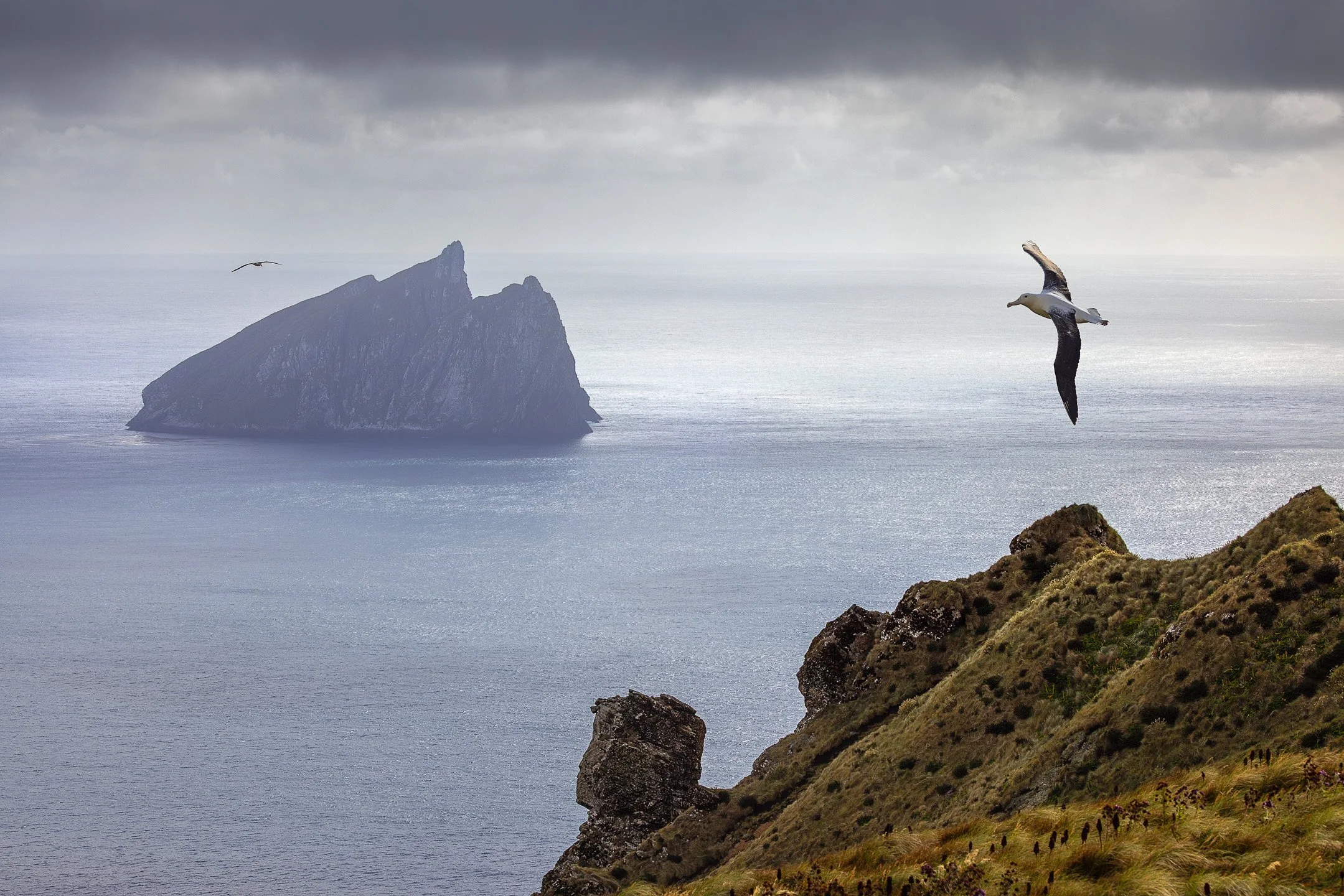
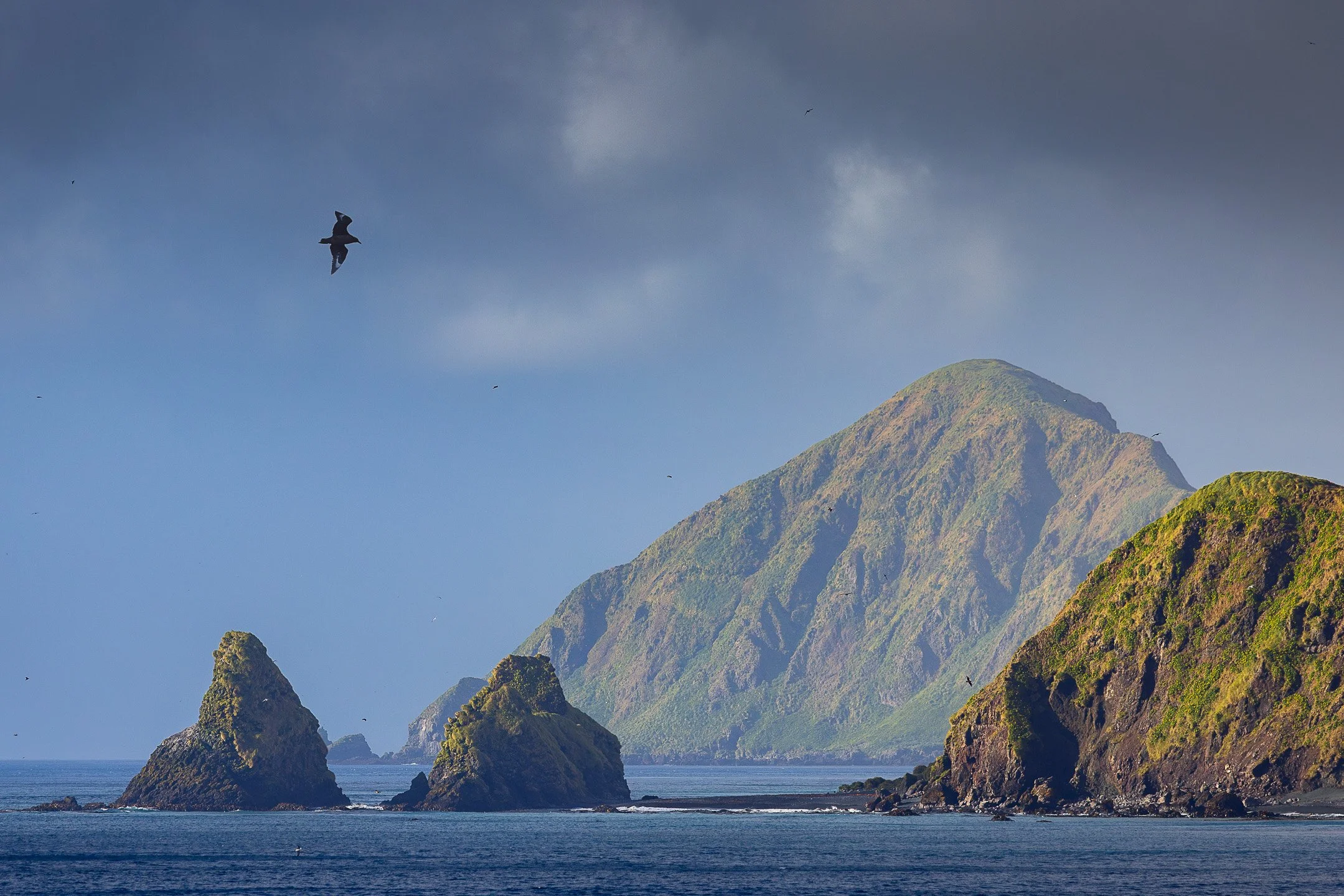
Along these rugged coastlines, where ocean meets land, the landscape rises and falls in a dynamic vertical rhythm. Here, albatross and petrels glide effortlessly along cliffs, becoming animate strata that bind land, sea, and sky. Navigating invisible wind currents with intuitive grace, they provide scale, movement, and a sense of cohesion to the expansive Subantarctic environment.
These birds are more than inhabitants—they are the connective tissue of the Subantarctic experience. Perched on a ridge or cutting through salt spray, they embody the restless energy of the Southern Ocean, linking the layers of terrain and atmosphere. Their motion ensures that this world is never still, reminding us that the landscape is a living, shifting whole, held together by wings and wind.
I wasn’t photographing wildlife as subjects, but as part of the landscape’s movement—another expression of wind, terrain, and energy.
Wings over Triangular Stacks - Macquarie Island
Wings over the Spires - Snares Island
Sunbeams and Wings - Southern Ocean
Wings beyond the Cliffs - Campbell Island
Animate Margins: Life as the Island’s Edge
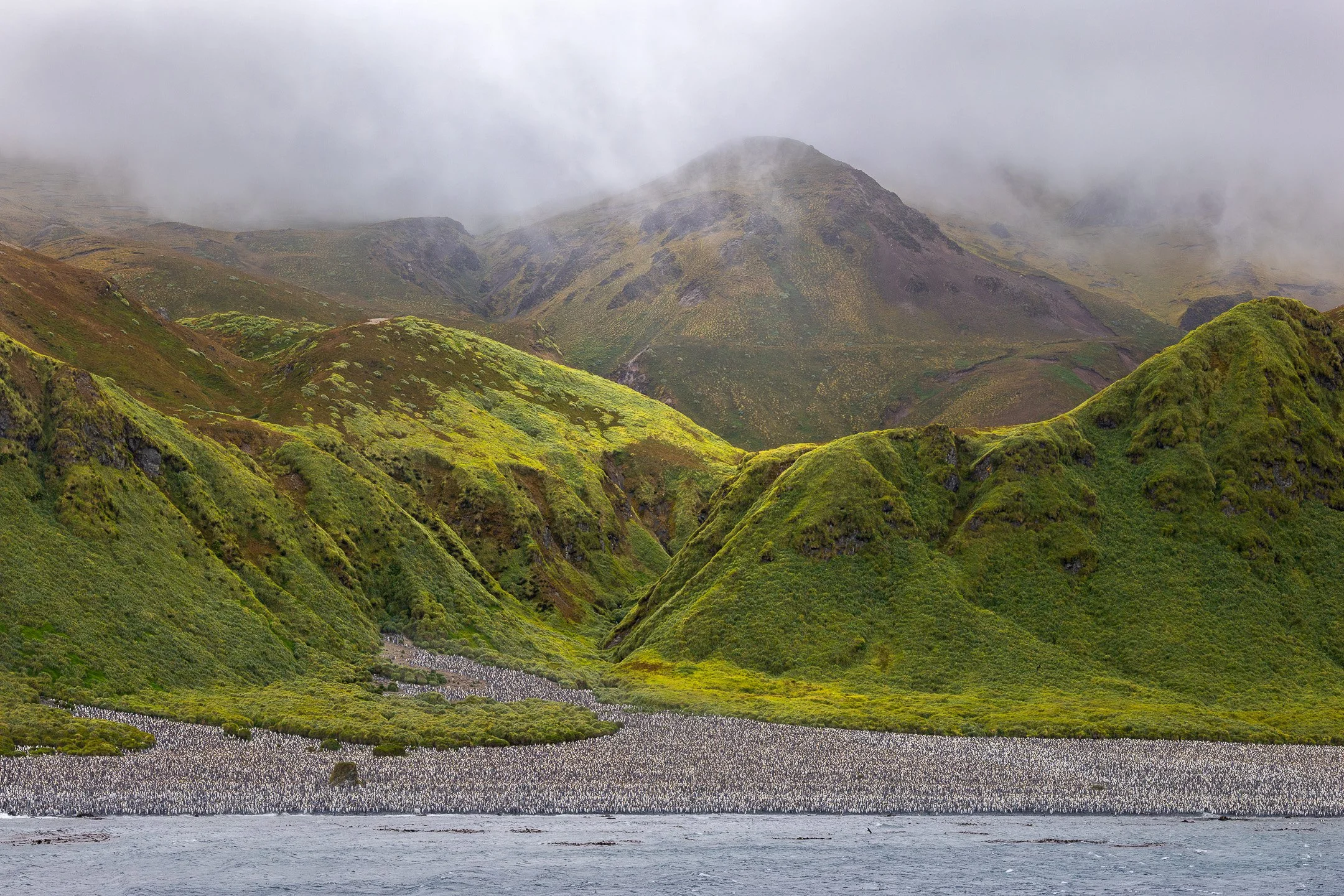
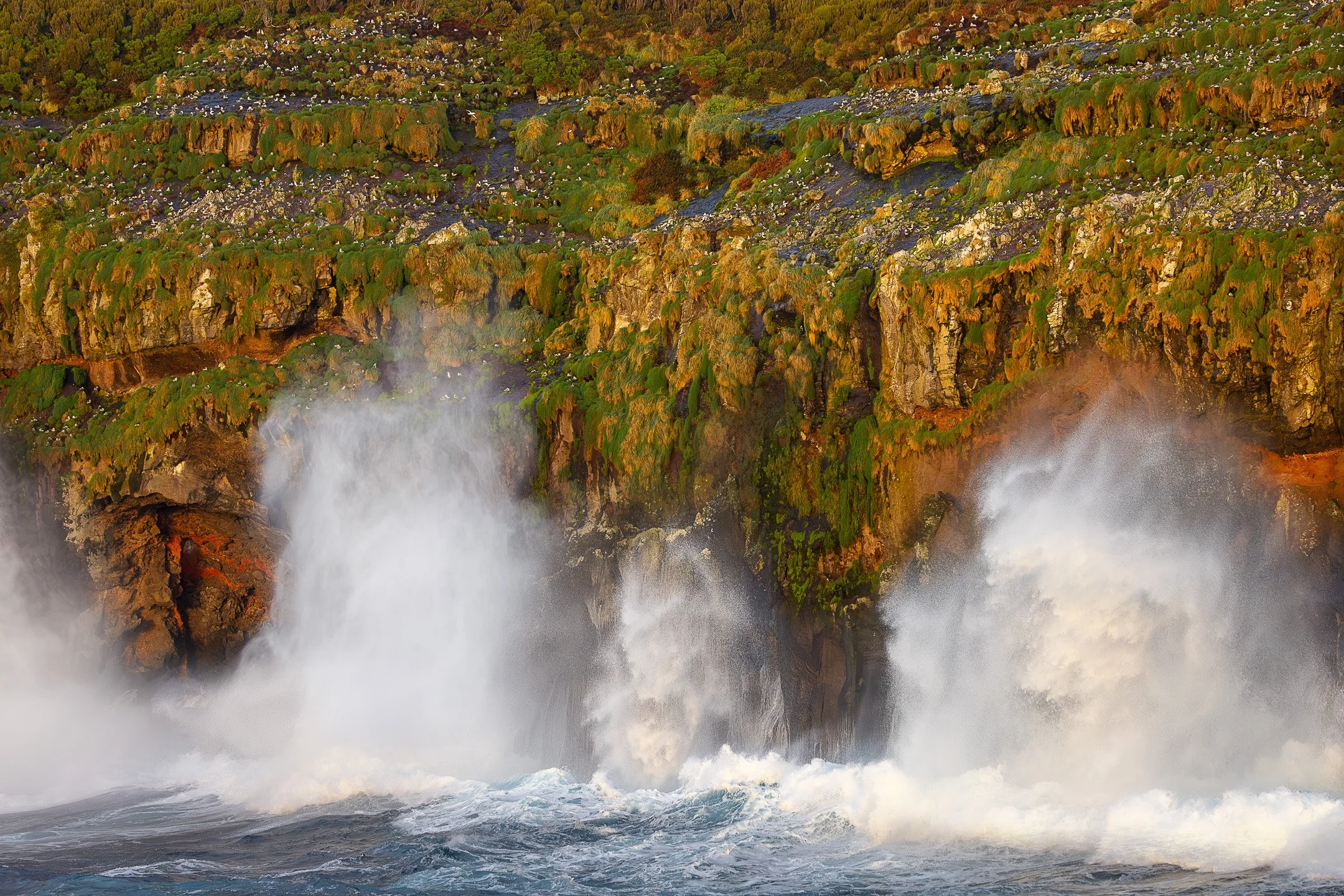
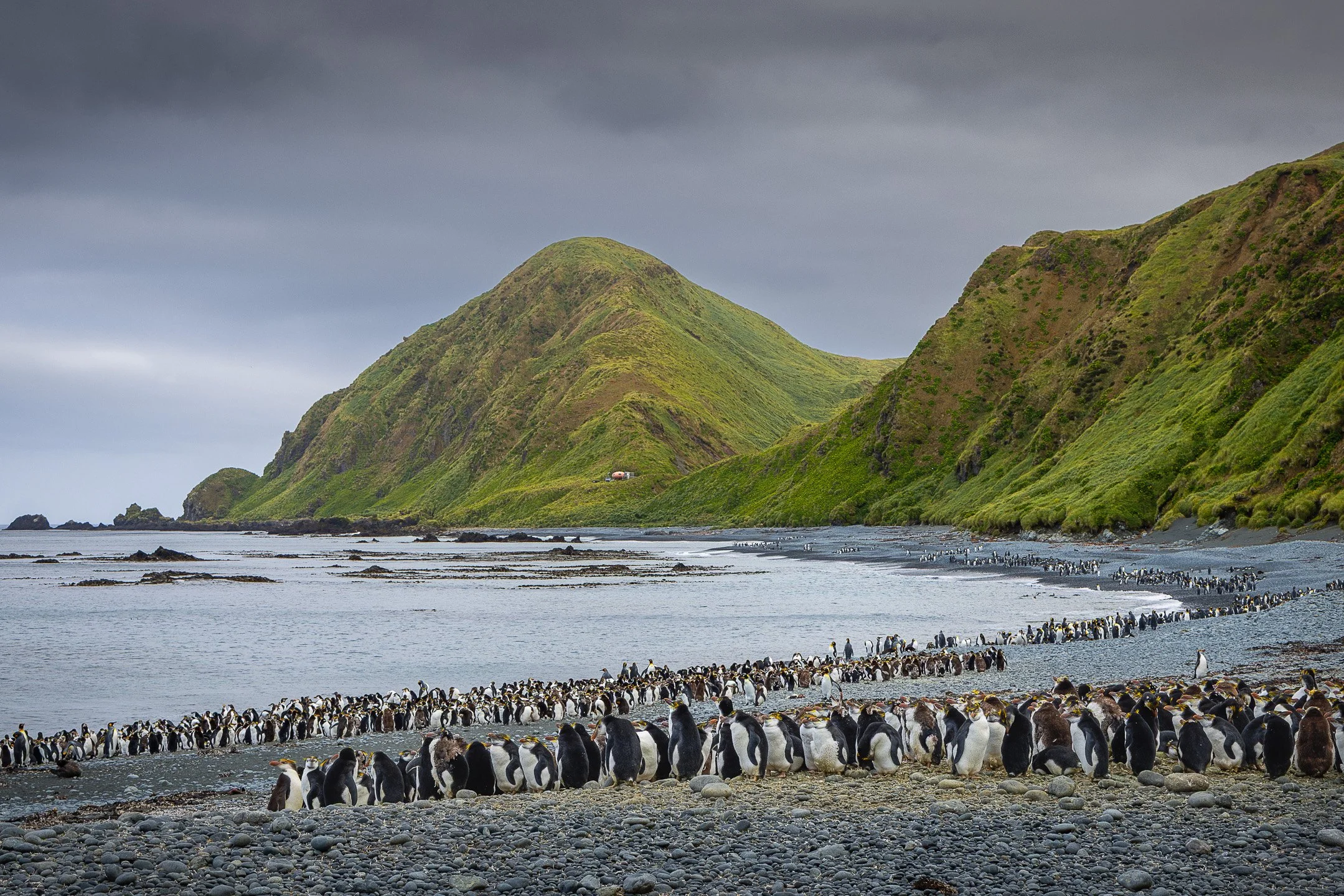
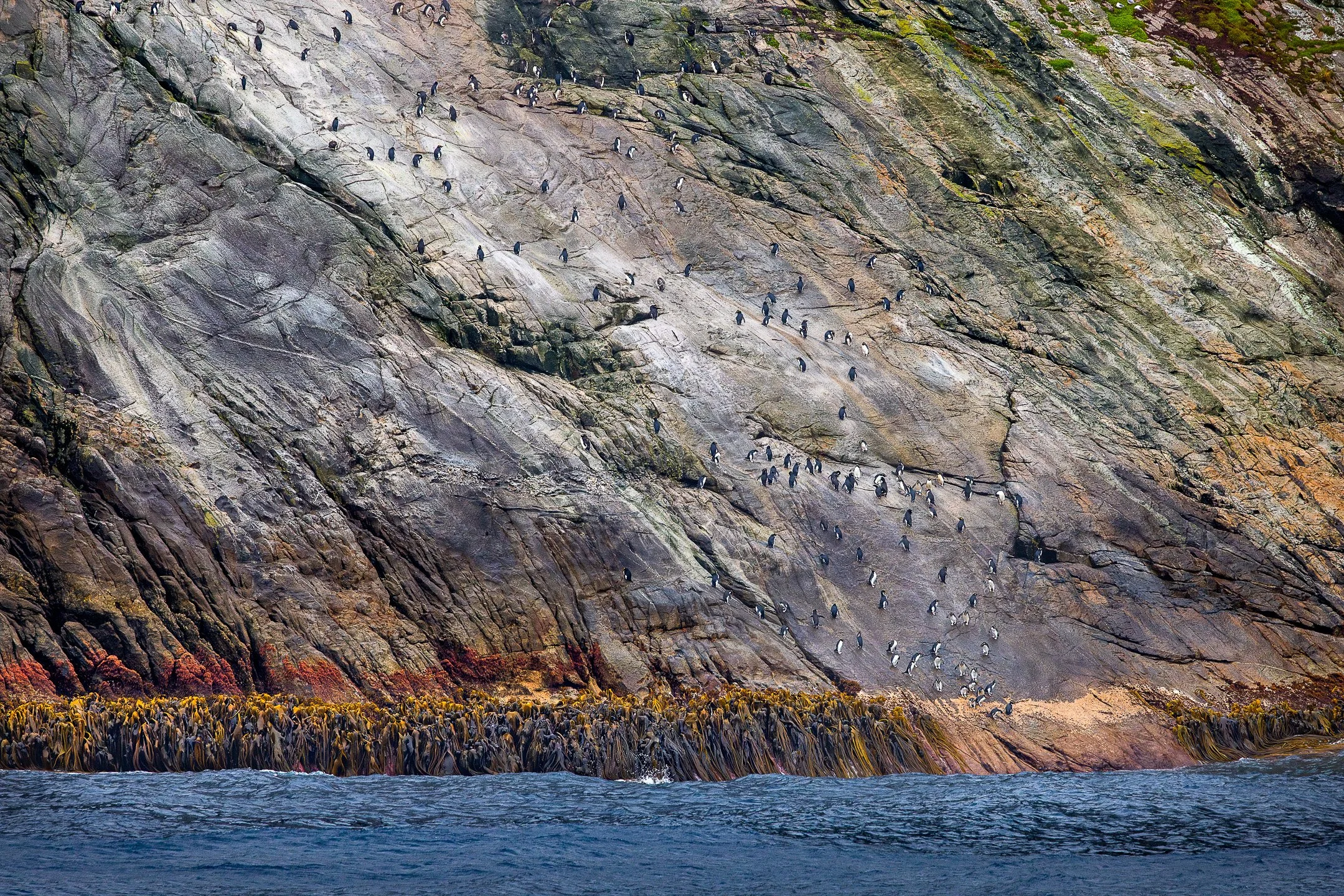
In the Subantarctic, life gathers at the margins, clinging to the thresholds where the Southern Ocean meets the land. Steep cliffs, narrow ledges, and wave-lashed beaches are not merely backdrops; they are living structures, defined by the dense colonies that drape across them like a biological crust.
Penguins, albatross, and seals do not just occupy these spaces; they function as the rhythmic pulse of the island’s fringe. While the sheer rock faces and slender coastal strips provide the foundation, it is this interplay of animate and inanimate that truly dominates the scene. Wildlife provides more than just a measure of scale—they are the final, breathing layer of the island’s architecture, transforming a static geography into a theatre of constant, fluid motion.
Snares Crested Penguins on Steep Cliffs - Snares Islands
King Penguin Colony at Lusitania Bay - Macquarie Island
The immense density of life at Lusitania Bay drapes across the shore like a biological crust, transforming static geography into a theatre of constant, fluid motion. These King Penguins are the animate finish to the island’s architecture—the living details that prove the land and its life are a singular, unified system of heartbeat and bedrock.
Campbell Mollymawks nesting along the cliffs at North Cape - Campbell Island
Royal Penguin Colony at Sandy Bay - Macquarie Island, Australia
Kelp Forests and Coastal Abstractions
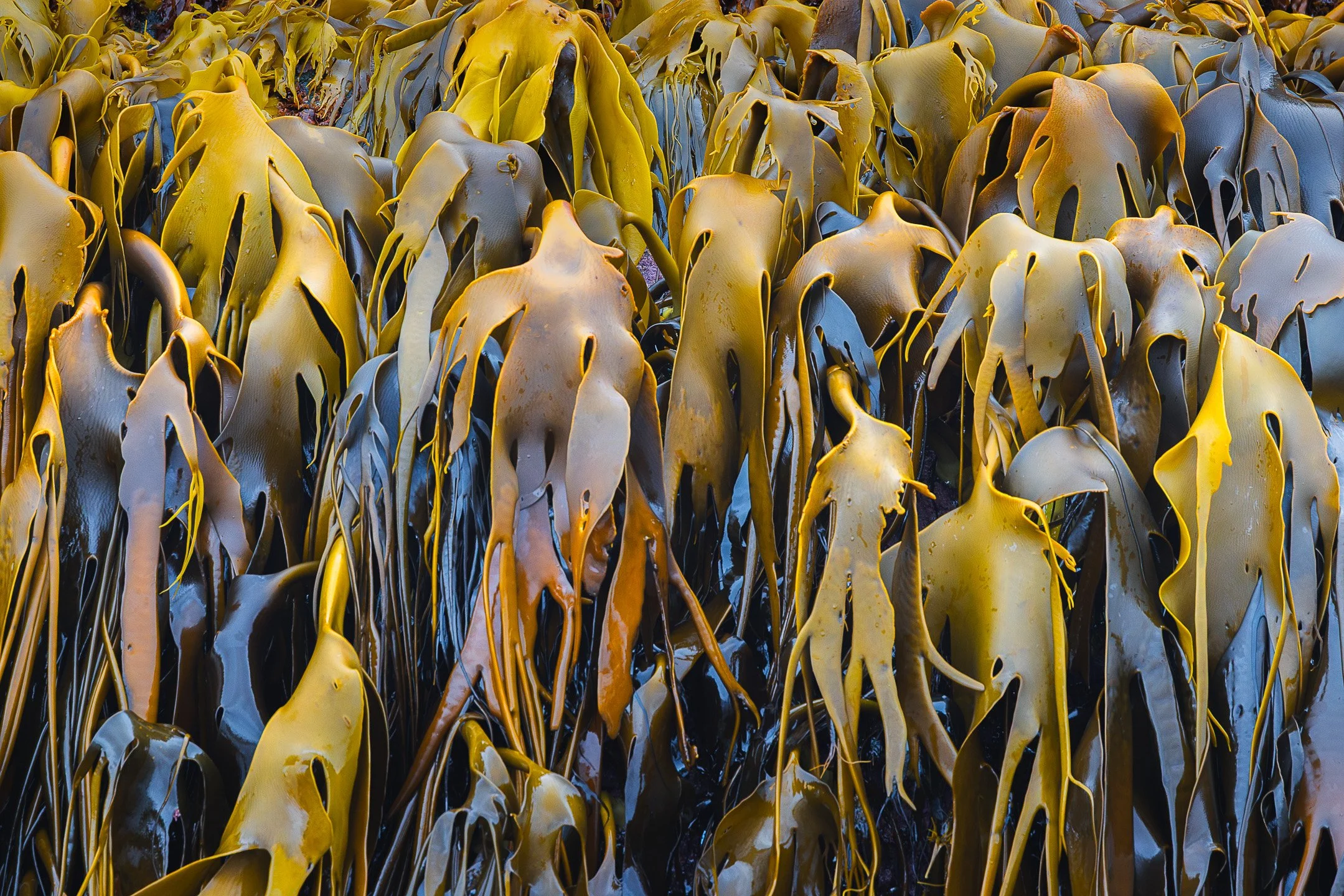
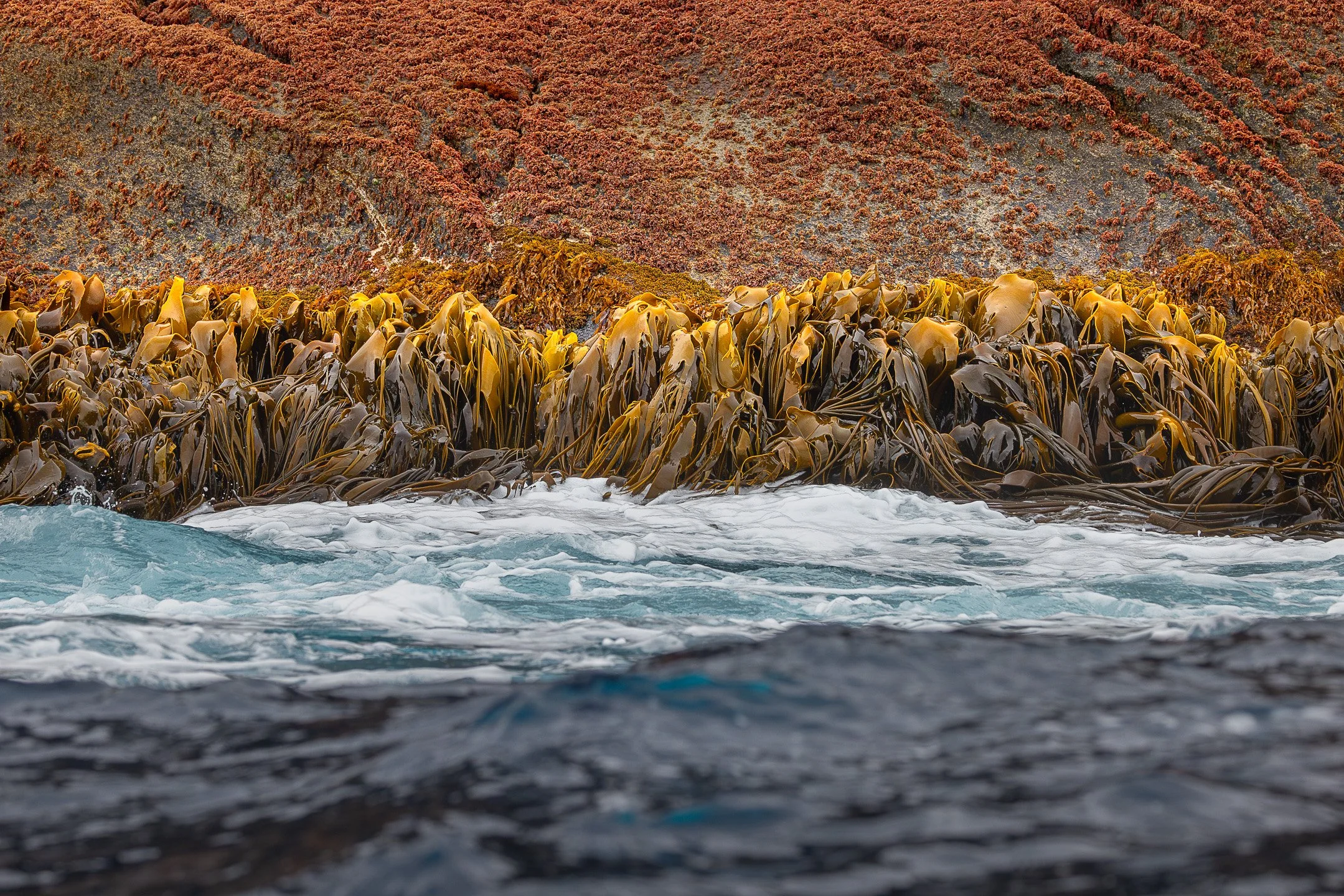
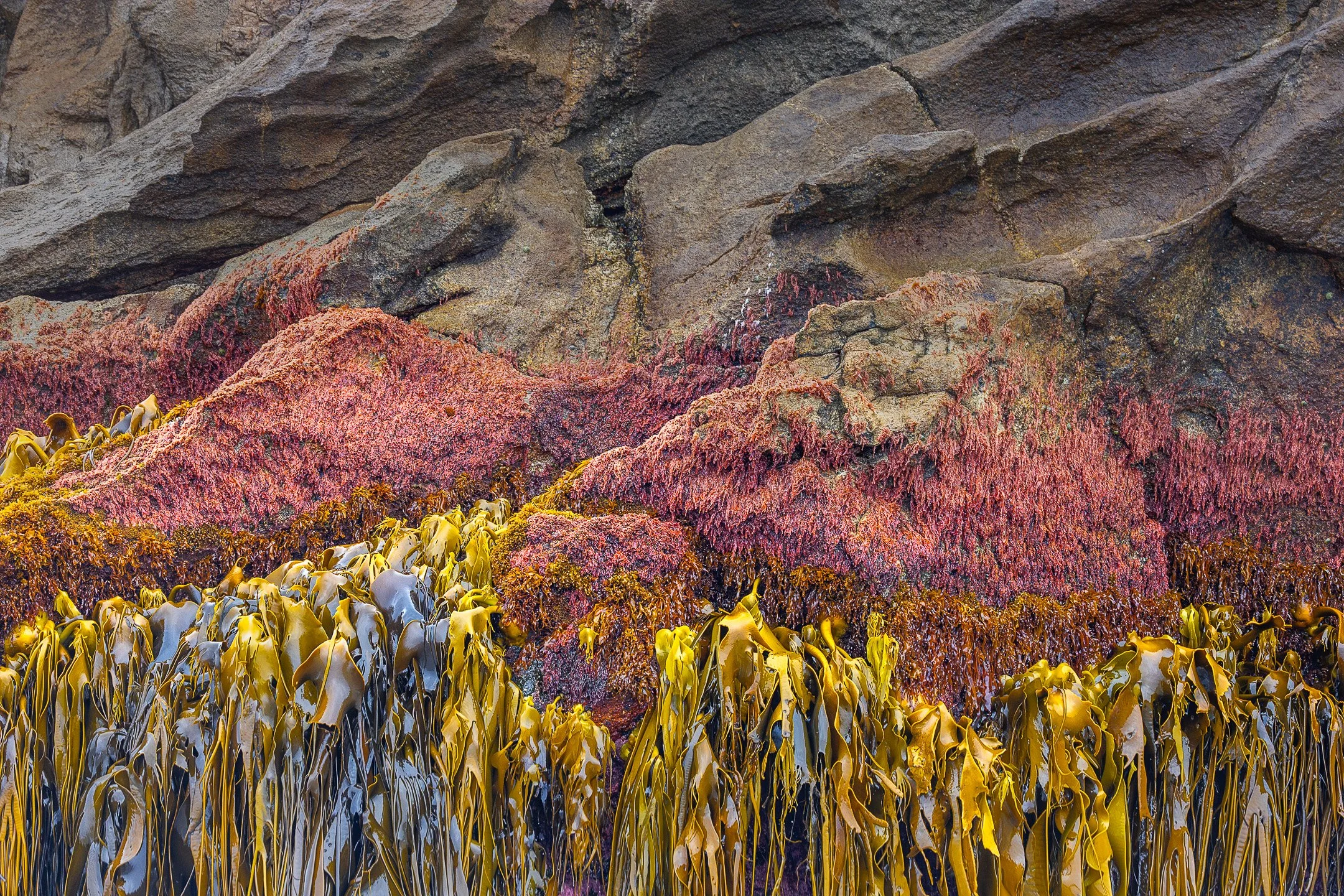
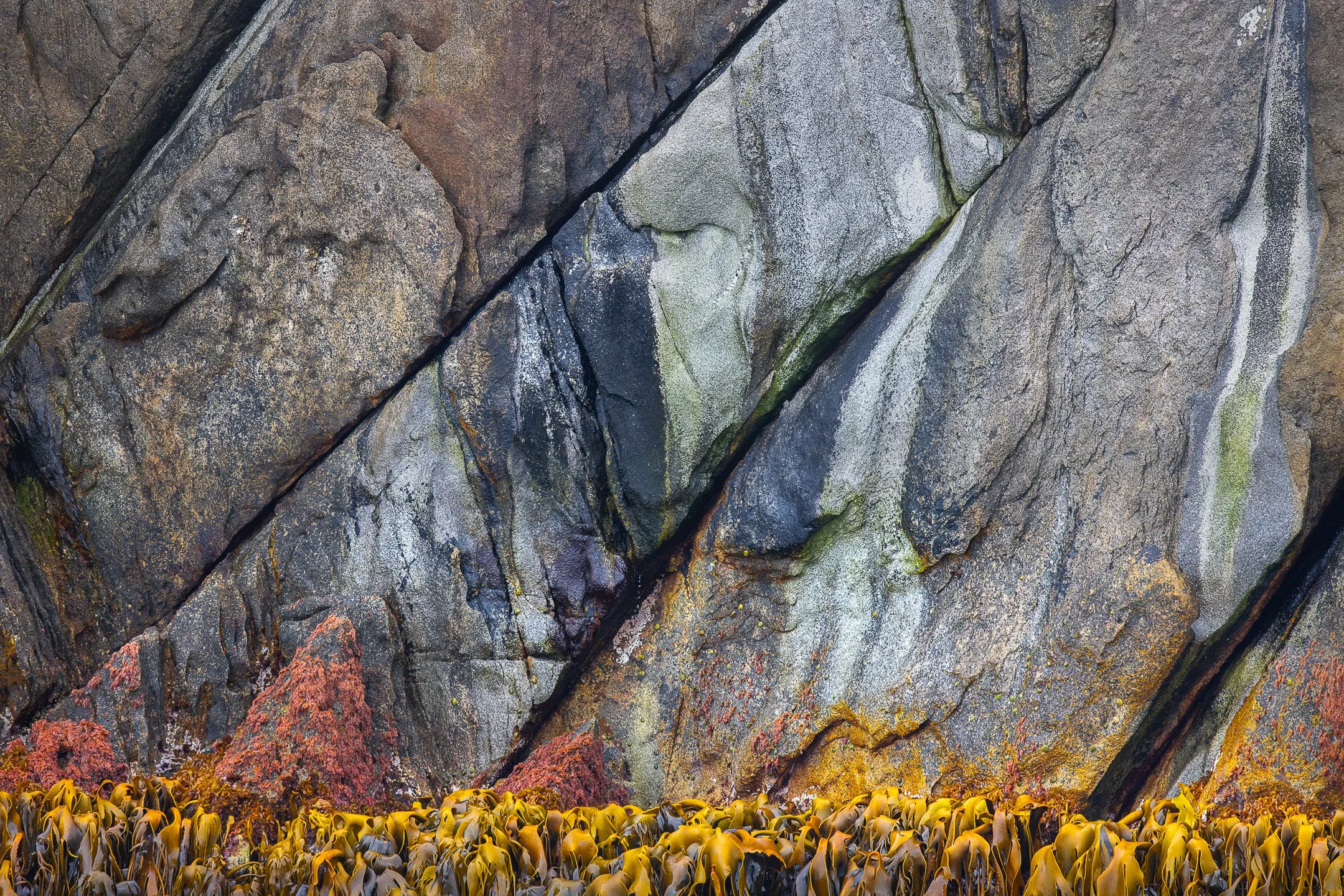
Along the Snares, the landscape shifts toward a pure abstraction where texture, pattern, and movement become the primary subjects. The golden bull kelp isn't just vegetation; it's a flowing, leathery architecture that transforms the granite coastline. Massive golden fronds fold over one another, set against granite rocks streaked with mineral tones and algae. In these intimate scenes, the "bedrock" of the island is revealed as a shifting study of form, where the organic and the geological are indistinguishable.
Kelp Abstract (1) - Snares Islands
Kelp Abstract (2) - Snares Islands
Kelp Abstract (3) - Snares Islands
Kelp Abstract (4) - Snares Islands
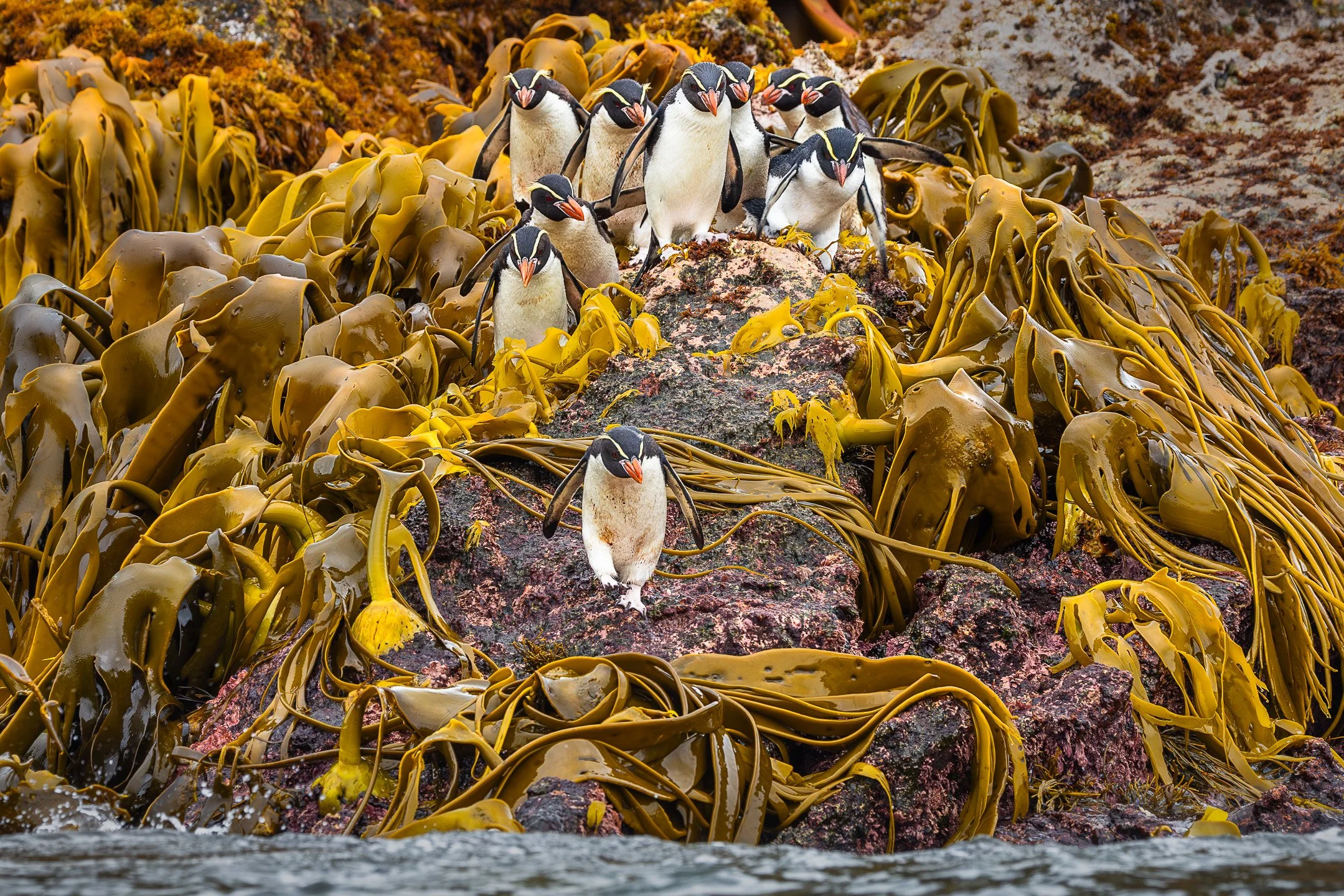
A Tangle of Life and Stone: Kelp and Snares Crested Penguins
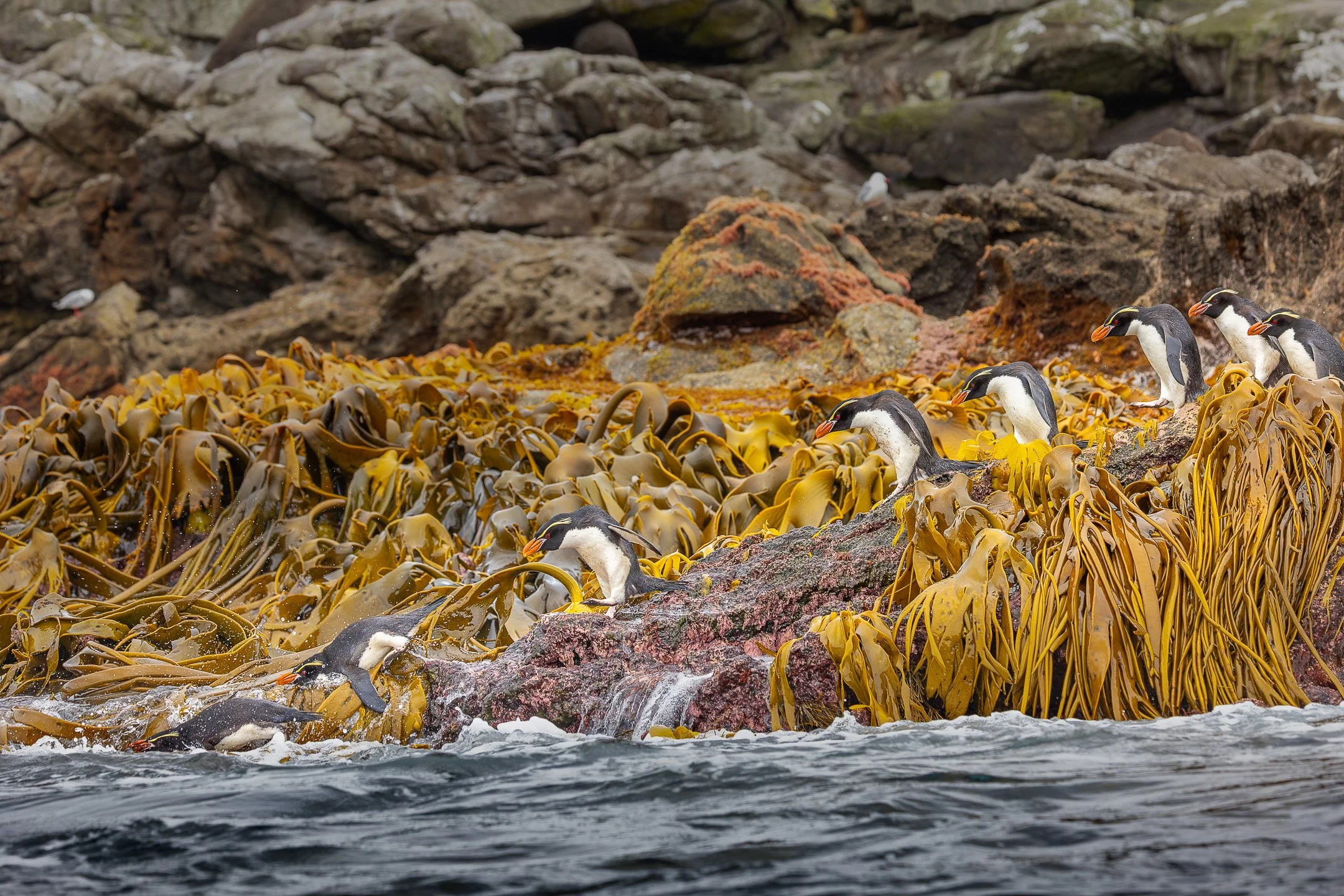
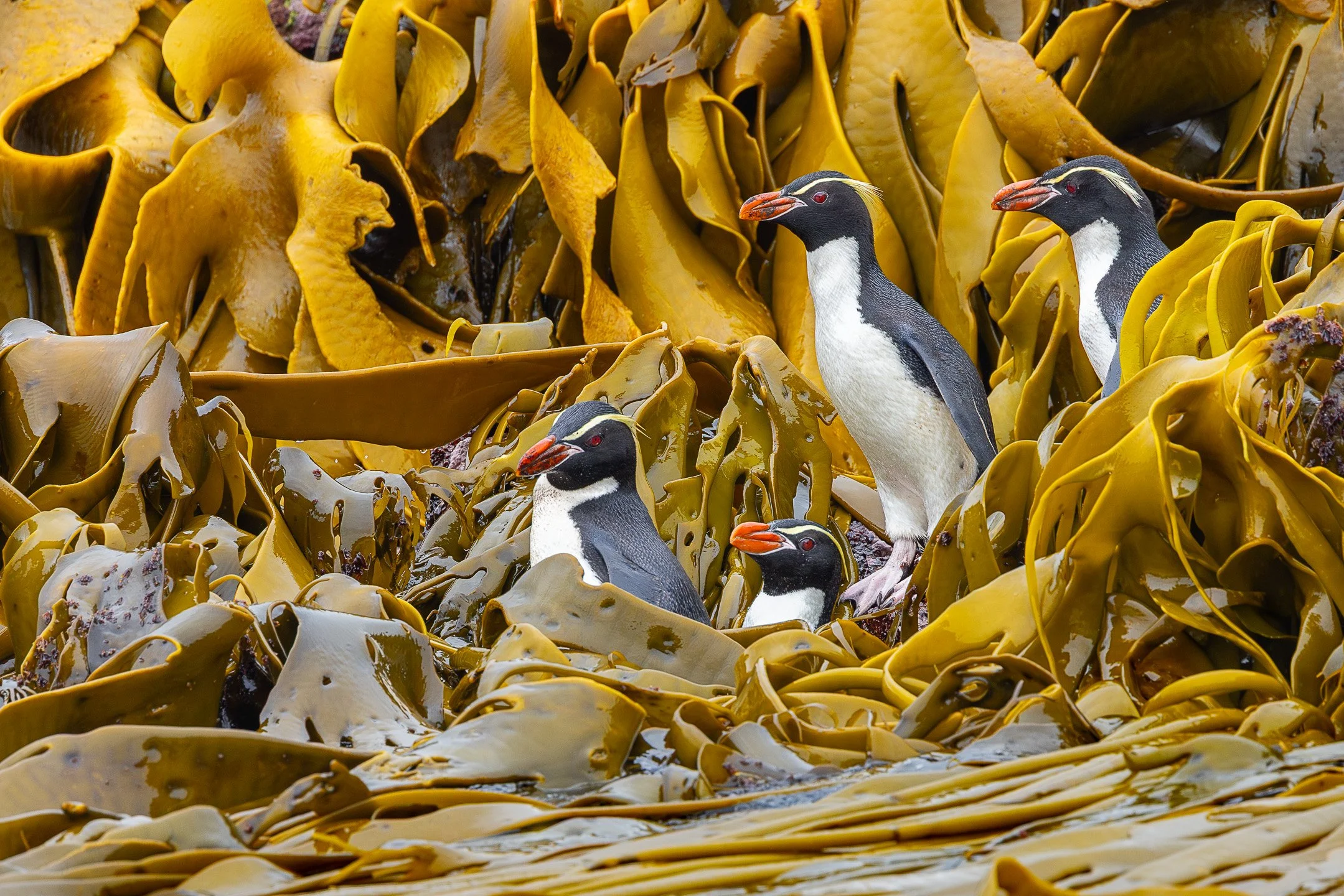
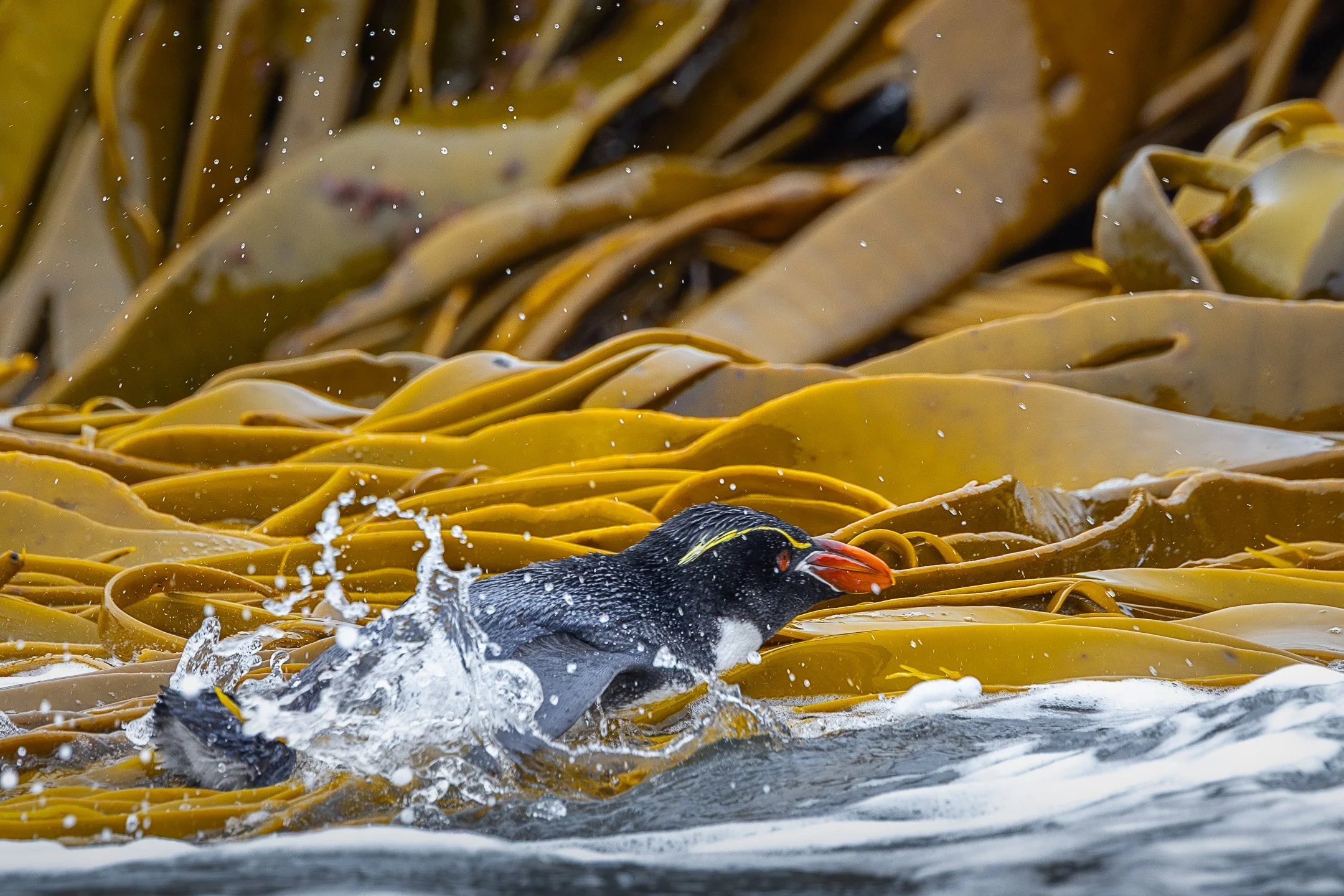
At the remote Snares Islands, the dense tangles of bull kelp and wave-washed rocks are brought to life by groups of Snares Crested Penguins. Endemic to these isolated outposts, these birds act as the intricate, living details that complete the stone. They move constantly between sea and shore—slipping from kelp-draped ledges into the water, porpoising through the swell, and scrambling back onto the rocks. Their bright yellow crests and white chests stand out against the deep ochres of the kelp, serving as the animate finish to a geography that is defined by the tight intertwining of ocean energy and seabird life.
Leading the Way - Snares Islands
Procession of Penguins - Snares Islands
Sinking Penguins - Snares Islands
Swimming in Kelp - Snares Island
The Animate Shore
On the Subantarctic islands, life is not merely an inhabitant; it is the bedrock. Here, the landscape is a shifting architecture of bone, fur, and feather. Penguins do not simply navigate the shoreline—they define its contours. Elephant seals do not just rest upon the sand—their immense, huddling forms create a living geology of gold and grit. In these isolated outposts, the sheer density of existence suggests a radical truth: the animals do not live on this land; they are the land.
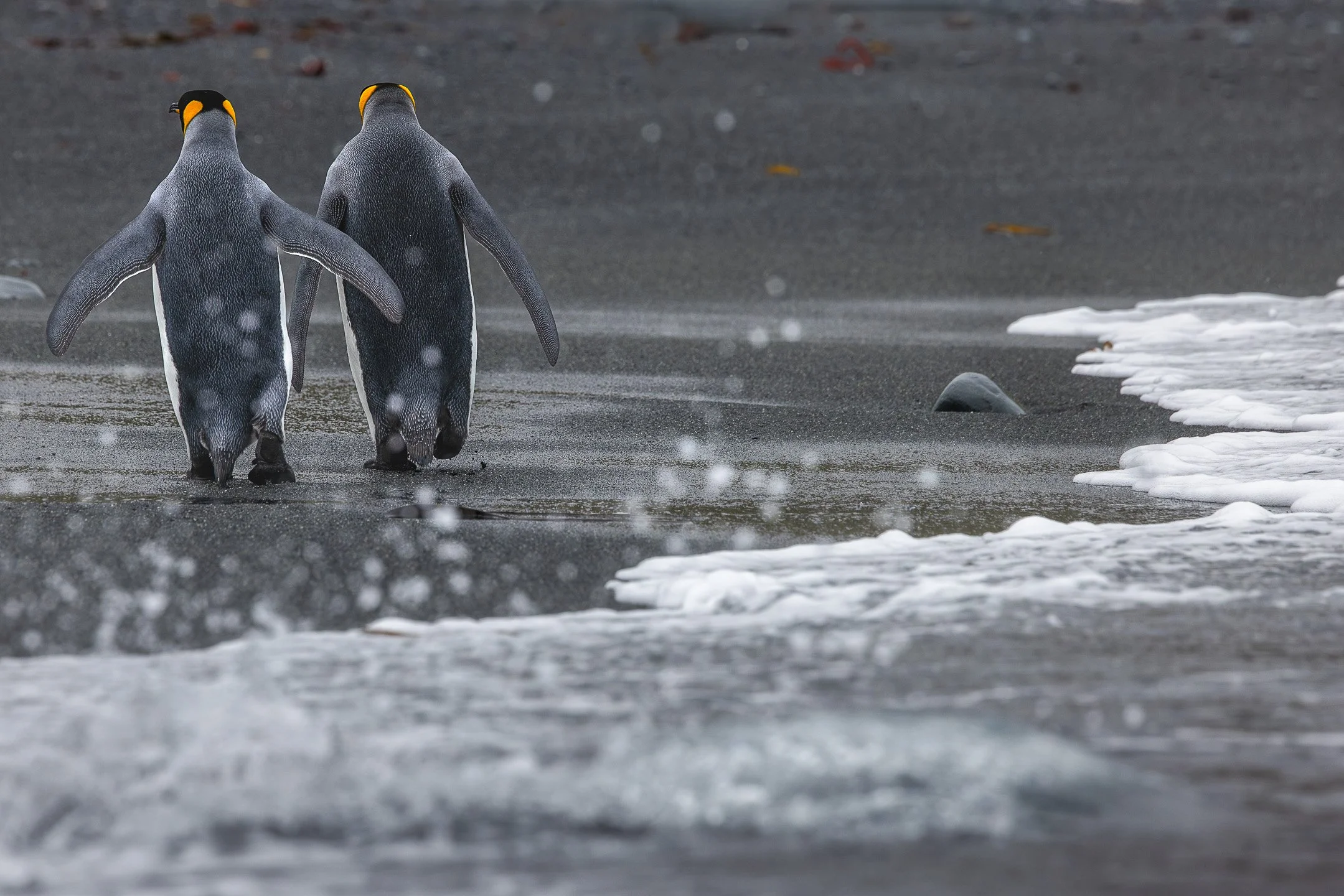
And on a smaller scale, animals seem to be the intricate, living details that complete the stone—a solitary Rockhopper standing as a defiant spire against a cliff, or a couple of Kings blending into the shoreline. They are the animate finish, the final layer of a geography that is as much heartbeat as it is bedrock.
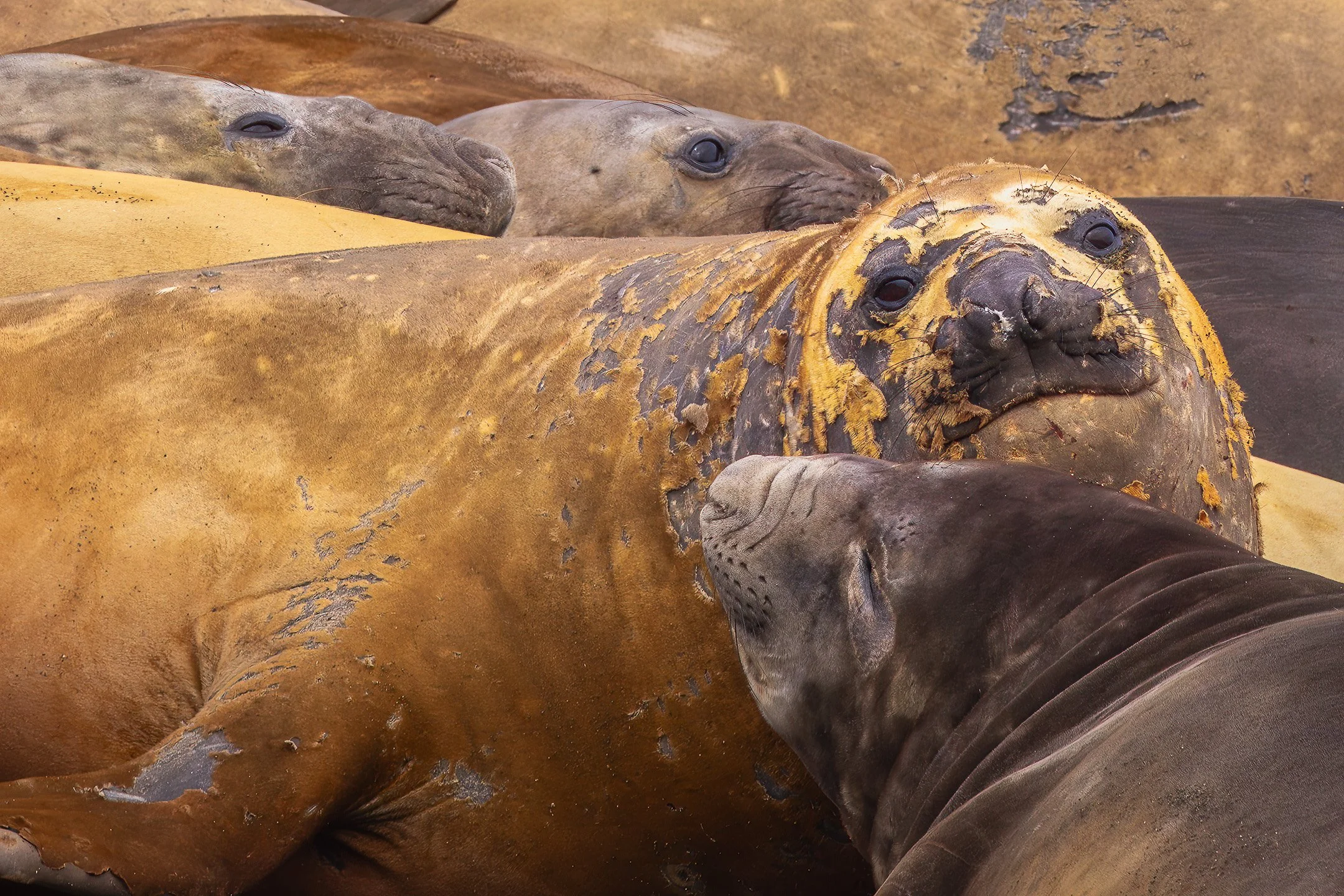
The Living Terrain of Macquarie - Macquarie Island
In the Subantarctic, the line between the land and the life it sustains is often blurred. This huddle of Southern Elephant Seals presents a living topography, their skin peeling in the 'catastrophic moult' to reveal textures that mirror the very islands they inhabit. Much like the weathered cliffs and eroding shorelines of Macquarie, these giants undergo a seasonal shedding of layers—a biological erosion that transforms a colony of animals into a shifting, golden landscape of fur, scar, and sediment.
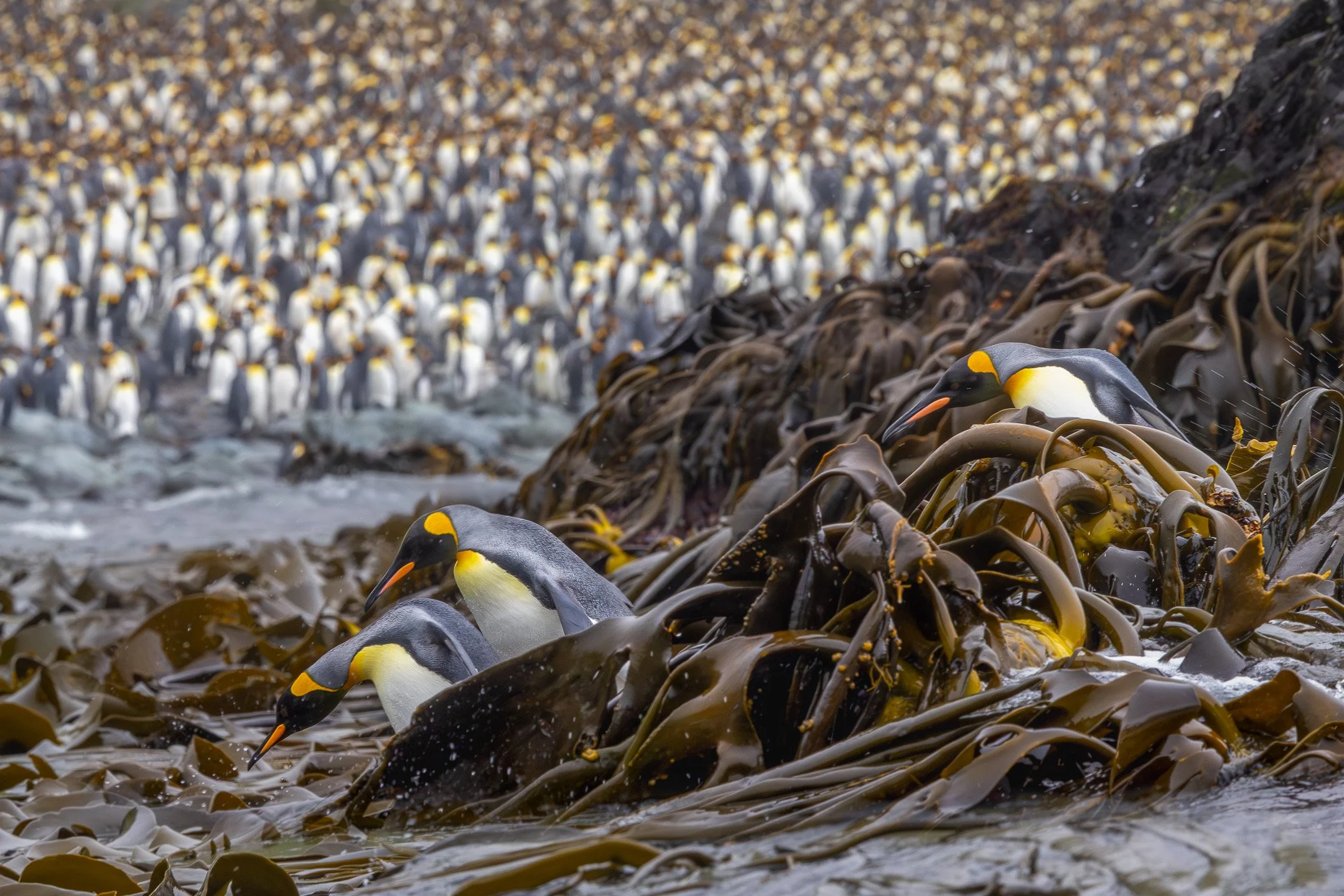
Living Glacier of King Penguins - Macquarie Island
At the water's edge, the topography of Macquarie Island is defined by a chaotic intersection of forms. In the foreground, the massive, sinuous ribbons of Bull Kelp create a dark, leathery terrain—a biological reef that surges with the tide. Rising from this organic labyrinth, the landscape gives way to a monumental 'living glacier' of King Penguins. Their collective mass transforms the horizon into a granular field of white and gold, where the boundary between the earth and the creatures that cover it is entirely lost to the eye.
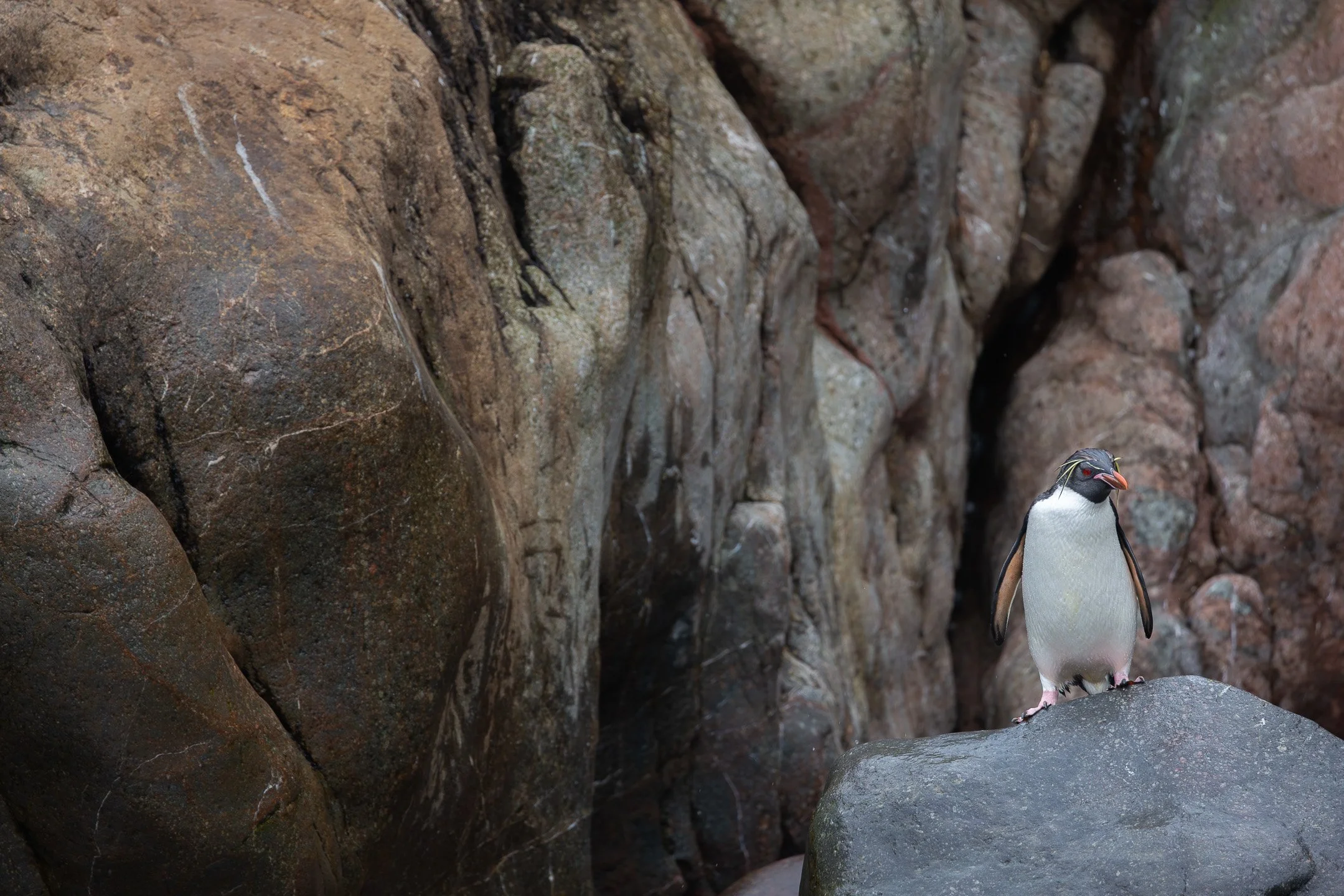
Animate Spire - Macquarie Island
Perched atop a dark, wave-polished pedestal, a Rockhopper Penguin is stilled against a monumental rockface. Its presence transforms the massive cliff from inert stone into a breathing environment. This is life as a stationary sculpture, an animate detail integrated into the ancient geology of the shore.
Moving Boulders - Macquarie Island
Two King Penguins walk the shoreline of Macquarie Island, their bodies blending seamlessly into the grey beach and the white wash of the surf. Like moving boulders echoing the texture of the dark volcanic sand.
Photographing the Subantarctic Islands
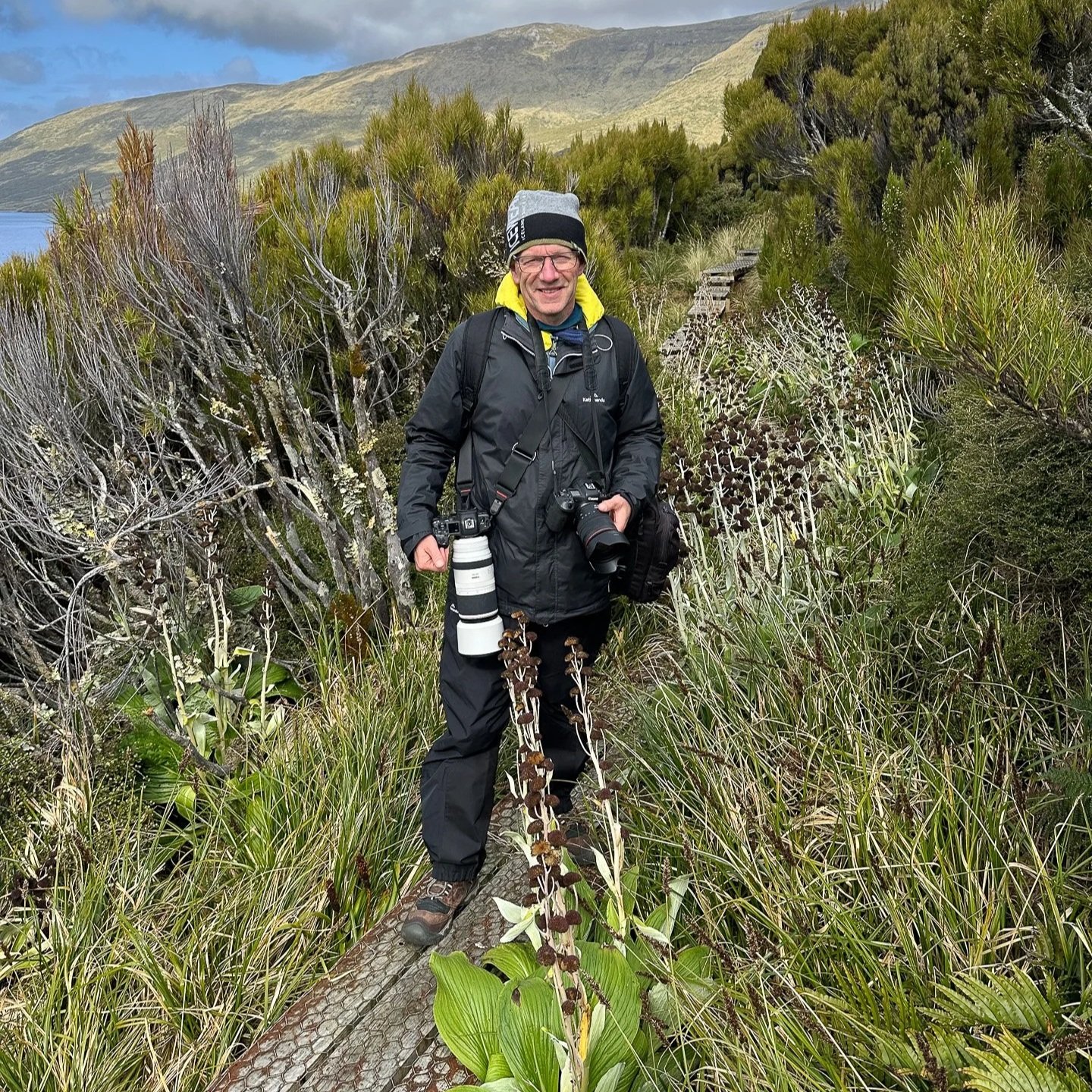
Photographing the Subantarctic islands pushed me beyond familiar ways of working. Much of my previous landscape practice had been grounded in stillness—calm, deliberate, and often tripod-based. Here, the environment asked for something different.
Access was often limited to moving platforms, from an offshore cruise ship to Zodiacs navigating the surge of the coastline. The stability I once relied upon was replaced by shifting frames and unpredictable motion. To succeed, I had to learn to work with this instability—anticipating the rhythm of the swell rather than resisting it—which required a much more instinctive response to both my subject and the sea.
The Convergence of Land and Life
The wildlife introduced a constant, compelling tension into my process. As a lover of nature, the pull to treat these animals as isolated subjects was powerful, yet my lens remained focussed on the landscape. I sought to integrate these living forms into the broader terrain realising that penguins navigating kelp, albatross gliding along cliffs, and seals resting on wave-washed rocks were not distractions from the environment—they were the very pulse of it.
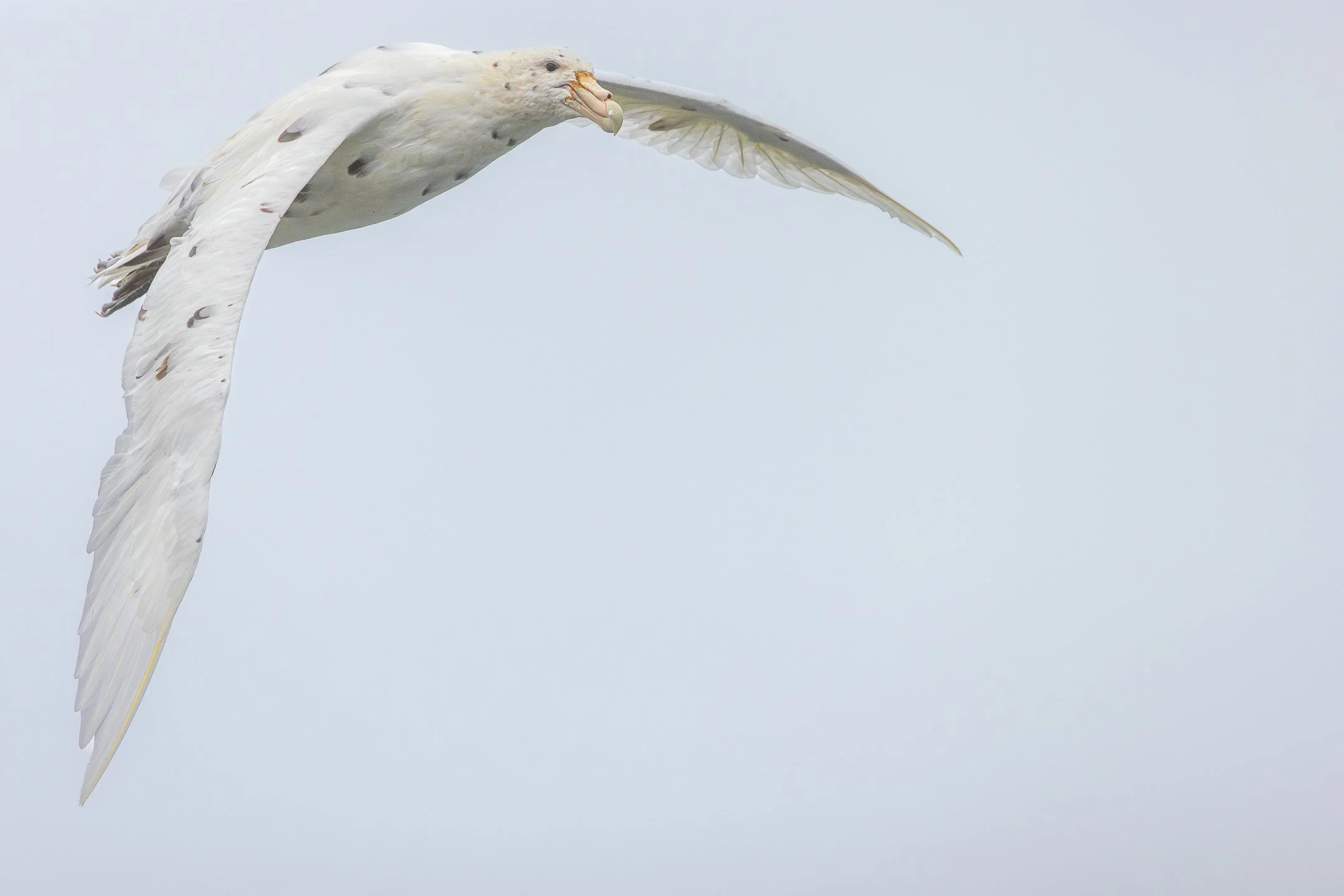
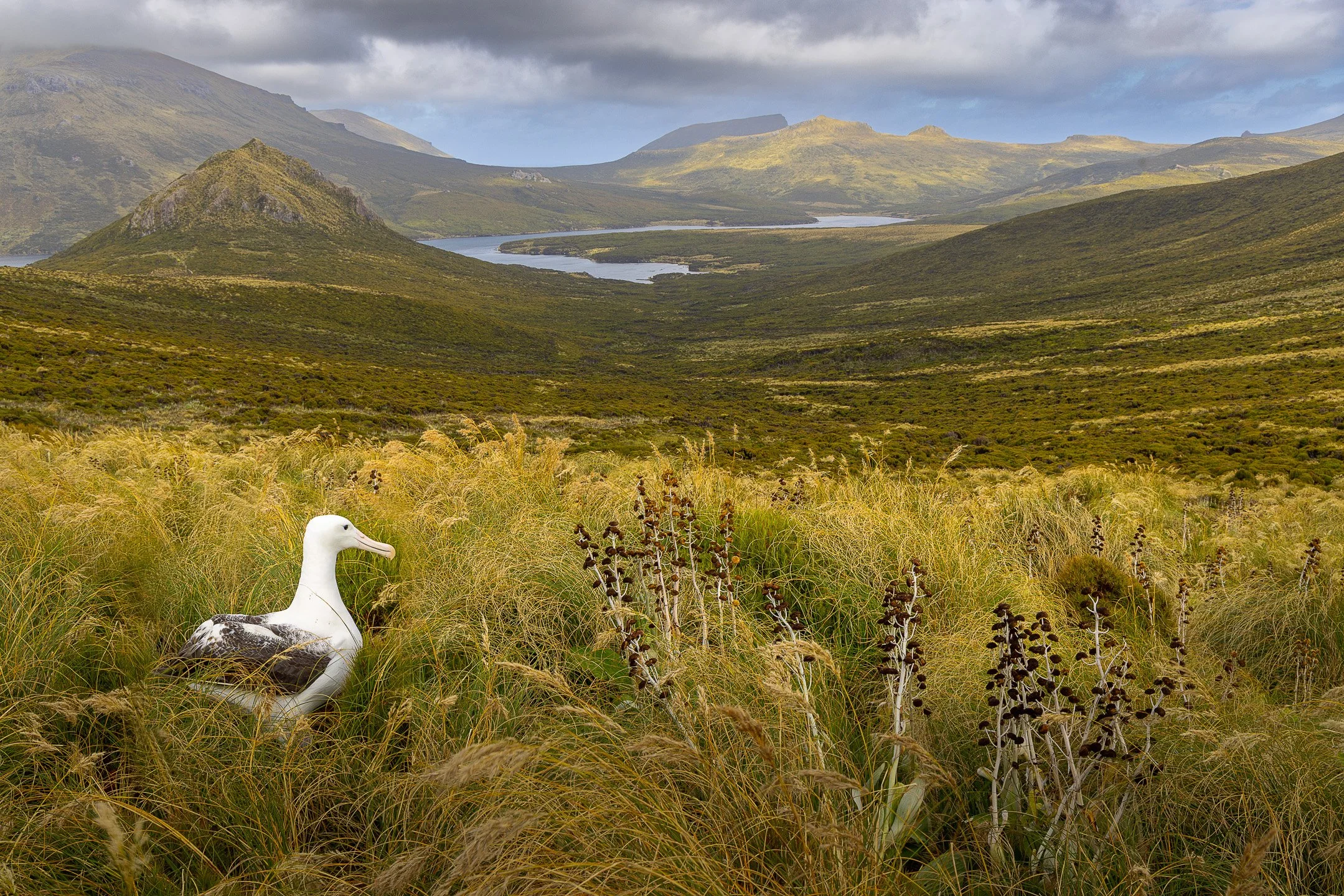
Capturing these moments demanded a unique balance of attentiveness and restraint. The goal was to honour the individual life without allowing it to eclipse the monumental scale of the islands. Whether framing an intimate portrait of a Southern Giant Petrel or capturing a Southern Royal Albatross to provide a sense of place against the Campbell Island ridges, the realisation remained the same: the land and the wildlife are not separate entities.
They are a singular, unified system where the geography is as much heartbeat as it is bedrock. This 'Living Topography' became the essential story I wanted to tell.
Technical Fluidity and Response
Technically, this environment forced a radical shift in my settings. High shutter speeds became essential, paired with ISO levels far beyond what I would typically use in a traditional landscape shoot. I had to let go of the pursuit of technical perfection, particularly the desire for noise-free files. In these conditions, the sharpness of the moment and clarity of intent mattered more than absolute image cleanliness. Over time, I came to recognise higher ISO not as a compromise, but as a necessary tool to capture the environment's raw energy.
Ultimately, the process moved from meticulous planning and scouting to a state of reactive uncertainty. Weather, light, and access were never fully predictable, and opportunities appeared and vanished in heartbeats. This required a willingness to let go—to accept that not every scene could be fully realised.
Photographing the Subantarctics became less about control and more about response. While my approach to digital rendering remained grounded, the capture process adapted to a fluid, dynamic world where the unpredictable forces of nature were allowed to shape the final image.
Visual Cohesion through Narrative Sets
During the journey, as I reviewed each day’s work, it became clear that the raw complexity of these islands could rarely be contained within a single, definitive frame. To address this, I began organising my work into deliberate narrative sets—groupings linked by a shared subject, a recurring theme, or a specific visual style. By moving beyond a collection of disparate "shots," I was able to weave a cohesive story of the "Living Topography" I encountered. This intentionality kept my vision anchored, ensuring that the individual lives I photographed didn't eclipse the monumental scale of the islands, nor did the environment distract me from the intimate details.
This approach to visual storytelling—and how it helps bridge the gap between technical craft and artistic expression—is something I will explore in much greater detail in upcoming articles.
Conclusion: The Gateway to the Ice
In the Subantarctic, the landscape cannot be separated into parts. Land, sea, air, and life exist as a single, shifting whole—each shaping and revealing the other through constant motion.
Photographing here required letting go of the idea of capturing fixed scenes. Instead, it became an exercise in recognising relationships: between wind and wing, light and form, movement and structure. The images are not records of isolated moments, but fragments of a system in motion.
This way of seeing continues to shape how I approach the landscape. Not as something to be framed and contained, but as something to be read—patiently, and with humility—as it reveals itself over time.
As I continue south toward the frozen stillness of the Antarctic continent, I find myself wondering: will the 'Living Topography' of the islands give way to a more traditional, static landscape? Or does the ice itself have its own animate pulse?
Find out in my next article, where I cover my arrival in the Ross Sea region—the continent of ice. Subscribe now if you don’t want to miss out.
Share this article
If you would like more of these visual stories, then scroll to the bottom and subscribe to my newsletter.
Other stories you may find interesting
In this article, I provide some tips to not only enjoy, but also improve your chances of capturing great images in an unfamiliar landscape.