
Photographing in Unfamiliar Landscapes: How to Find Your Way in New Landscapes
For many of us, landscape photography is inseparable from exploration. There’s something uniquely energising about arriving in a place you’ve never photographed before — the sense of possibility, the unknowns, the pull of a landscape you’re only beginning to understand. But that excitement often comes with its own challenges. The terrain is unfamiliar, the conditions unpredictable, and the expectations — especially when travel is involved — can feel uncomfortably high.
You might have spent weeks researching maps, tides, and weather patterns. Yet the moment you step into the landscape, all that planning meets reality. Light behaves differently than expected. The scene feels bigger, or tighter, or simply stranger than imagined. And the real question emerges:
How do you find your footing — and make meaningful images — when the landscape is new to you?
What follows are the methods I rely on when working in unfamiliar environments. They’re part preparation, part mindset, and part willingness to let the landscape lead.
Let Research Guide You
Research provides a foundation. Tools like Google Earth, topographic maps, PhotoPills, and tide charts help you understand the lay of the land and the movement of light. Is it a sunrise or sunset spot, a low or high tide spot, does it need soft light? Are there any conditions, like fog that could help? Is it a seasonal spot (e.g. does it need autumn colour?)
Thinking through logistics — access points, walking distances, weather exposure, gear weight — ensures you arrive ready rather than reactive.
Looking at images taken by other photographers can also be valuable. It might be what first draws you to a location, and it can offer inspiration for compositions or a sense of the conditions to expect — or hope for. But it’s important to find the right balance. Rely too much on other people’s work, and you risk chasing familiar images instead of discovering your own perspective. Iconic images often come from locals who know the landscape deeply and can return in perfect conditions. Travelling photographers rarely have that luxury. Research should inspire possibilities, not expectations.
Build Flexibility into Longer Trips
For longer trips I usually begin by identifying key locations I want to explore, then grouping them by priority: must-do, should-do, may-do. Before leaving, I’ll check tides, seasons, and accessibility — lessons learned the hard way after arriving at locations during the wrong tide window or wrong season (e.g. low water levels, bird breeding season).
I often choose a creative theme or project for the trip — something that gives direction without boxing me in. Scenic vs. intimate, movement, shadows and light, monochrome, story-driven work - a loose framework helps maintain focus while still allowing room for surprise.
I plot locations on a map so I can plan distances and travel times. Google Maps works well, but I personally use Trello to track locations, notes, and reference images. I’ll share more on that in another article.
Scout the Area in Advance
Whenever possible, arrive early and use daylight hours to explore safely. Scouting gives you the chance to walk the terrain, test compositions, and understand how the environment changes with tide, weather, or shifting light.
Apps like PhotoPills and Windy are invaluable for scouting, helping you anticipate light direction and weather conditions when you return.
I prefer to spend a few days in one location, giving myself time to get to know it and multiple chances to photograph at sunrise and sunset. Of course, that isn’t always possible on longer trips with lots of moving around. In those cases, I make a point of identifying the most special spots in advance and, if I can, building in a rest day from travelling. That way I can slow down, revisit the area, and give myself the best chance of catching it in the right conditions.
On a recent trip to Wharariki Beach, for example, I spent an afternoon walking across the dunes, testing different foregrounds, and studying the angles toward the Archway Islands. By sunrise the next morning, I knew exactly where to set up, giving me precious extra minutes to focus on exposure and timing rather than scrambling to find a composition in the dark.
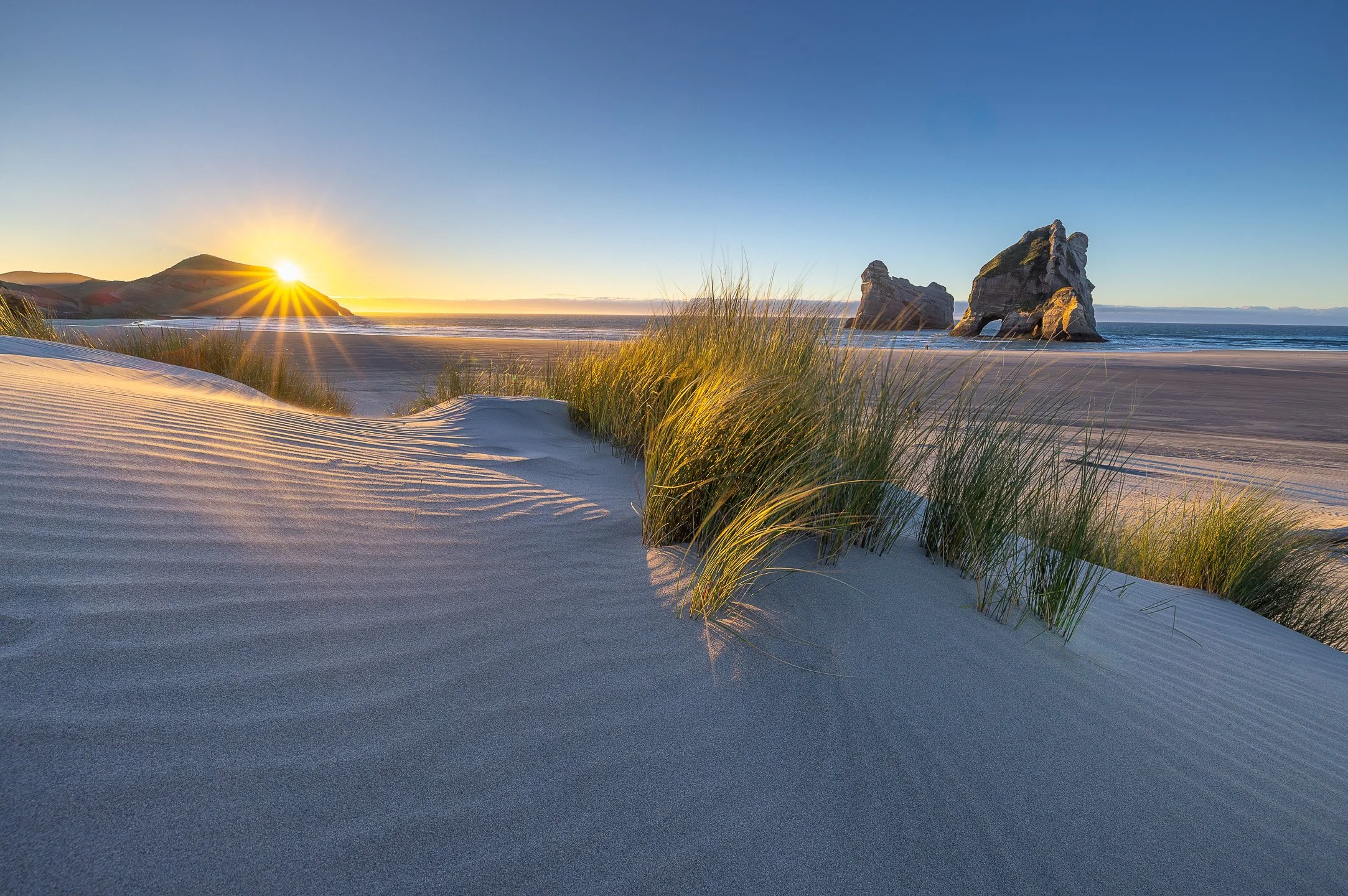
While scouting, I experimented with several framing options to see which compositions might work best under different conditions. I tried the above scene during golden hour but wasn’t completely satisfied with the result. The sun and the Archway Islands felt too far apart, leaving the islands small within the frame. I also realised that I needed to position myself slightly higher on the dune to create a clearer separation between the dune and the islands, while also reducing the amount of sand in the foreground and blue sky above.
Adapt to the Conditions
In unfamiliar environments, plans rarely unfold as expected. Storms arrive, clouds roll in, and light shifts in ways you never imagined. Some of the most rewarding images come not from chasing what you hoped for, but from staying present and responding to what unfolds.
One morning at Wharariki, I stood ready for a fiery sunrise. Instead, heavy clouds flattened the sky. I stayed anyway, and minutes later a rainbow arched briefly beside the islands. It lasted only moments, but it became one of my favourite images from the trip. Patience doesn’t guarantee results — but it often creates the conditions where luck can find you.

For Rainbow at the Archway Islands, I positioned myself slightly higher on the dune to balance the composition — giving equal weight to the foreground grasses and the distant sea stacks. Using a standard zoom lens at 32mm rather than an ultra wide angle brought the islands closer, lending them a stronger presence in the frame. The rainbow, fleeting and delicate, was the final, unexpected gift that completed the scene.
The same mindset applies to overcast days. Flat, grey light may not bring the drama of sunrise or sunset, but it has its own quiet appeal. Overcast skies create soft, even illumination that reveals subtle textures, gentle tones, and atmospheric depth. On one trip, muted light transformed a coastline into a study of understated colour and delicate contrast — a mood that bright sunlight could never have produced.
It helps to keep a few “soft light” locations in mind for days like these — forests, waterfalls, or fog-shrouded valleys that don’t rely on dramatic skies. Embracing these less-than-ideal conditions often leads to images that feel more intimate and expressive — the kind that surprise you precisely because they weren’t planned.
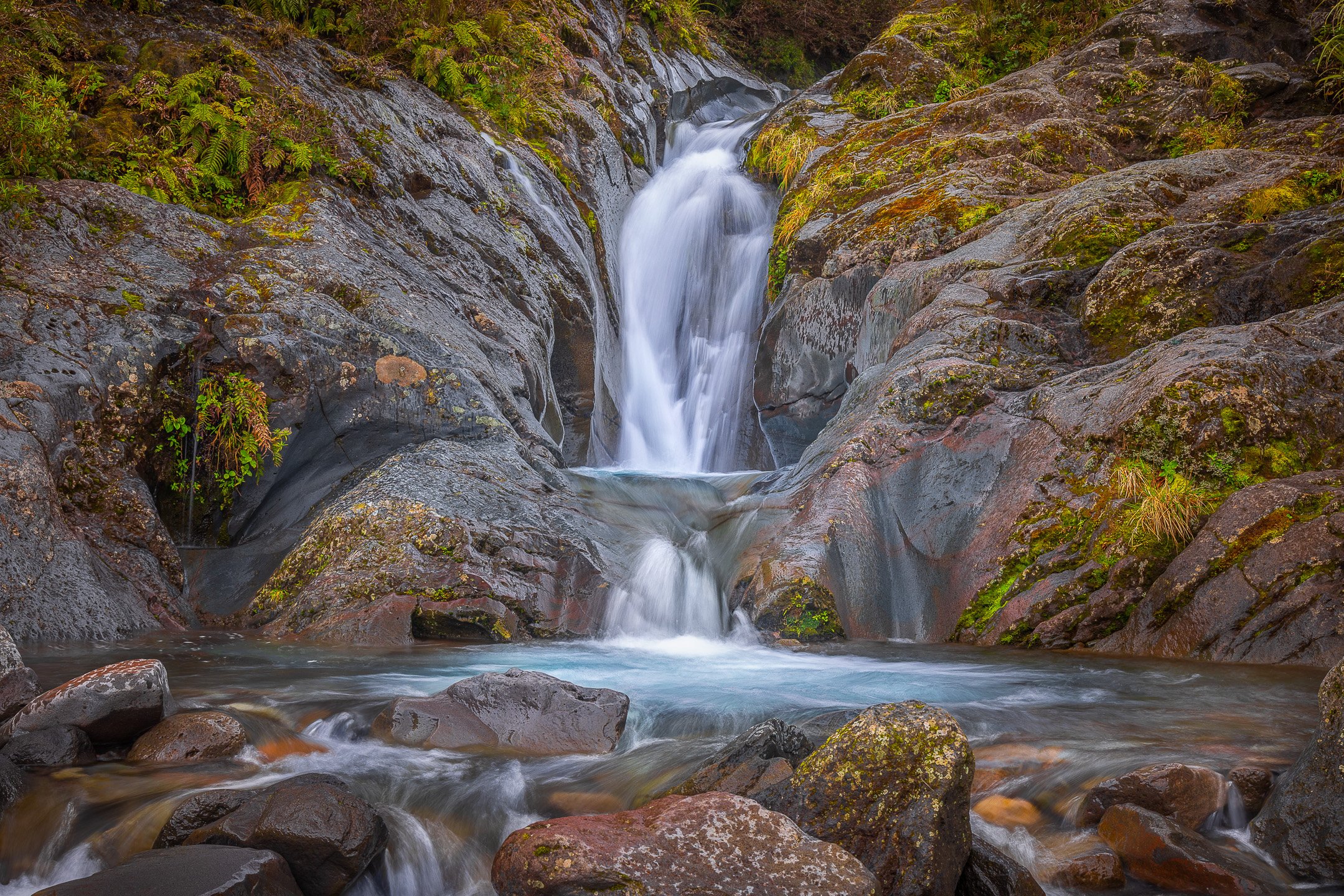
This image of Wilkies Pools was taken on a cloudy day with occasional showers. The soft light created a low contrast scene emphasizing the textures of the rock and flowing water. If it had been sunny, there would have been too much contrast, and the water would have been too bright.
Slow Down and Let the Landscape Set the Pace
When you arrive in a new location, it’s easy to be overwhelmed by the sheer number of possibilities and feel the pressure to capture everything. But not everything you see needs to become an image.
I’ve learned to slow down and step back from the impulse to photograph. Instead, I pause. I stand still, look around, and read the landscape — its light, rhythm, and subtle details revealing what’s worth photographing. The images I’m most proud of rarely come from rushing to unpack my camera and shoot everything in sight.
I’ve also trained myself to shift perspective, moving between wide, scenic views and more intimate, expressive frames. The scenic image often comes first — a way of establishing where I am and what drew me to the place. Once that initial curiosity (and excitement) is satisfied, I slow down and change pace. Like switching from a wide-angle to a telephoto lens, I begin to look closer — noticing patterns, relationships, and moments of quiet design within the larger landscape. That’s usually where the more personal, expressive photographs start to emerge. Together, the scenic and the intimate form a dialogue — a visual story of place that shows both what it looks like and how it feels.
I have written about my move from scenic to expressive photography (and embrace both) here.

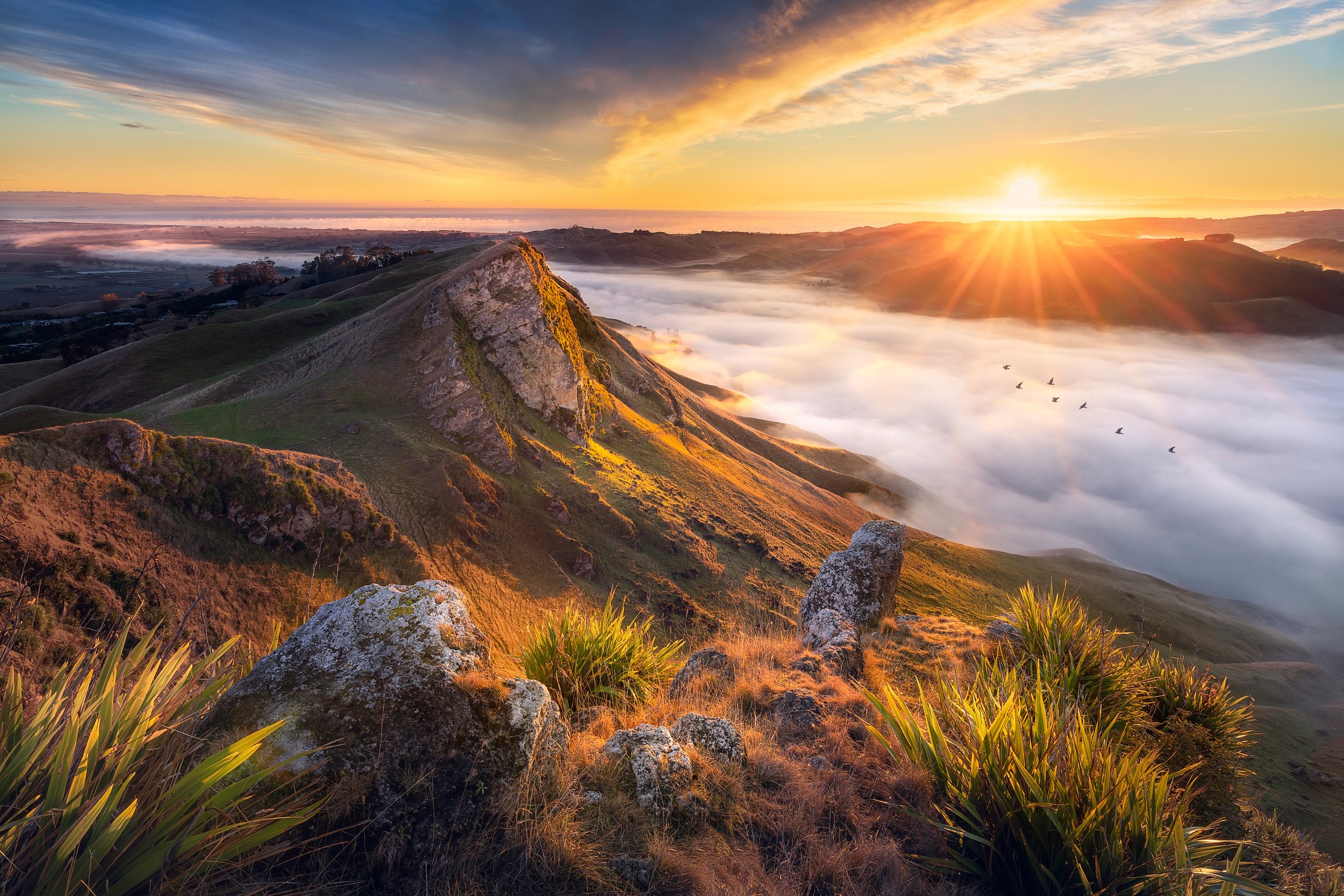
The above image, titled Eternal Sunrise, captures the daily rise of the sun over Te Mata Peak — a moment deeply familiar yet always new for those who have witnessed it many times. This wide-angle view serves as an establishing shot, the kind I often make when first encountering a landscape. Once the initial awe settles, I begin to look closer, seeking the subtler stories within the scene.
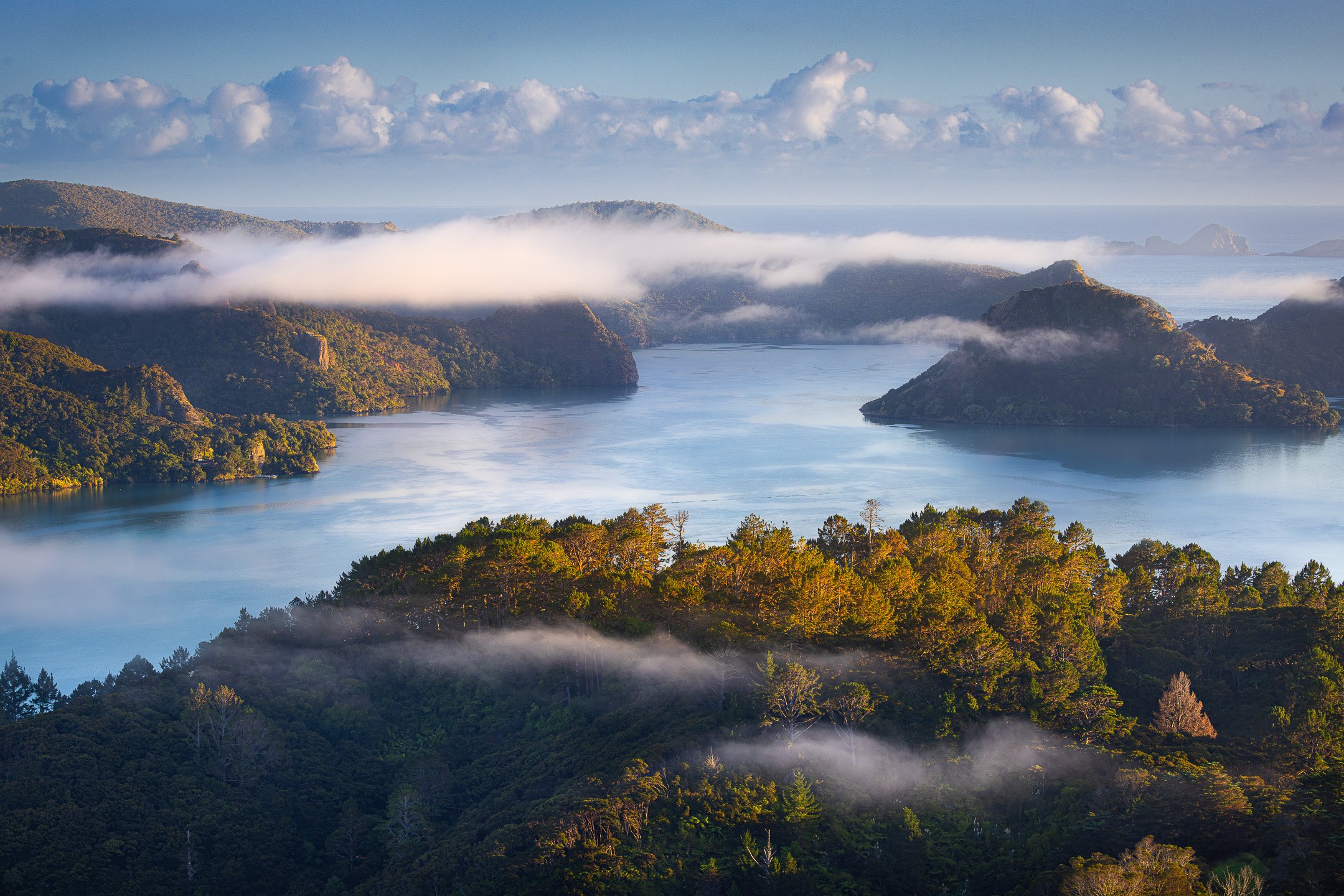
That curiosity led to the next image, Ethereal Valley, a more intimate interpretation focusing on what I found most captivating — the way fog drifted gently through the valley and trees at the foot of the peak. For most viewers, the location may not be immediately recognisable, yet it reveals the quiet essence of the place beyond the iconic view.

Keep a Journal
In new environments, it’s easy to become so focused on capturing images that you forget to capture the experience itself. Keeping a simple journal — even a few quick notes on your phone — helps preserve the story behind the photograph.
A few notes about light, weather, frustration, hope, or mood help anchor the experience and enrich the story you later tell with the image. Those small details become invaluable when editing or writing about the work.
I use Trello to record daily reflections and attach phone snaps, but any method works — a notebook, a voice memo, a notes app. The goal isn’t literary perfection; it’s remembering the moment.
Some photographers record short video clips or voiceovers as a kind of audiovisual diary. I’ve tried it, but found it distracted me from photographing, so journaling remains my preferred approach.
Closing Reflection
Photographing unfamiliar environments is about more than producing images. It’s about curiosity, patience, and a willingness to let the landscape surprise you. Not every shot will work out, but every moment in a new place teaches you something — about composition, about conditions, and about yourself.
The unfamiliar keeps us humble, reminding us that photography is not just about chasing perfection, but about being present, adapting, and letting the landscape speak in its own voice.

Share this article
Other stories you may find interesting
In this composition guide for landscape photographers, I cover composition from first principles through to the judgement calls that come with experience, including the rule of thirds, leading lines, negative space, and more, built around the same questions I ask participants on my Hawke's Bay photography workshops.