Resources
Welcome! This is where I share the guides, cheat-sheets, and other resources I've put together for subscribers. Everything here is free to download, made for anyone working through the same questions I ask myself out in the field: how to see a composition before you've made it, how to plan a shoot around light and weather, how to get more out of a place you've walked past a hundred times.
I'll be adding to this page as new guides come together, so it's worth bookmarking rather than searching for again. If something here is useful, I'd love to hear about it — just reply to any of my newsletters or contact me.
Downloadable PDFs
Landscape Photography Composition: The Essentials Guide
A full guide to composition, from first principles through to the judgement calls that come with experience. Includes field exercises and a one-page cheat-sheet.
Download the full Guide
Landscape Photography Composition: The Essentials Cheat Sheet
A lighter, one-page version of the cheat-sheet on its own, easy to keep on your phone or print out and fold into your camera bag.
Download the Cheat Sheet →
Guides
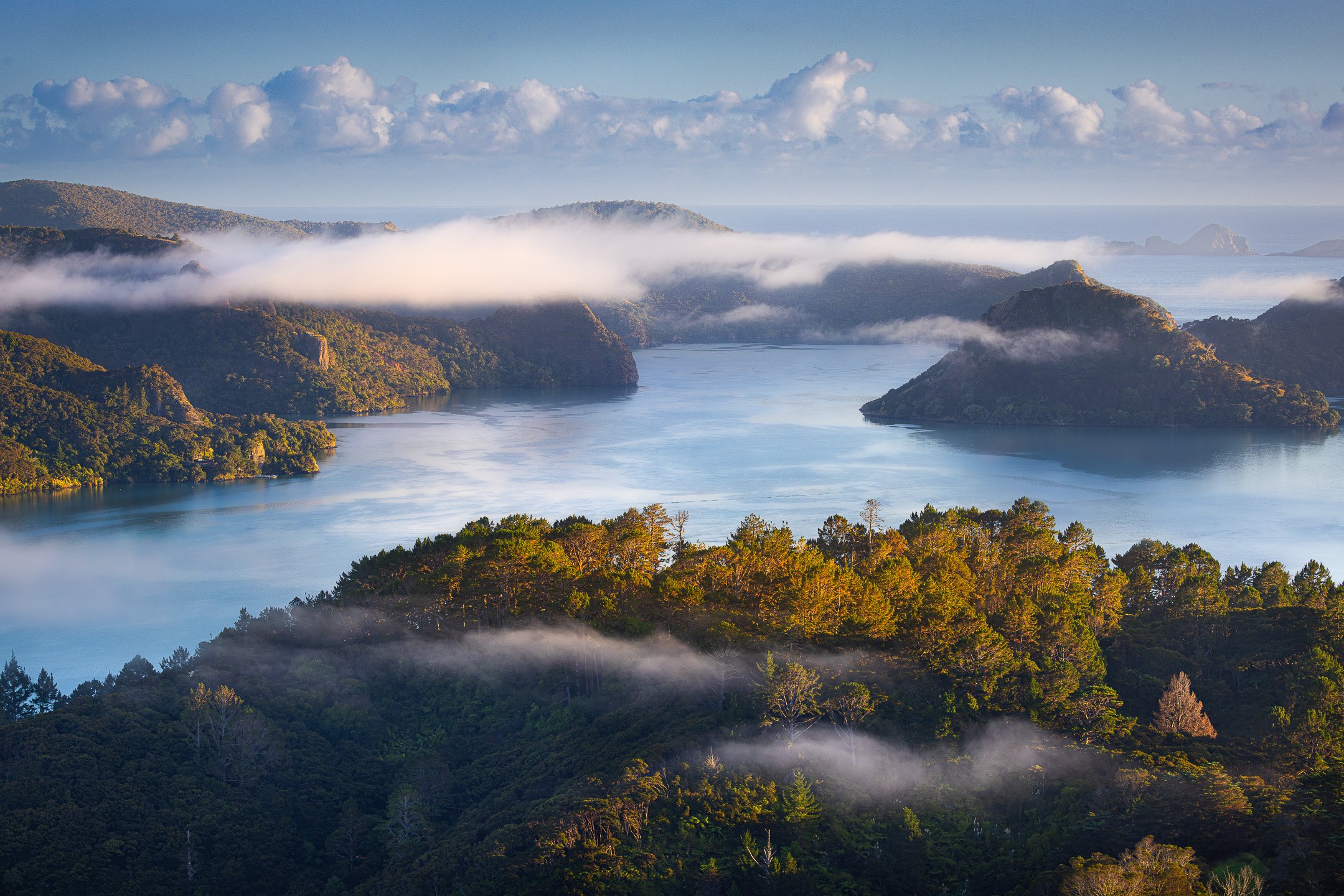
In this article, I provide some tips to not only enjoy, but also improve your chances of capturing great images in an unfamiliar landscape.
In this article, I reflect on my evolution as a landscape photographer — from scenic landscapes to more expressive, interpretive work. It was first published in Nature Vision Magazine, Issue 10 (Fall 2025).
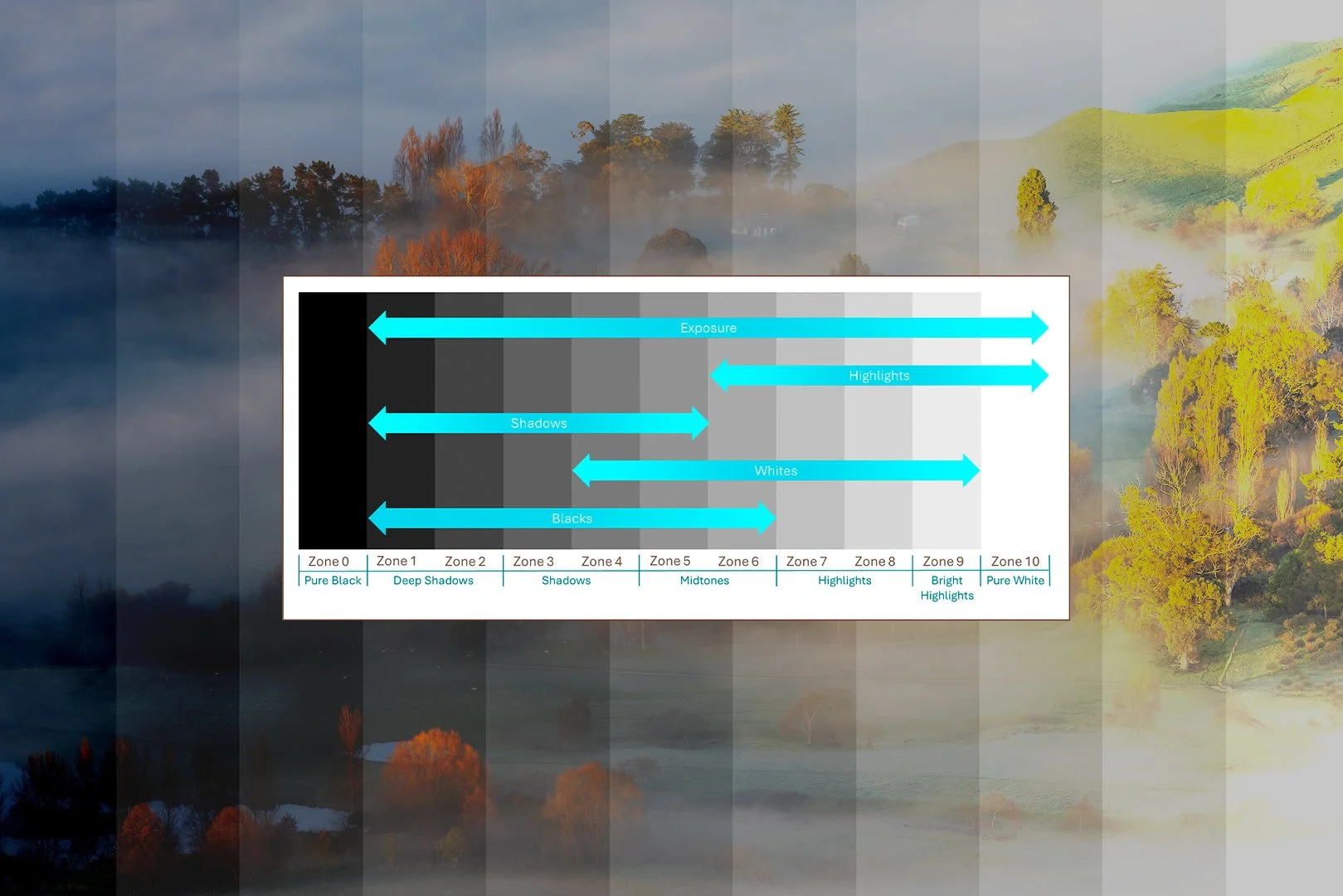
Lightroom’s Tone controls are some of the most powerful tools for shaping the light, depth, and mood of your photos. In this guide, I break down how to use the five essential sliders — Exposure, Highlights, Shadows, Whites, and Blacks — to correct common issues, recover detail, and add creative impact. You’ll also learn how these controls interact with the histogram, and how to apply them with confidence to achieve balanced, natural-looking results. By the end, you’ll know how to turn good photos into stunning images with depth, richness, and polish.
Even the most breathtaking landscapes can start to feel over-familiar when you photograph them often — especially when they’re right on your doorstep. But what if the key to reigniting your creative spark isn’t found in far-off places, but in learning to see the familiar differently? In this post, I share how shifting my focus from sweeping vistas to more intimate details helped me rediscover inspiration in the landscapes I thought I already knew — and how you can do the same.
This article explains what a Circular Polarising Filter (also known as a CPL filter) is, and shows results of an in-depth test to determine if they make a genuine difference to landscape photography. And I made an unexpected discovery!
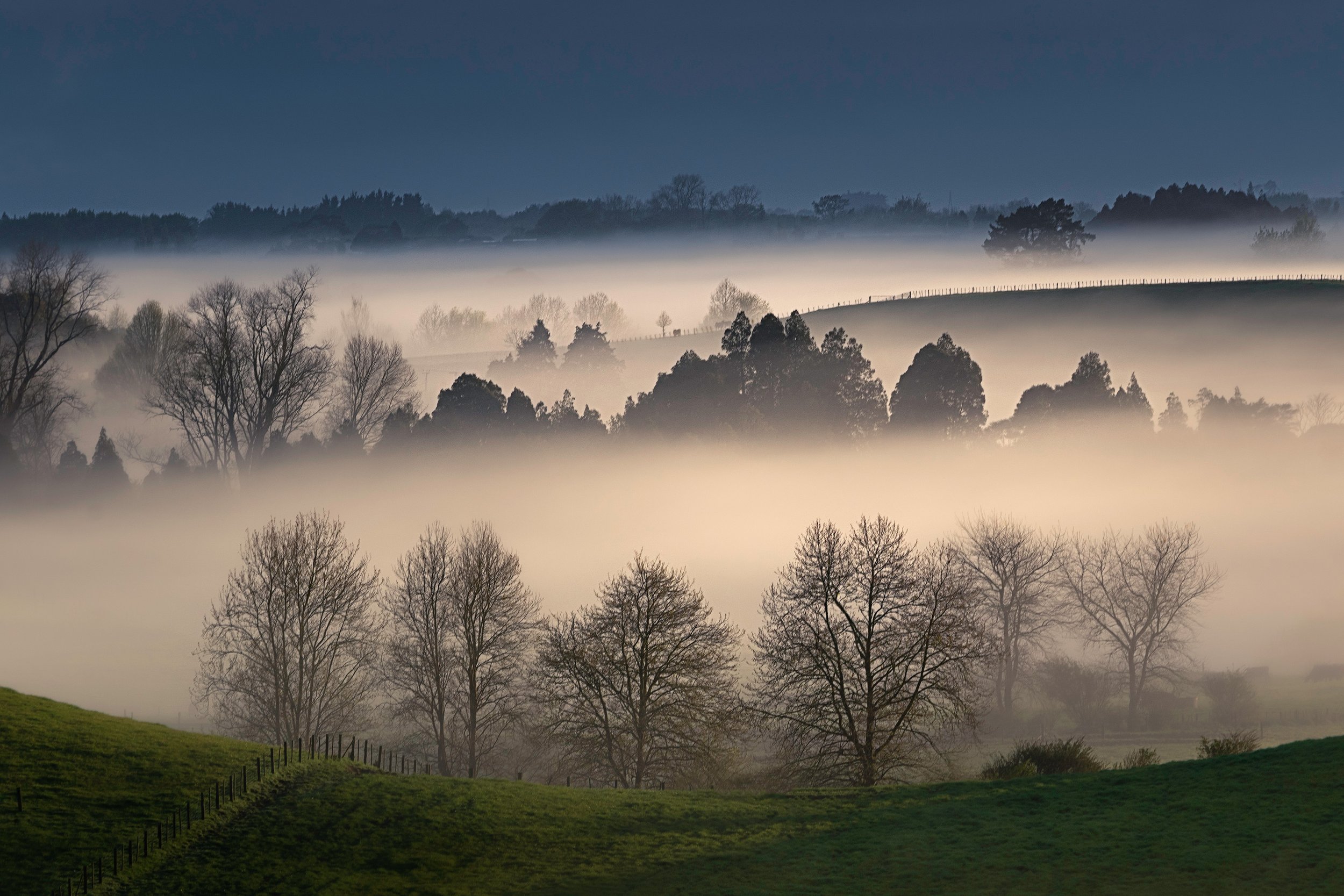
In this comprehensive article, which is part of a mastering misty landscape photography guide, you’ll learn how to predict and where to find misty landscapes in New Zealand.
This article explains what is meant by “Back Button Focus”, how to use it, what the advantages and disadvantages are, and if you should use it.
This article explains what is meant by “Exposure Stacking”, how to use it, what the exposure stacking techniques are, and which one is the best.
Local photographer Jos Buurmans shares his top 8 easily accessible landscape photography spots in the Hawke’s Bay.
This article explains what is meant by “Exposure Bracketing”, how to use it, what the advantages and disadvantages are, and when you should use it.
This article provides an outline of the equipment you need and the techniques you should learn to begin your landscape photography journey.
This article explains what is meant by “Exposing to the Right”, also known as ETTR, how to use it, what the advantages and disadvantages are, and if you should use it.
This comprehensive article explains why landscape photographers should shoot and edit in the RAW as opposed to JPEG. It also describes an end-to-end, uniform workflow that enables the capture of an image in the highest possible quality and that is preserved in the archival DNG format.
This comprehensive article describes how landscape photographers can use the exposure triangle to create a well-exposed image using the aperture, shutter speed and ISO camera settings and be creative when taking a photo by using these settings to affect the depth of field and motion blur.
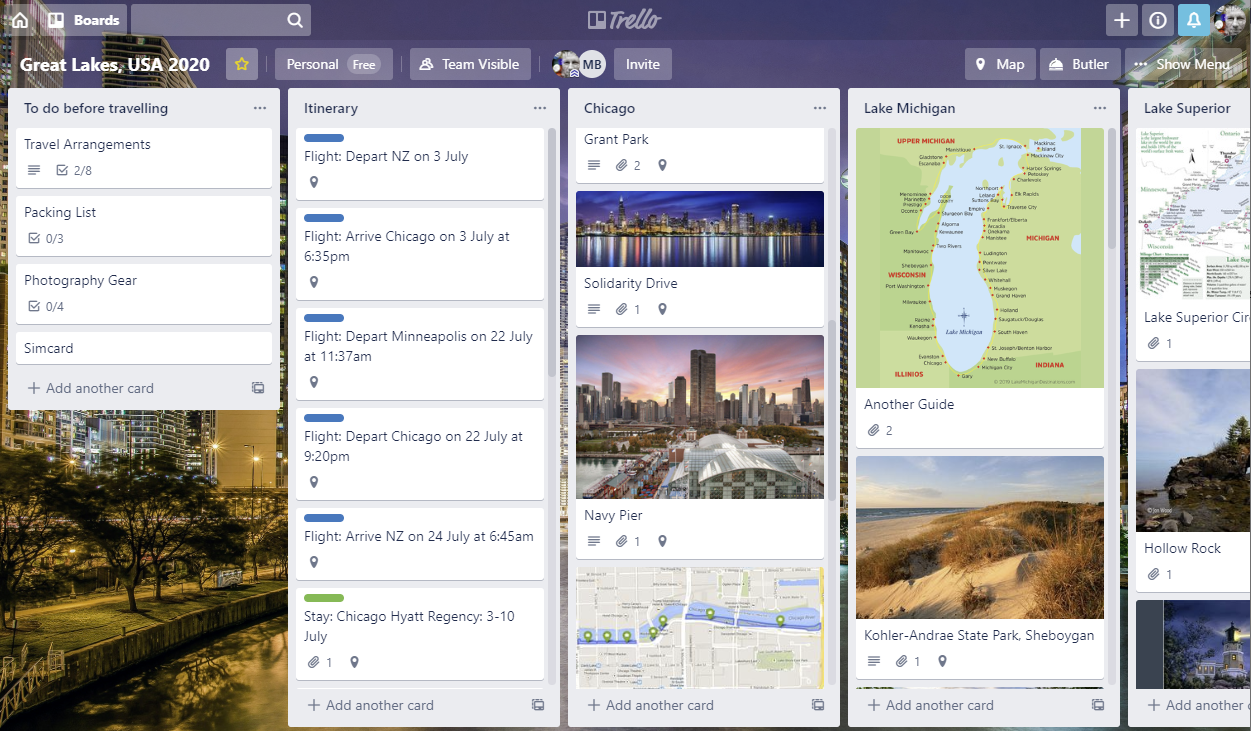
This article describes how to use the Trello App to record notes, itinerary details and photo locations when planning a photography trip. Includes a free download of the PDF version.
In this composition guide for landscape photographers, I cover composition from first principles through to the judgement calls that come with experience, including the rule of thirds, leading lines, negative space, and more, built around the same questions I ask participants on my Hawke's Bay photography workshops.