
The Ashburton Lakes: Learning to See Beyond the Reflection
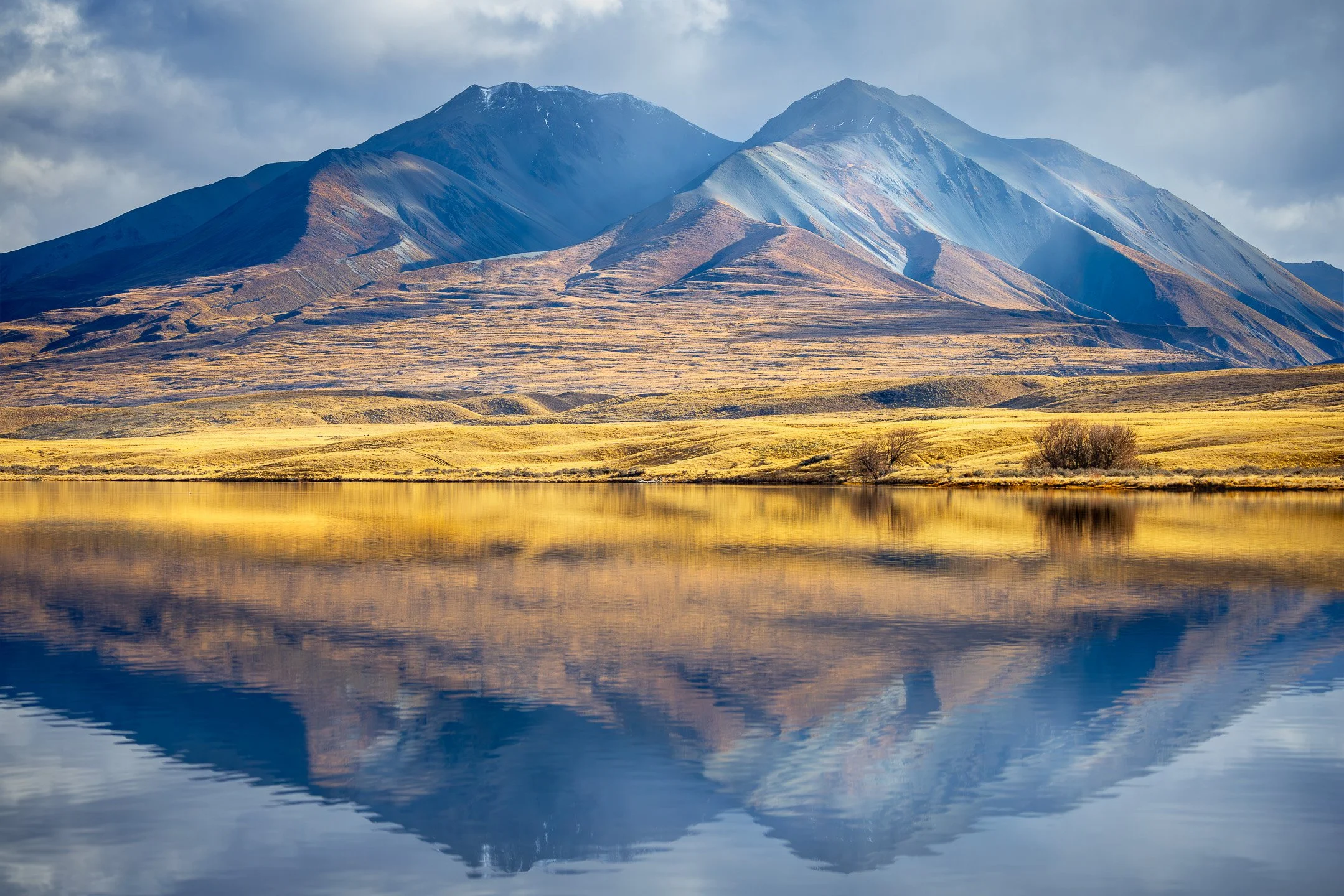
The Ashburton Lakes (Ōtūwharekai), nestled within Canterbury's rugged Hakatere Conservation Park, are a collection of glacial lakes located between Christchurch and Aoraki/Mount Cook. The region is known for golden tussock landscapes, mountain reflections, hiking trails, and rapidly changing weather.
The wind is the great influencer of the Canterbury high country. For a photographer standing on the gravel shores of the Ashburton Lakes, a windless moment is a perfect moment. The world splits in two, and you are left staring at a mirror so flawless it makes you catch your breath.
Most people visit Lake Camp and Lake Clearwater to capture that postcard perfection: the grand, sweeping symmetry of golden tussock terraces and rugged mountain peaks stretching across a mirror-like horizon, ideally during a stunning sunrise or sunset. But if you stay in one spot long enough, and look past the horizon, the landscape starts to tell a deeper story.
This is a visual record of my recent days spent exploring the Ashburton Lakes. It is a journey that began with the search for classic, scenic reflections. But, ultimately, it became a lesson in the art of slow looking, adapting to the conditions, and surrendering to the intimate abstracts.
The Power of the High-Country Vista
I arrived at Lake Camp about midday. I wanted to capture the spaciousness of the landscape while keeping an eye out for the smaller details hidden within it, both together telling the story of this place.
I had planned to be here for sunset as the light would fade opposite the lake, but with plenty of time to explore, I drove a short distance to Lake Clearwater for an 11km hike around the shore.
The weather was clearing from overnight rain, and the water grew calmer by the minute until there was nothing but blue sky. I was blown away by the clarity of the reflections: mountains, trees, and sometimes just pure shapes and textures. But, as I usually do, I focussed on my first impression: the wide landscape.
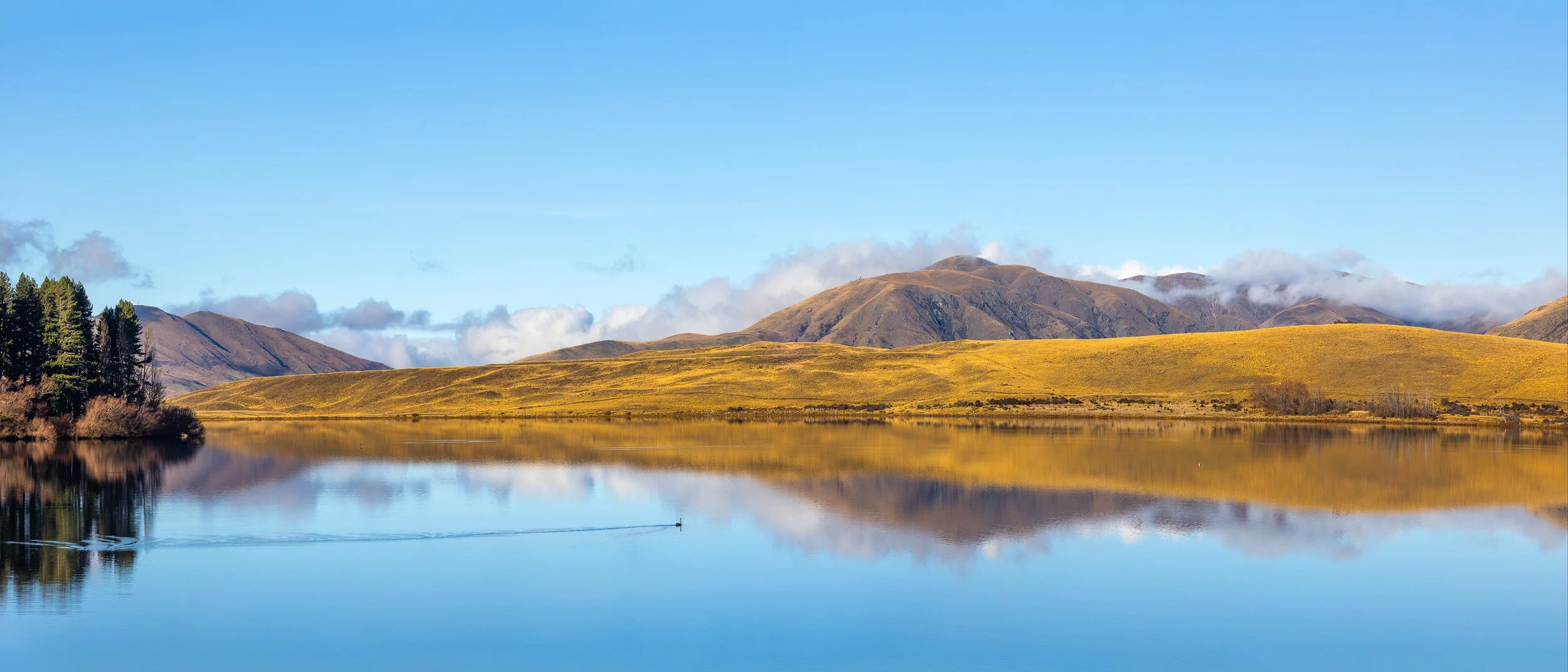
Wake
I returned to my original spot at Lake Camp just before sunset. The conditions were promising enough, and I settled into a routine that has become second nature after years of photographing landscapes. I adjusted compositions, watched the clouds, waited for the colour to arrive, and made photographs when it did. Everything unfolded more or less as expected. Yet as I packed up and walked back to the motorhome, I realised I hadn't felt particularly connected to the experience. I had captured the scene, but I hadn't really engaged with it. The photographs were competent, perhaps even beautiful, but they lacked the sense of discovery I was hoping to find.
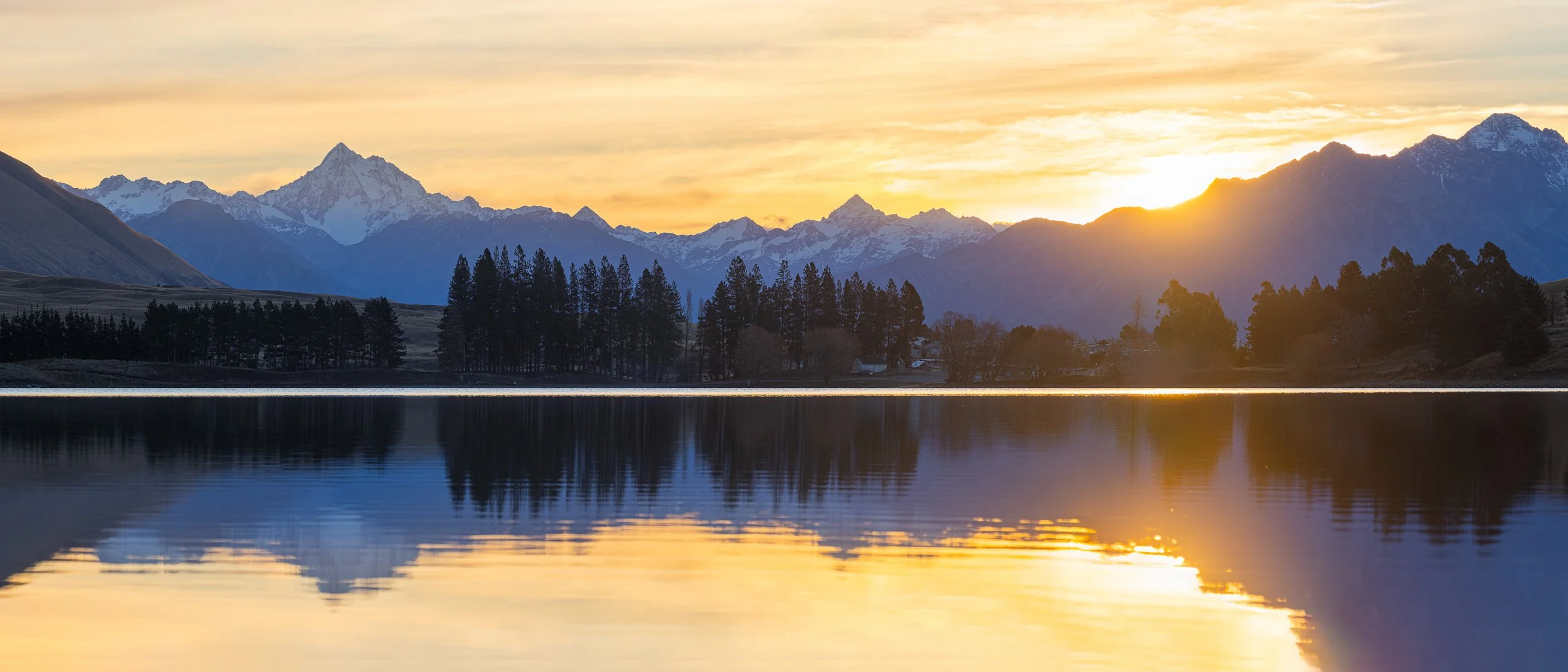
Lake Camp, Mountains and Mirror Panorama
Sitting in the quiet of my motorhome that evening gave me a chance to reflect on the day. I always keep a travel journal to log the conditions, locations, and technical notes of my photography sessions, but it also serves as a record of my internal experience. While writing, I noticed a distinct shift. I had become noticeably calmer, shedding the anxiety about 'forcing' the photography and the pressure of making my visit to the Ashburton Lakes count.
The High-Country Theatre: Volatility and Light
The next morning arrived cloudy with the odd shower, a weather shift that shattered the stillness of the previous day and forced a change in my photographic narrative. I didn't lose the calm water, but I lost the gentle mood; instead, I had to balance the peaceful mirror of the lake with the heavy storm clouds rolling over the mountains.
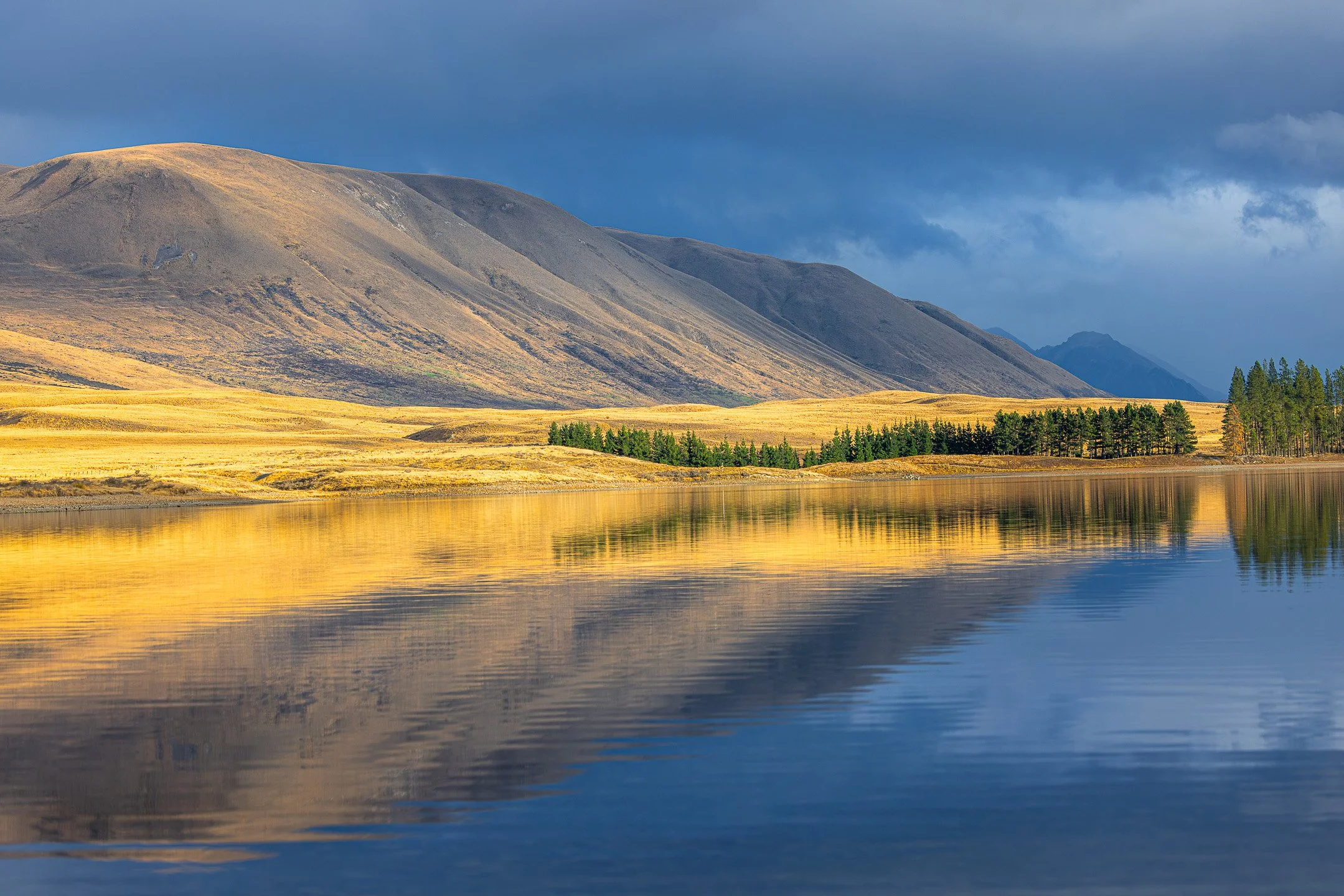
The Storm Breaks
I loved the selective spotlighting created by the combination of a low sun and a cloudy sky. And every now and then, a rainbow would appear. Each time the sun broke through, it lit a different stretch of the ridgeline, and I moved with it.
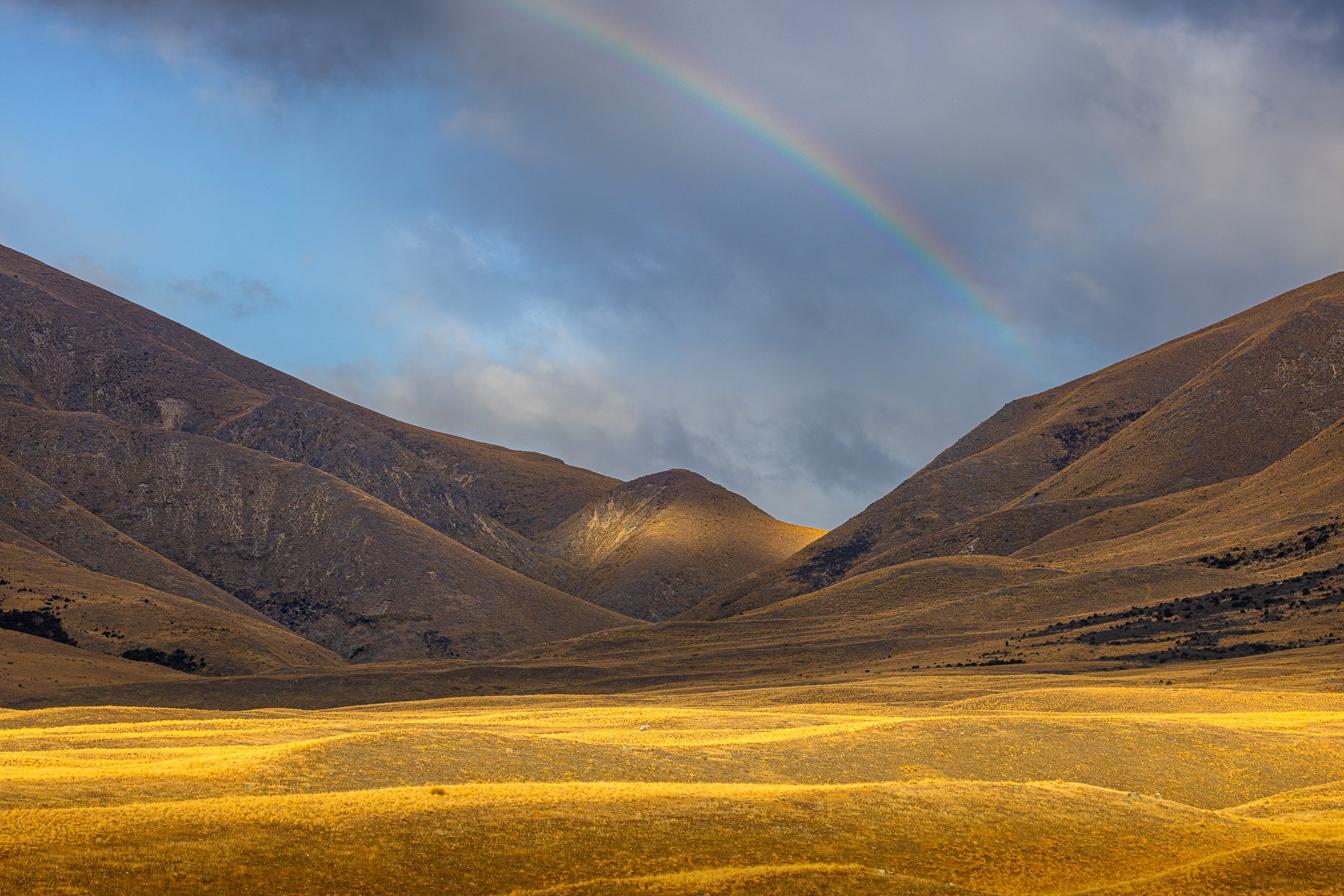
Passing Through
After a quick breakfast, I returned to Lake Clearwater to see how it was reacting to the weather. It was here that I captured what I consider my most pleasing image of the trip: a perfect mirror of the triangular-shaped twin peaks of Mount Potts, rendered in a complementary colour palette of cool blues and warm orange and yellow tussock highlights.
Potts Mirror
Shifting Focus: Beyond the Vista
On both days, I consciously tried to see beyond the obvious vistas. I wasn’t sure what I was going to find, but I have learned over the years that it takes time to find it. While moving around the lake, I regularly paused to just stand still. By observing the environment, listening to nature's sounds (flowing water, wind, birds), and smelling the flora, I gradually entered a zone of calm and openness where I became more attuned to nature's finer details. In my case, that meant that my eye fell on simple compositions that illustrate order in nature: repeating graphic elements and geometry emphasised by light or colour.
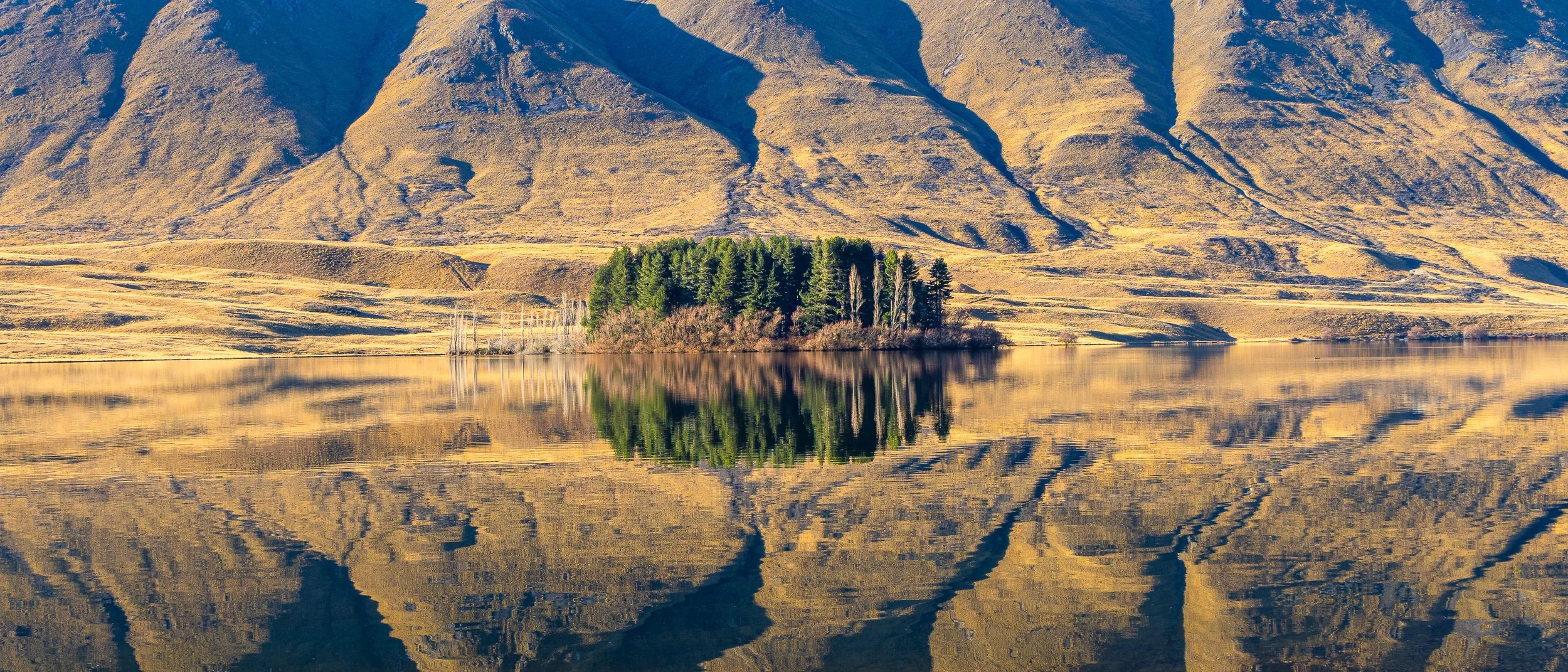
Mirror Island Panorama
Finding the intimate scene
One technique that helps is putting on the tele lens and scanning the world through the viewfinder until you notice something that makes you stop moving the camera. Just like appreciating an abstract image usually takes more time than appreciating a scenic image, noticing an abstract composition requires patience.
The following three images illustrate the transition from far to close, from wide to long, from landscape to abstract, from rock and soil to shapes, lines, and tones. From observing to interpreting. Here, I was no longer just documenting reality but translating it through my own artistic lens.
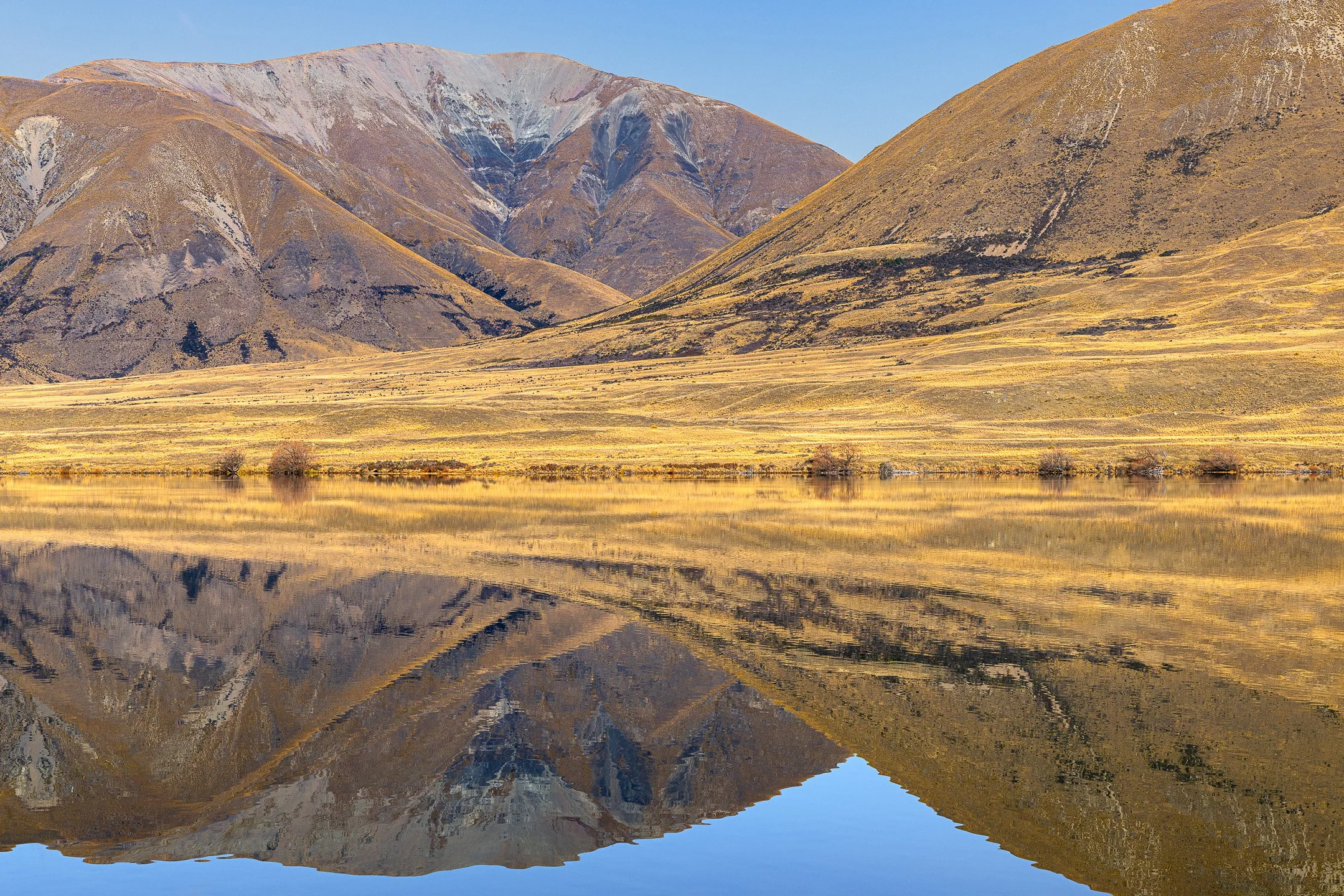
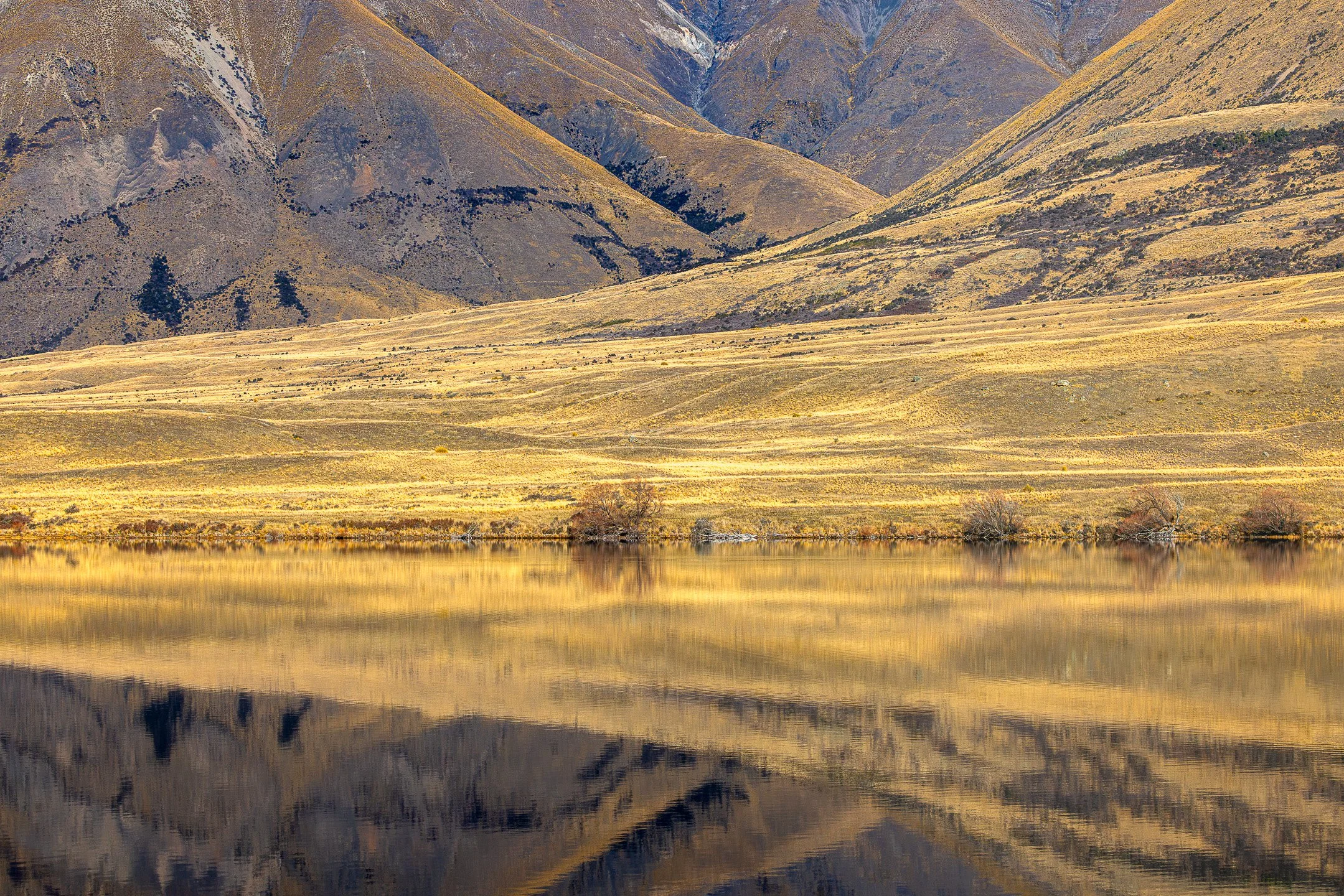
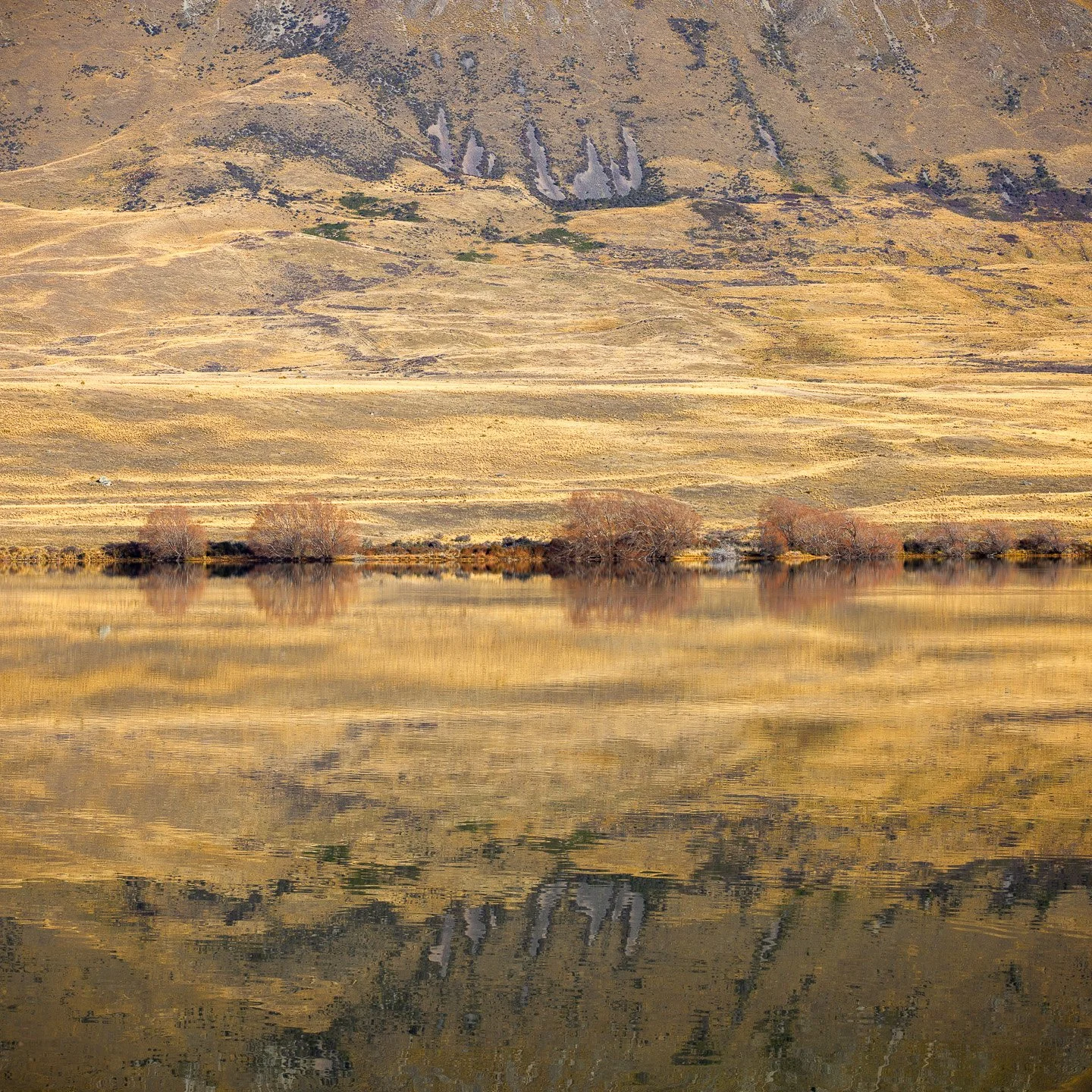
The climax of this ‘far-to-close’ journey occurred when I completely abandoned literal representation and looked straight down onto the surface of the lake. The end result was Clearwater Brushstrokes, a pure abstract of bleeding tree trunks and fine water ripples.
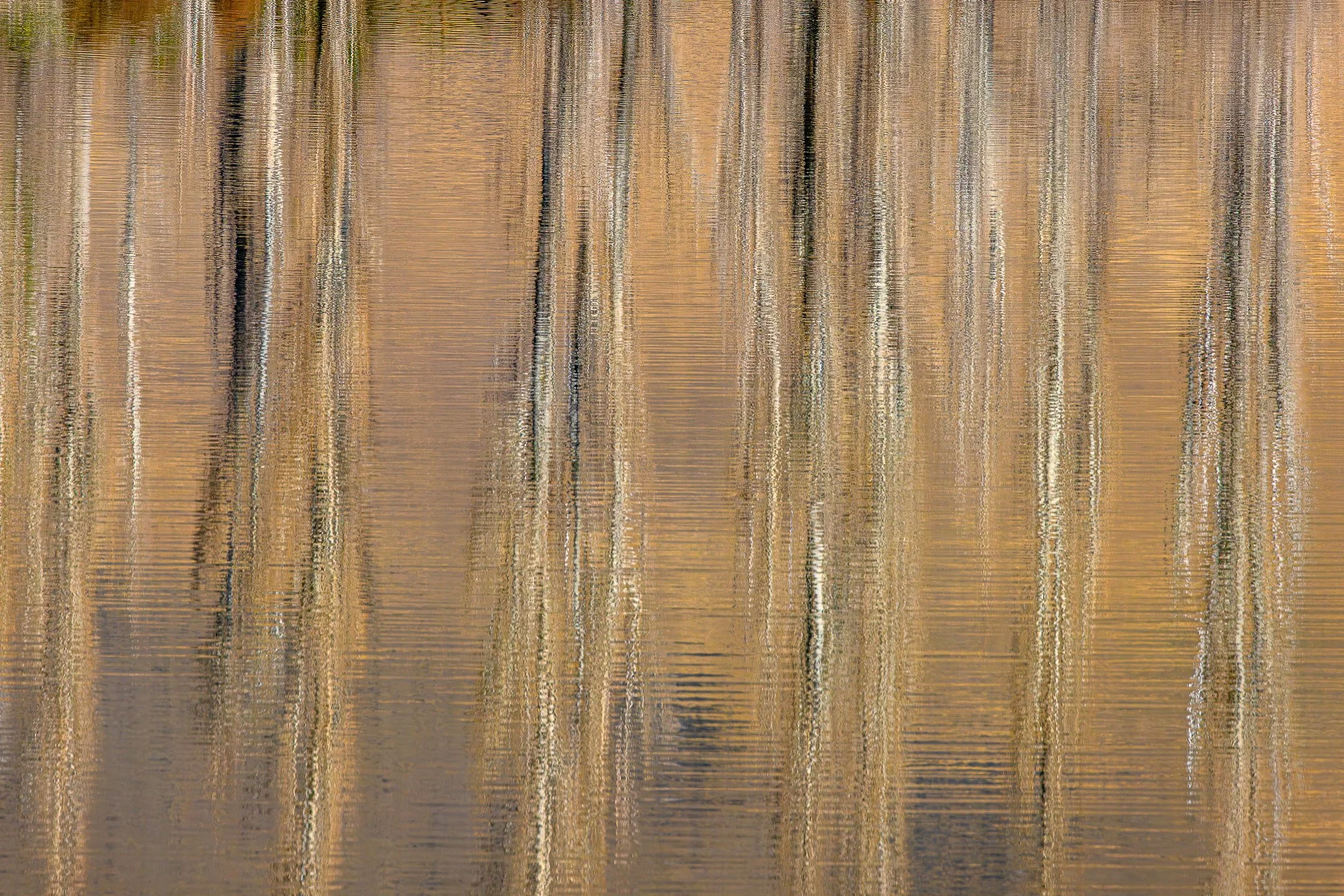
Clearwater Brushstrokes
Conclusion
The Ashburton Lakes will give you the postcard shot if that's what you came for: golden tussock, mirrored peaks, a sunset that does exactly what you hoped. But stay longer than that first shot takes, and the high country starts to offer something else, compositions that are quieter, stranger, and entirely your own.
For me, the real lesson of this trip was the value of staying put. When you give yourself permission to look slower, past the horizon and past the first impression, the landscape keeps offering something new. On that memorable walk around Lake Clearwater, standing on the water’s edge with my lens pointed straight down, I was no longer thinking about mountains or reflections at all, just the fine, bleeding lines the wind and light had left on the surface. That's what I'll go back for next time.
More Mirrored Waters
If these reflections caught your eye, the Mirrored Waters collection gathers more of that work from across the country.
Share this article
Earlier Trips and Stories
Two visits, two weeks apart, to the flysch rocks of the Kaikōura coast. The same formation gave me a jagged sunrise the first time and a very different answer the second.