
One Morning at Lake Tūtira
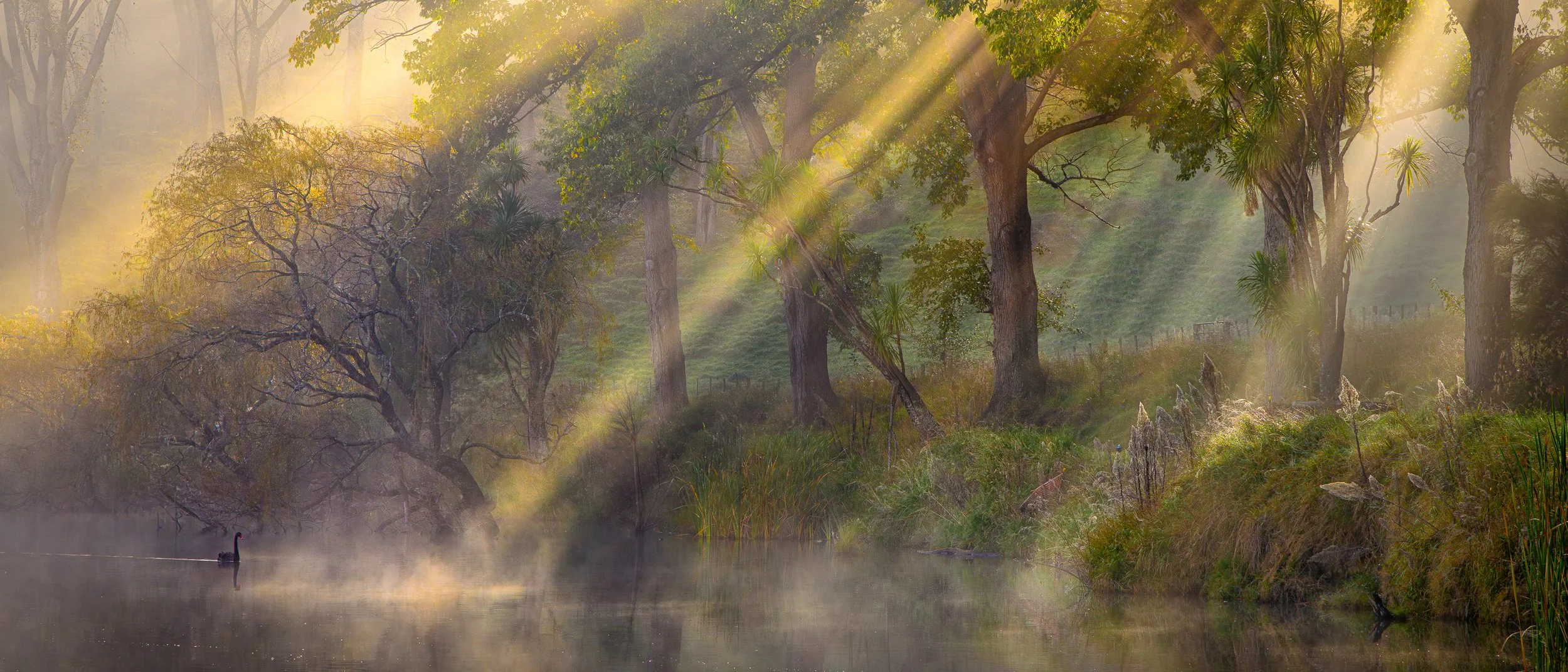
Tucked into the rugged hills of the Hawke's Bay region on New Zealand’s North Island, Lake Tūtira is a hidden gem located roughly halfway between Napier and Wairoa along State Highway 2. This tranquil regional park and wildlife refuge is renowned for its rich birdlife, fishing, weeping lakeside willows, and walking tracks, making it a peaceful, atmospheric sanctuary deeply cherished by locals and visiting photographers alike.
I have been to Lake Tūtira many times. I know its willow trees, the character of its water, and the exact way autumn colour collects along the southern shore. I know precisely what it can look like at first light when the conditions align, but on this particular morning, I could not see a single bit of it. The fog was total, a heavy white erasure that reduced the lake to nothing but sound and suggestion. I wasn't working with what was actually visible in front of me, but rather with memory.
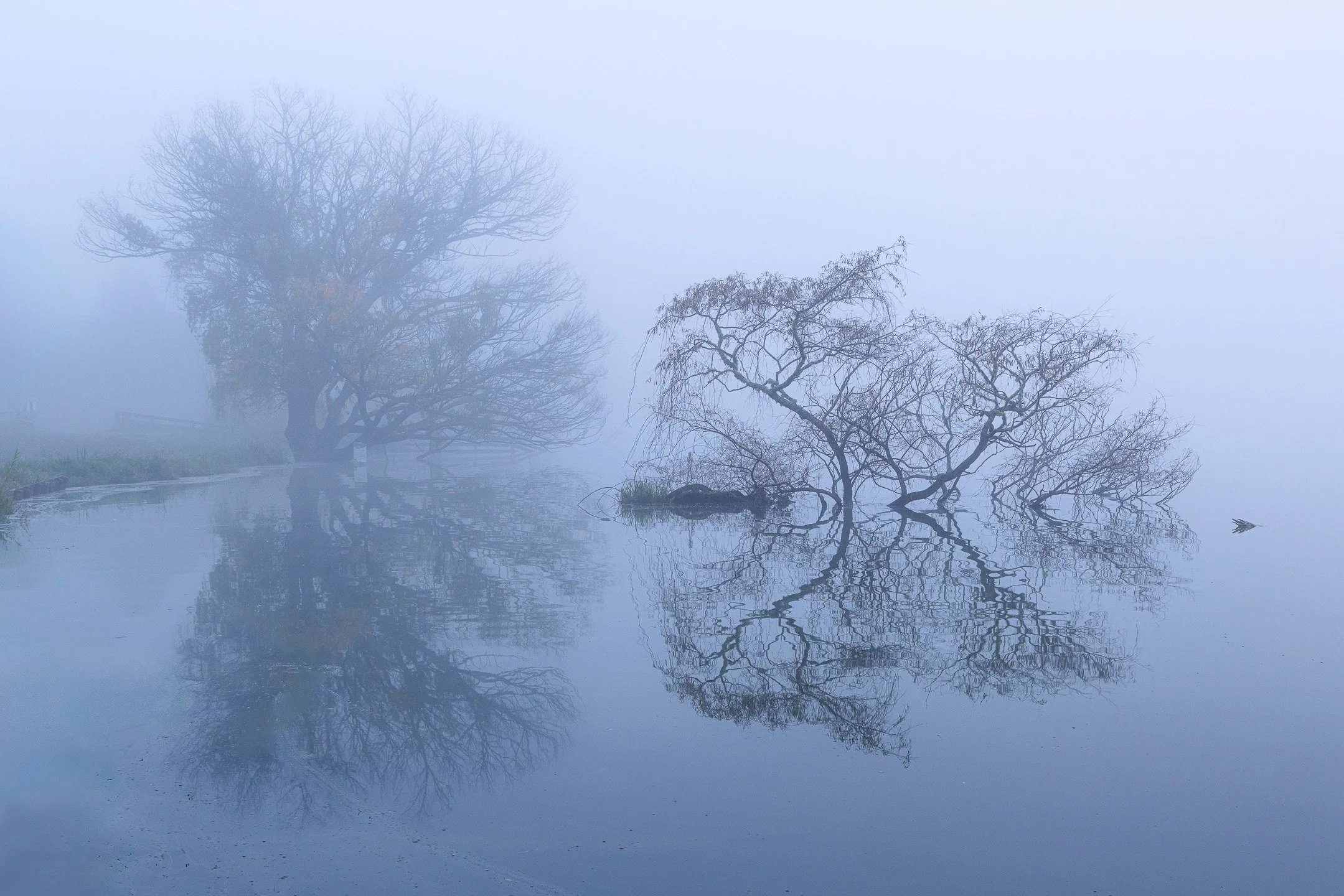
The Quiet Before
I walked along the water's edge, waiting and watching, looking not for the lake I already knew, but for whatever the fog was prepared to offer today. When I looked up into the trees, I could see that the sun was coming. Close to the bank, a willow canopy emerged from the blank white wall, showing warm gold against nothingness as its branches reached down toward their own reflection in the still water below. Anticipation was building.
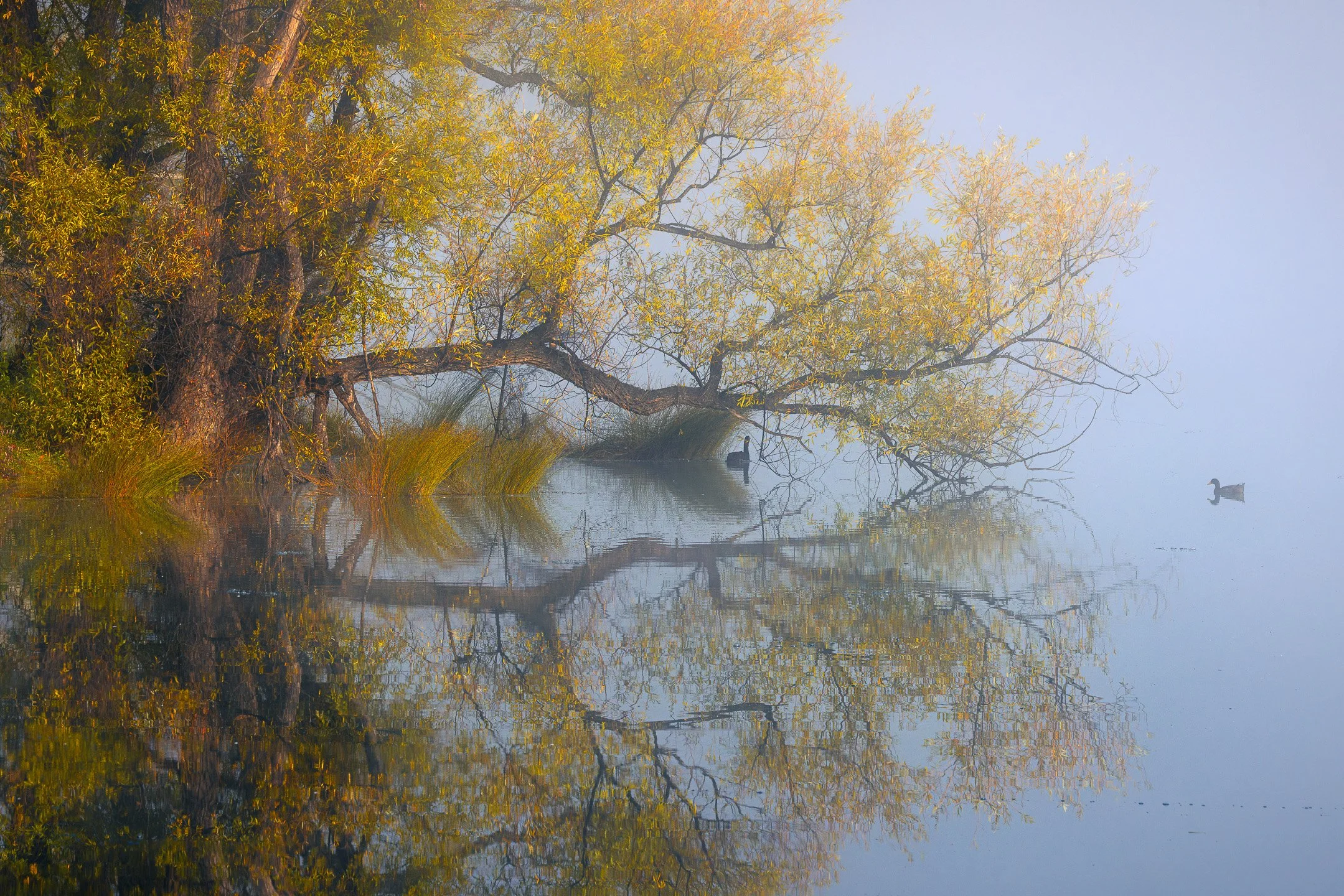
A Warm Haven
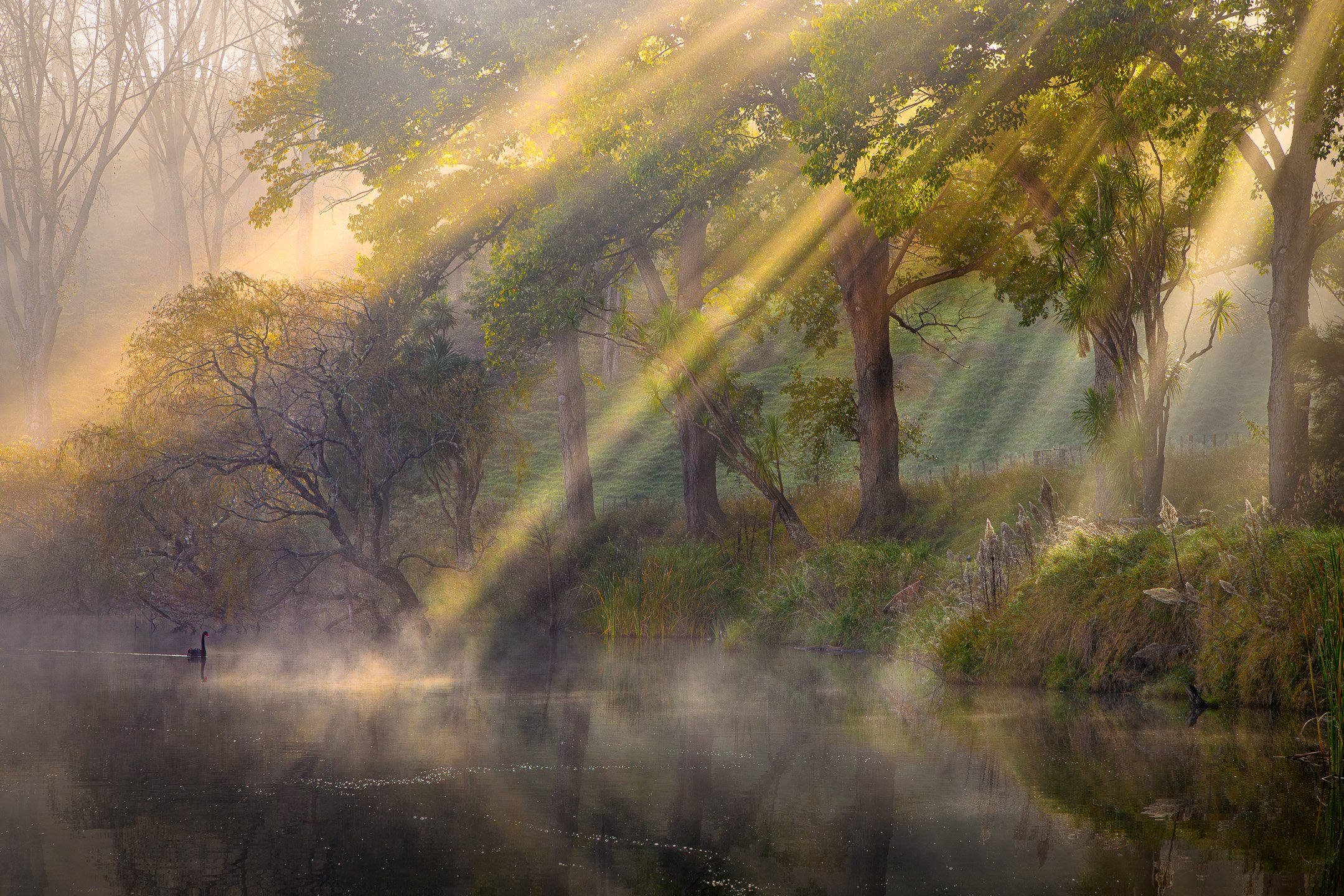
Then the light began to shift. It happened gradually through a gentle warming and thinning of the air until the sun finally found a gap in the overhead canopy, driving concentrated shafts of light straight down through the mist to the water. These crepuscular rays were formed by the very same fog that had completely hidden the landscape an hour earlier, and the lake reflected them back beautifully.
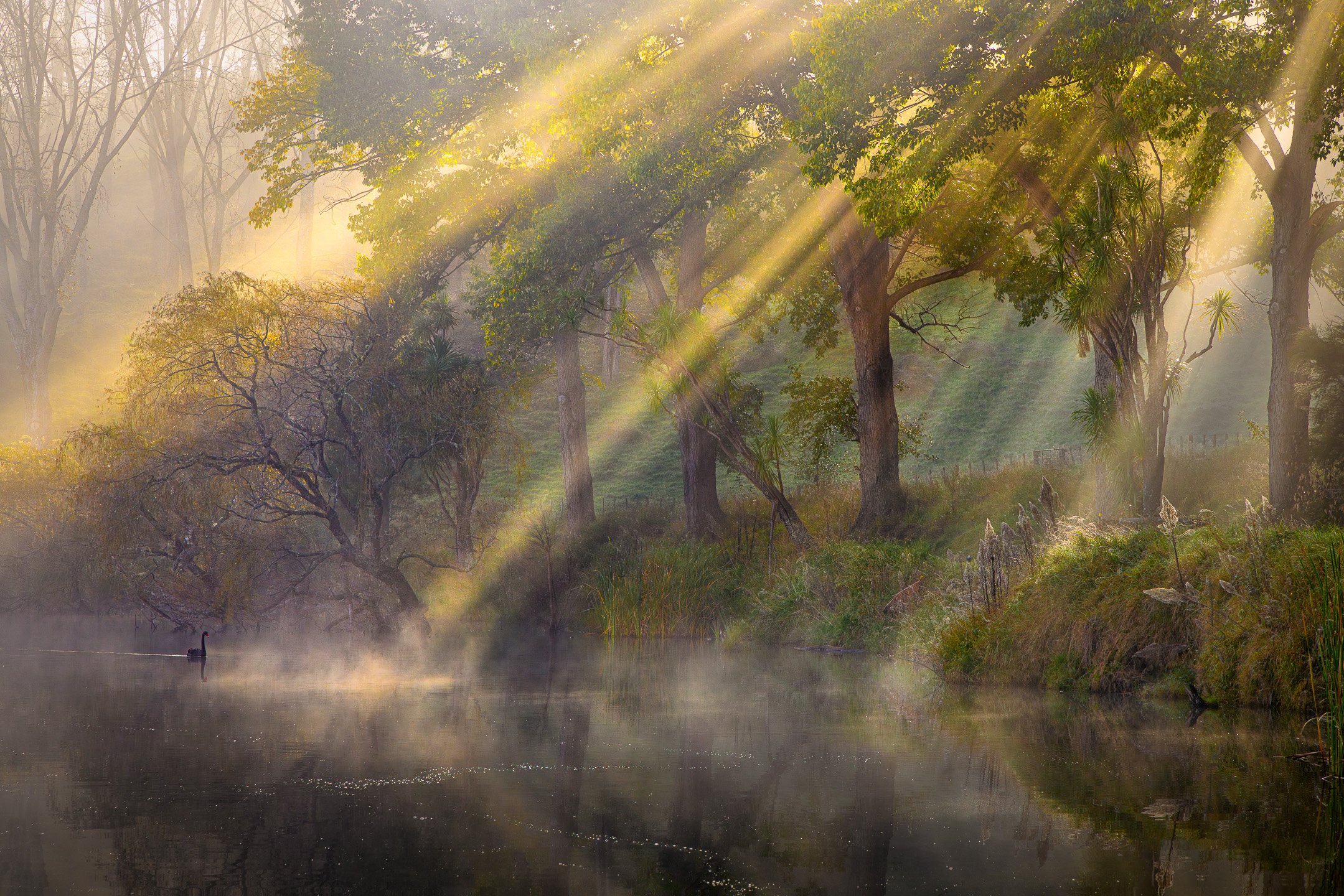
A Piercing Daybreak
Technical Insight: Capturing Sunbeams
Crepuscular rays require particles in the air to catch the light. To maximise their drama, I positioned myself in the shadows looking slightly toward the sun (backlighting) and stopped down the aperture to emphasise the sharp, directional paths of the light columns.
Further along, where an old willow leans low over the lake, I stumbled across something I hadn't anticipated. I am drawn to this tree on every visit, because its shape, still water and backlit light make it irresistible to photograph. Its heavy branch and its reflection formed a perfect arch, and just at that moment, a black swan glided straight through it. The geometry felt precise and accidental in equal measure, and I ended up titling that photograph The Arch and the Grace. It was an image that came entirely from the fog, and it could only have ever happened under those exact conditions.
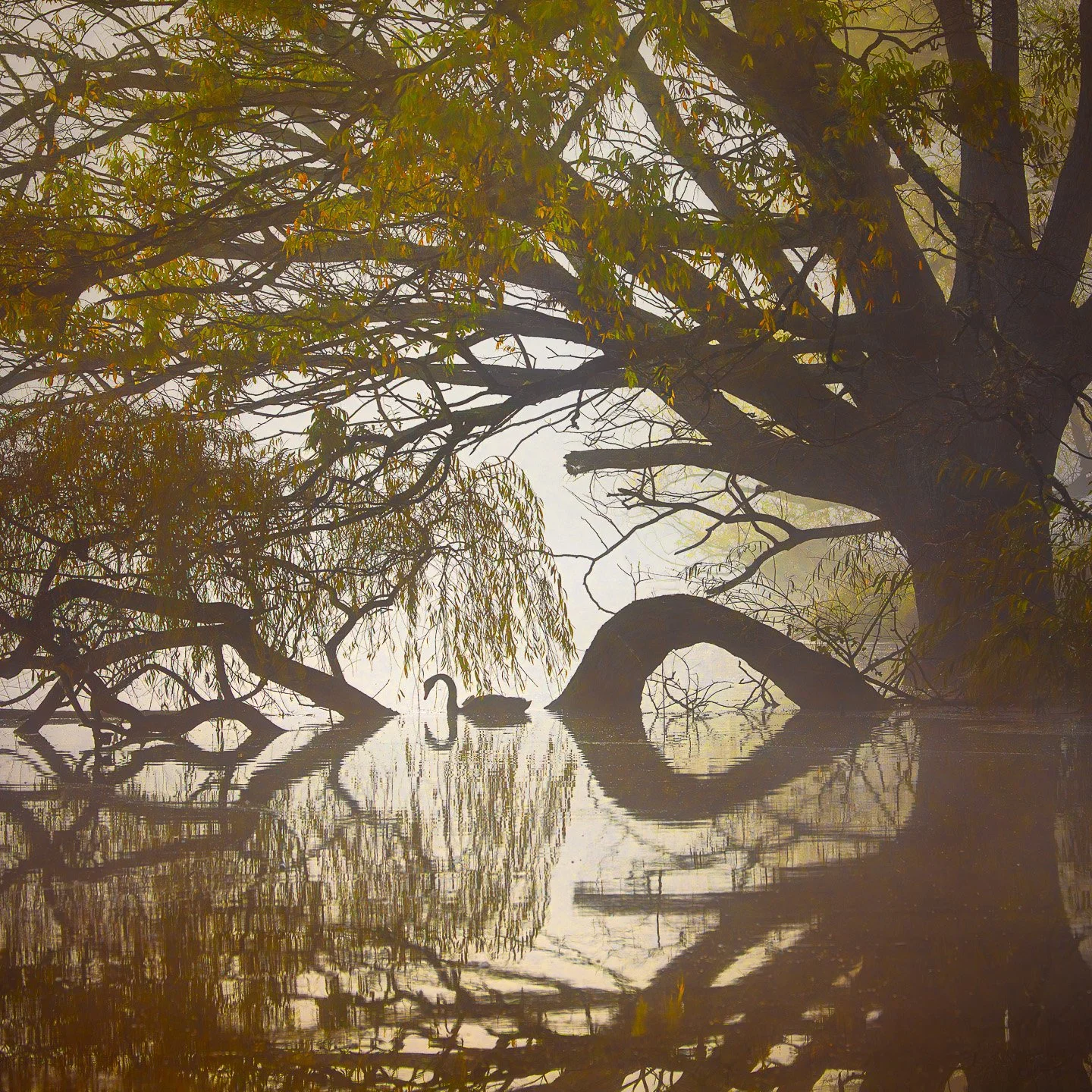
The Arch and the Grace
Technical insight: Capturing Moving Subjects
A common trap in landscape photography is assuming that locking your camera onto a sturdy tripod gives you permission to drop your shutter speed indefinitely. While a tripod eliminates camera shake, it does absolutely nothing to stop subject motion.
When dealing with live elements - whether it is a swan gliding through a reflection, wind-blown reeds along the shoreline, or birds in flight - the movement of the subject dictates your minimum exposure threshold. To capture sharp textures and clean edges, you must prioritise a fast shutter speed (typically 1/250 or higher depending on the speed of the action) to freeze the motion within the frame, raising your ISO or widening your aperture to compensate for the lost light. Always identify the fastest-moving piece of your composition and expose to control it.
By the time I reached the far shore, the fog had mostly lifted. The autumn trees along the southern bank were fully visible now, their colour reflected cleanly in water that had settled back into something calm and legible. The hills were clear, the light was warm, and the lake looked exactly the way Lake Tūtira is supposed to look on a fine autumn morning.
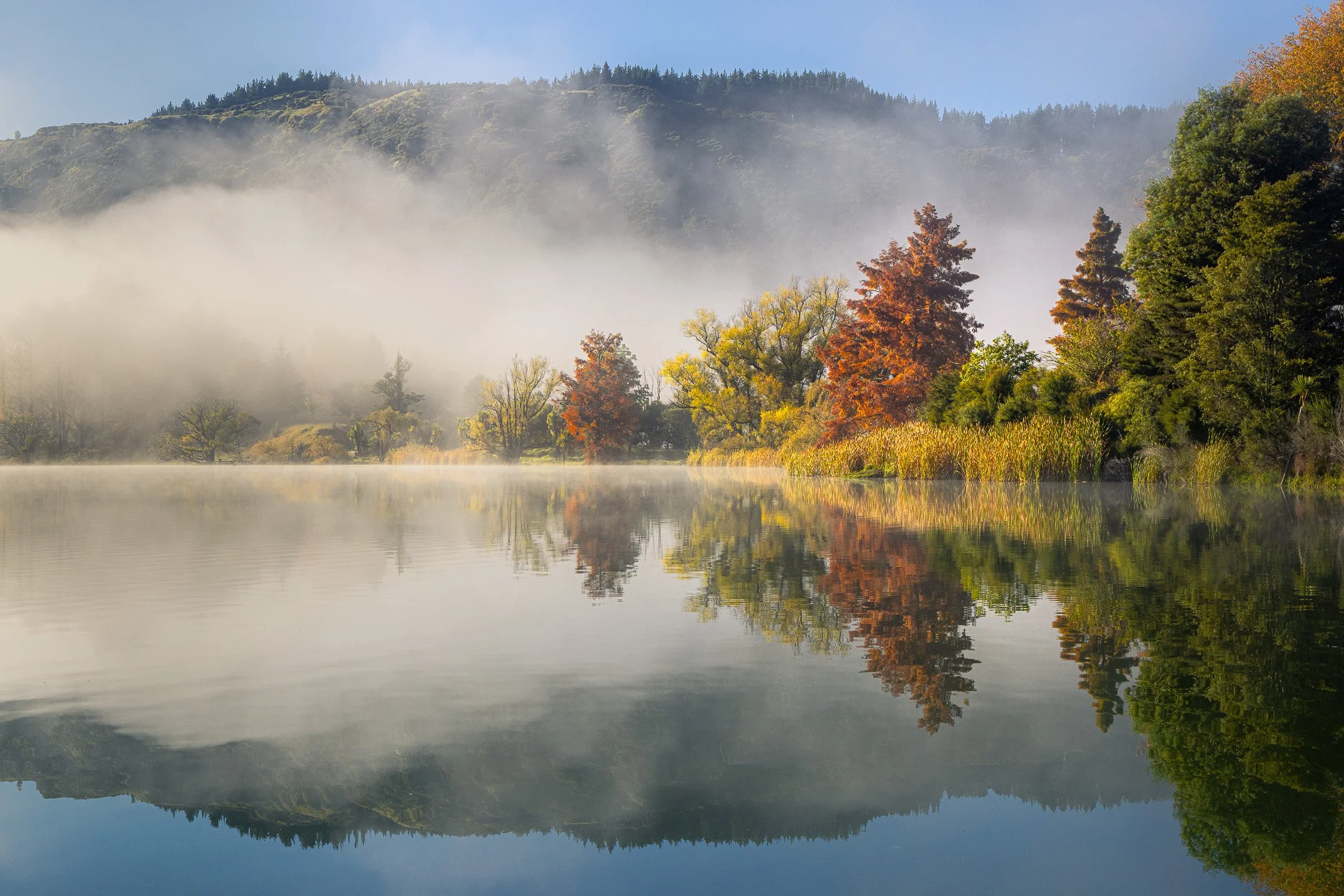
Muted Autumn Mirror
It was genuinely beautiful. But I had already been there for two hours before any of it arrived, standing in the fog with a camera, working with what I couldn't see rather than what I could. Those earlier frames, made in the cold and the white and the quiet, are the ones I keep returning to. That’s why I keep returning.
From a Fleeting Morning to a Lasting Print
The mist never hangs over the water for long, and that rare alignment of perfect stillness, soft light, and shifting fog disappears the moment the sun climbs too high. To capture those fleeting, quiet textures permanently, a selection of work from the Lake Tūtira collection is available as archival fine art prints. Printed on museum-grade cotton rag paper, they preserve the delicate, painterly transitions of the morning mist with a physical depth that a digital screen can't replicate, letting a piece of this tranquil shoreline live on your wall.
This is one part of a longer story, see the full Hawke's Bay Landscape Photography page for the rest of the galleries, stories, and workshops behind it.
Join the journey
Subscribe to my monthly newsletter to receive exclusive behind-the-scenes stories, printing insights, and early access to new fine-art print releases directly in your inbox.
Share this article
Other stories you may find interesting

Snow doesn't settle on Te Mata Peak often — only a handful of mornings since I moved to Hawke's Bay. This time I was ready for it, walking my familiar trail before dawn as sleet gave way to sun, cold hands and all.