
Two visits to the sea-carved flysch formations of the Kaikōura coast.
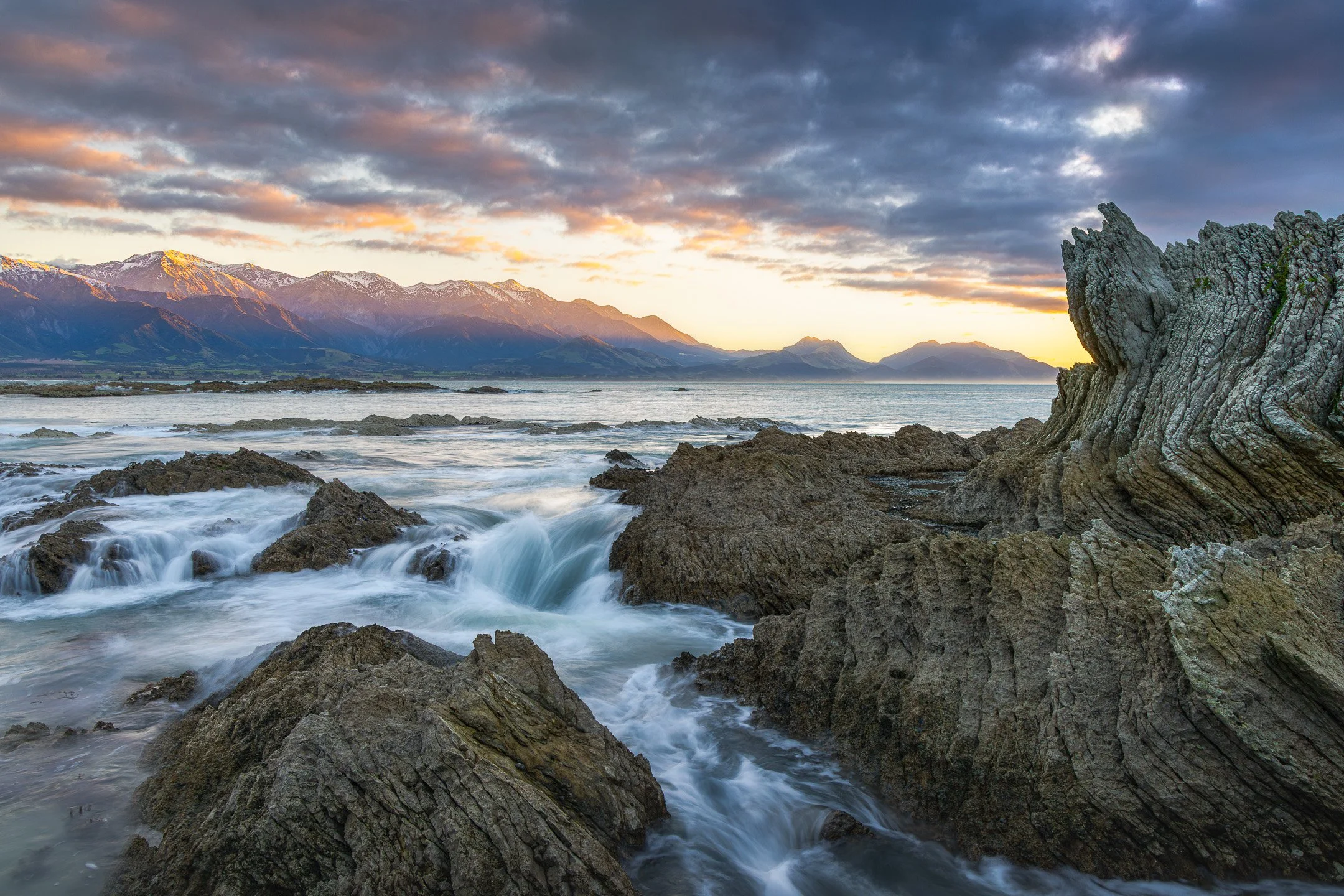
Kaikōura sits on a narrow strip of coastline on the northeast of the South Island, where the Seaward Kaikōura Range rises steeply almost directly from the sea. The town is best known for its marine life, sperm whales, dusky dolphins, and a fur seal colony along the peninsula. However, the coastline itself is just as striking, shaped by tectonic uplift and marine processes into dramatic rock platforms, reefs, and wave-cut shelves that shift character depending on the tide and the light.
The Arrival: Finding the Flysch on the Kaikōura Esplanade
I was at the start of a few weeks on the South Island, the motorhome parked up on the outskirts of town, with the plan of coming back this way again before the trip was done. Kaikōura was meant to be a brief stop, a stretch of the legs before pushing further south. I'd spent the afternoon on the Kaikōura Peninsula Walkway, stepping carefully around pup seals that seemed unbothered by my presence and looking out over some of the finest coastal views I'd seen in weeks.
By the time I turned back along the Esplanade, my mind was on what I'd come here to photograph. A coastal scene with sharp rising mountains as the backdrop was one of the shots I'd set out to find. I had the frame half composed in my head before I'd even reached the right spot.
Then I saw the rocks and my plan abruptly fell away. They rose out of the scrub just off the path, folded and buckled into shapes that looked less like stone and more like something caught mid-movement and frozen there. I found out later that this product of tectonic collision that stretches the coastline is called flysch, and the formations at Kaikōura are a well-known example of this.
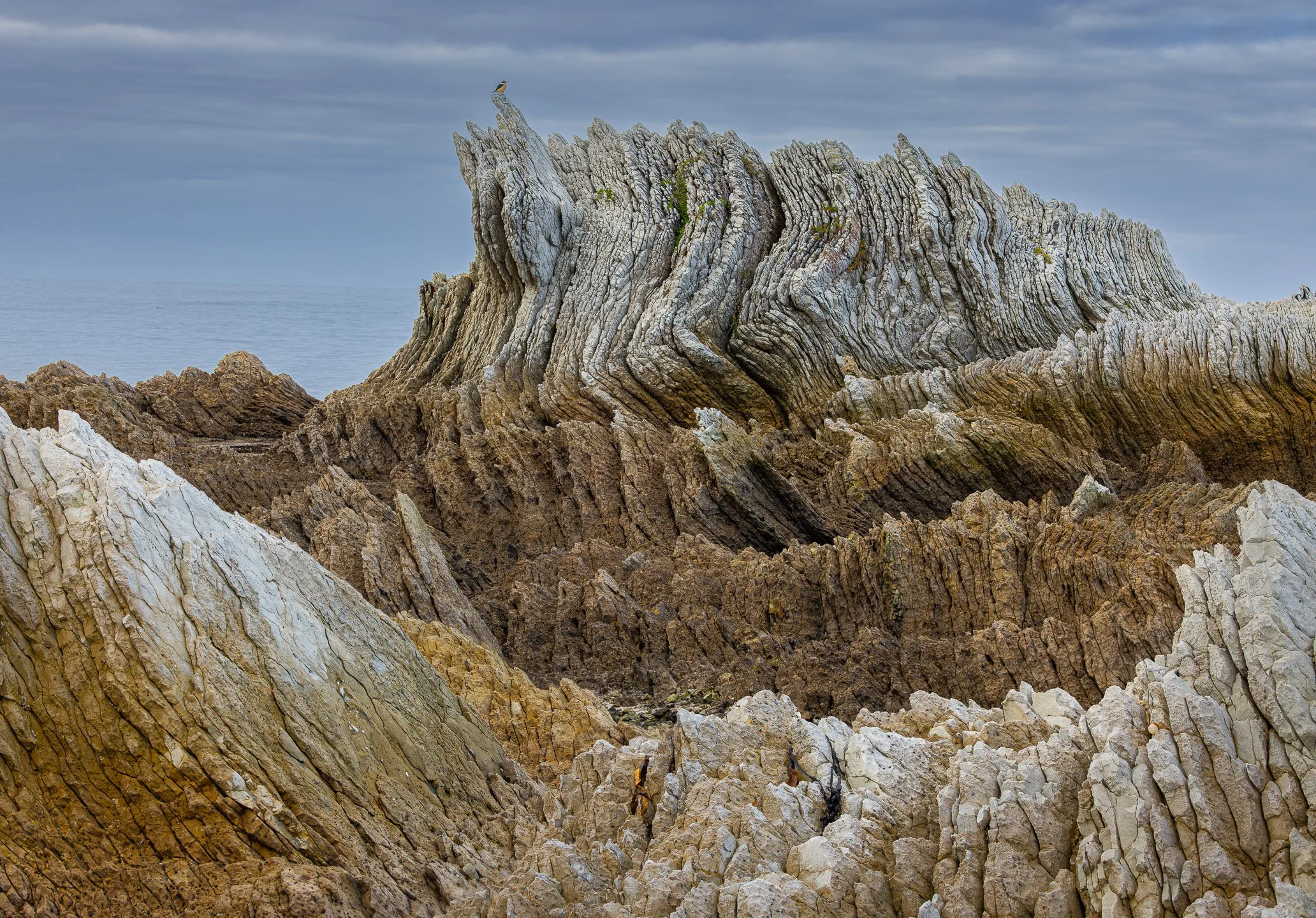
Stone in Motion
While studying the rocks from a distance with my tele lens, I noticed a kingfisher that was perched on the tip of one spire, watching the water, seemingly unconcerned with the fact that it had just become the subject. I decided then that this spot was going to be the focus for the rest of my time there.
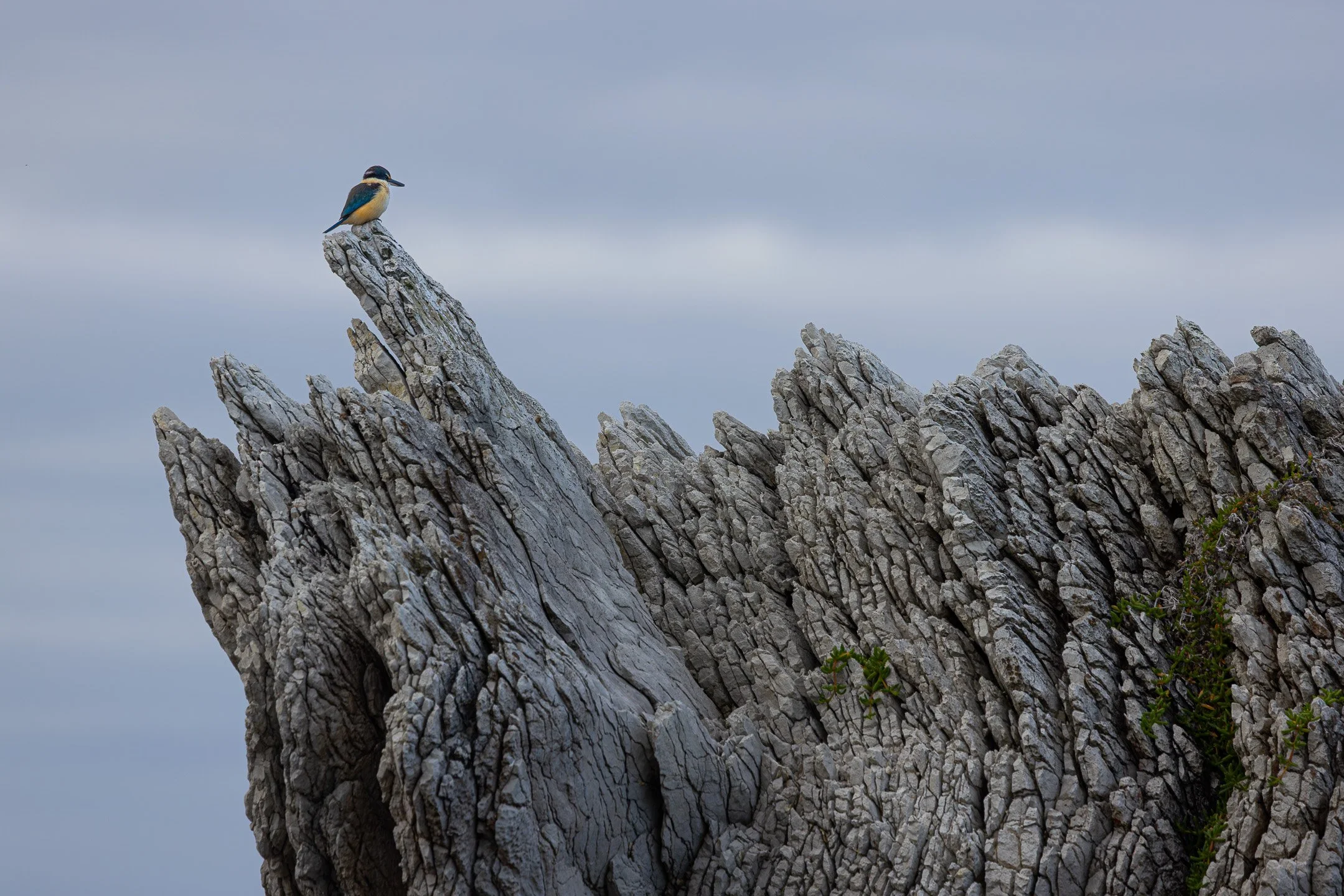
Kingfisher on Flysch
I went back before first light the next morning, tripod in my hand, the town still dark behind me. There's a particular kind of waiting that comes before a sunrise shoot at a place you don't yet know well, half anticipation and half doubt, since you can't be certain what the light will do.
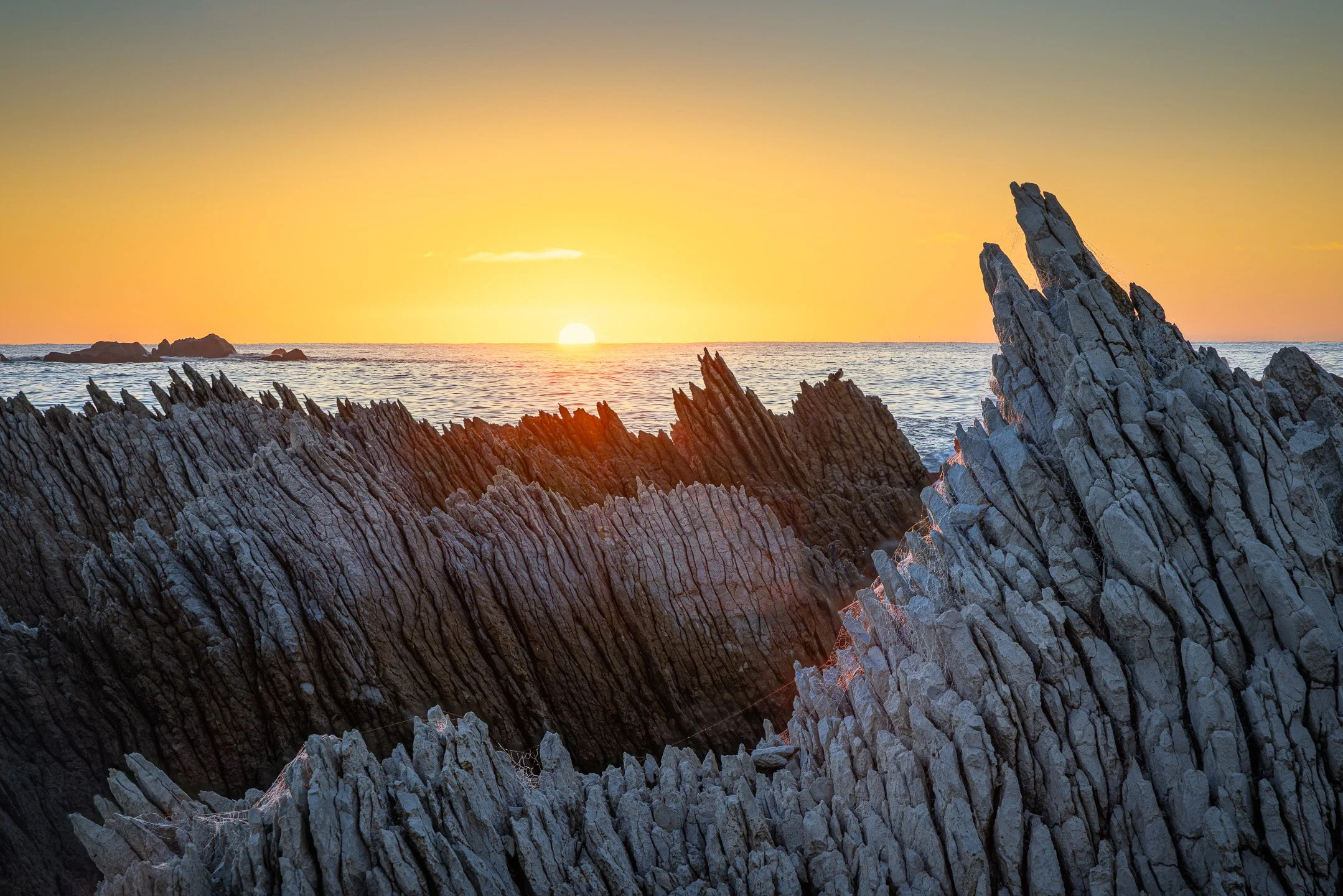
Jagged Sunrise
The sun came up over open water and struck the spires from behind, rimming their edges, while light off the sea was just enough to bring out the seams and fissures. Somewhere among the points a spider had strung a web, invisible until the light caught it.
I zoomed in, letting the jagged line of the formation run the full width of the frame, the sun small and quiet above the horizon, more source of light than subject. The sky went the colour of the inside of an apricot, but the real interest was in the rock, texture built on texture, some ridges dark and closed off, others glowing faintly against their neighbours. Strip away the colour and what's left is still a kind of drawing, the sort you notice only when the light is low enough to find it, every line the sea had etched into the stone thrown suddenly into relief.
Then, within 20 minutes, the light shifted enough that the whole scene opened up. I turned my view 90 degrees, and there was my original plan. The Seaward Kaikōura Range stood lit gold along its ridgeline while the water in front of it moved calmly. This was the coastal-scene-with-mountains I'd set out that first day to find. The rocks I'd walked past were doing the work of holding the whole image together in the foreground, giving the eye somewhere to enter before it travelled up toward the peaks.
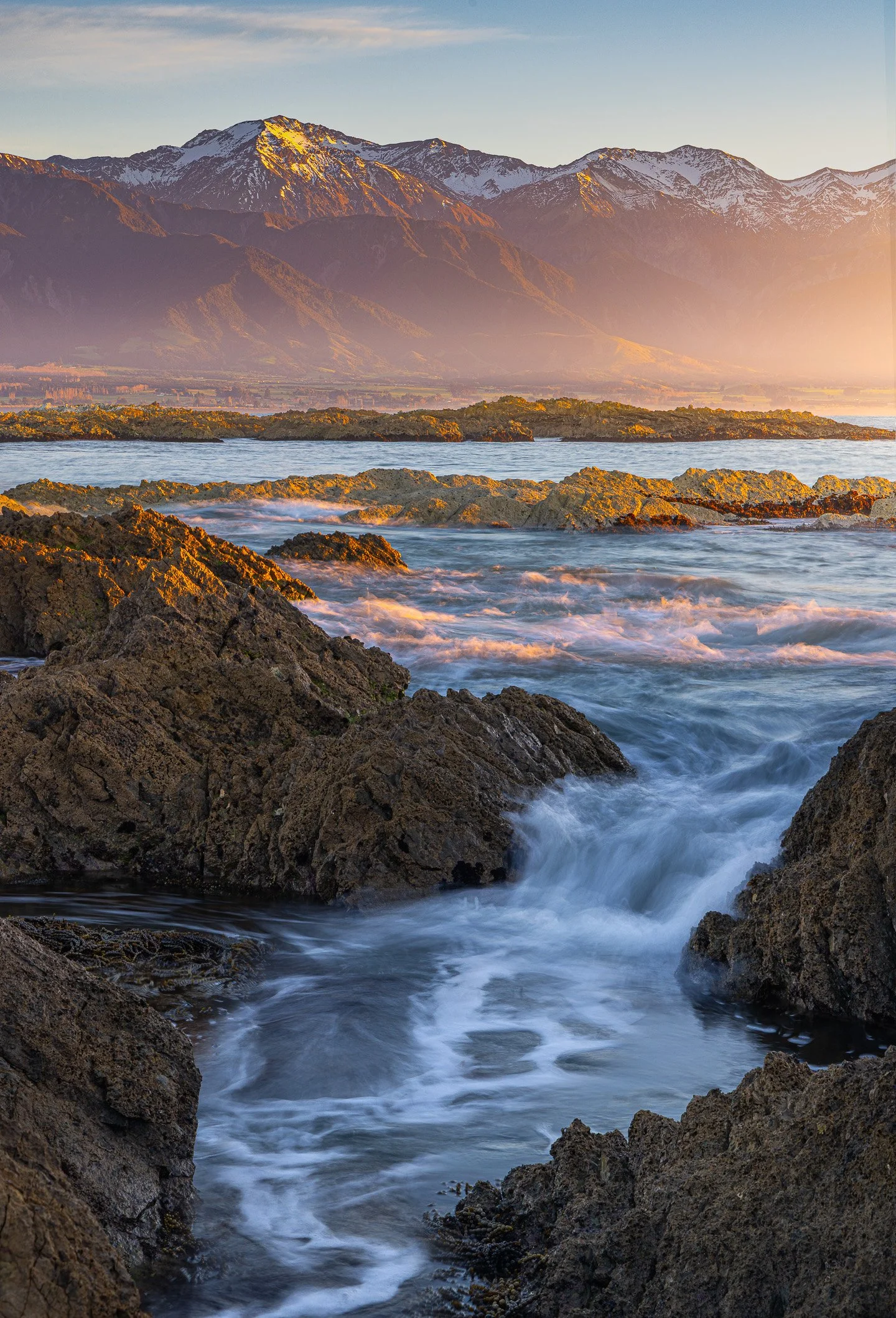
Channel to the Mountains
Looking at the two frames side by side afterwards, taken minutes apart from nearly the same spot, yet they were so different from each other. One was almost abstract, form reduced to its barest outline. The other was expansive and layered, everything I'd hoped for on my first walk along the Esplanade. Neither was more true than the other. The rock hadn't moved and the mountains hadn't shifted; only the light had changed, and with it, everything I could see in front of me. That's the part I still find exciting, however many mornings I spend doing this. The place never changes, but what I'm able to perceive of it does, and that gap between the two is where the work actually happens.
The Return: South Bay and a Passing Storm
I came back through Kaikōura on the way home. I had done a lot of hiking at the Ashburton Lakes and in the Arthur’s Pass area. By the time I reached the coast the second time I was a different traveller than the one who had walked the Peninsula Walkway a fortnight earlier. I knew the place now. And I was determined to find another spot to photograph the coastal edge.
I began that evening on the other side of the Peninsula, South Bay, where the coast curves out in a long arc of dark, pebbled sand before the rock and reef take over. The light hadn't dropped into colour yet, everything still held in that soft grey-blue hour before the sun properly commits to going down, and a long exposure pulled the incoming sea into pale, unbroken lines. There was no urgency in it. Just the tide arriving, again and again, in slow ribbons against the dark sand.
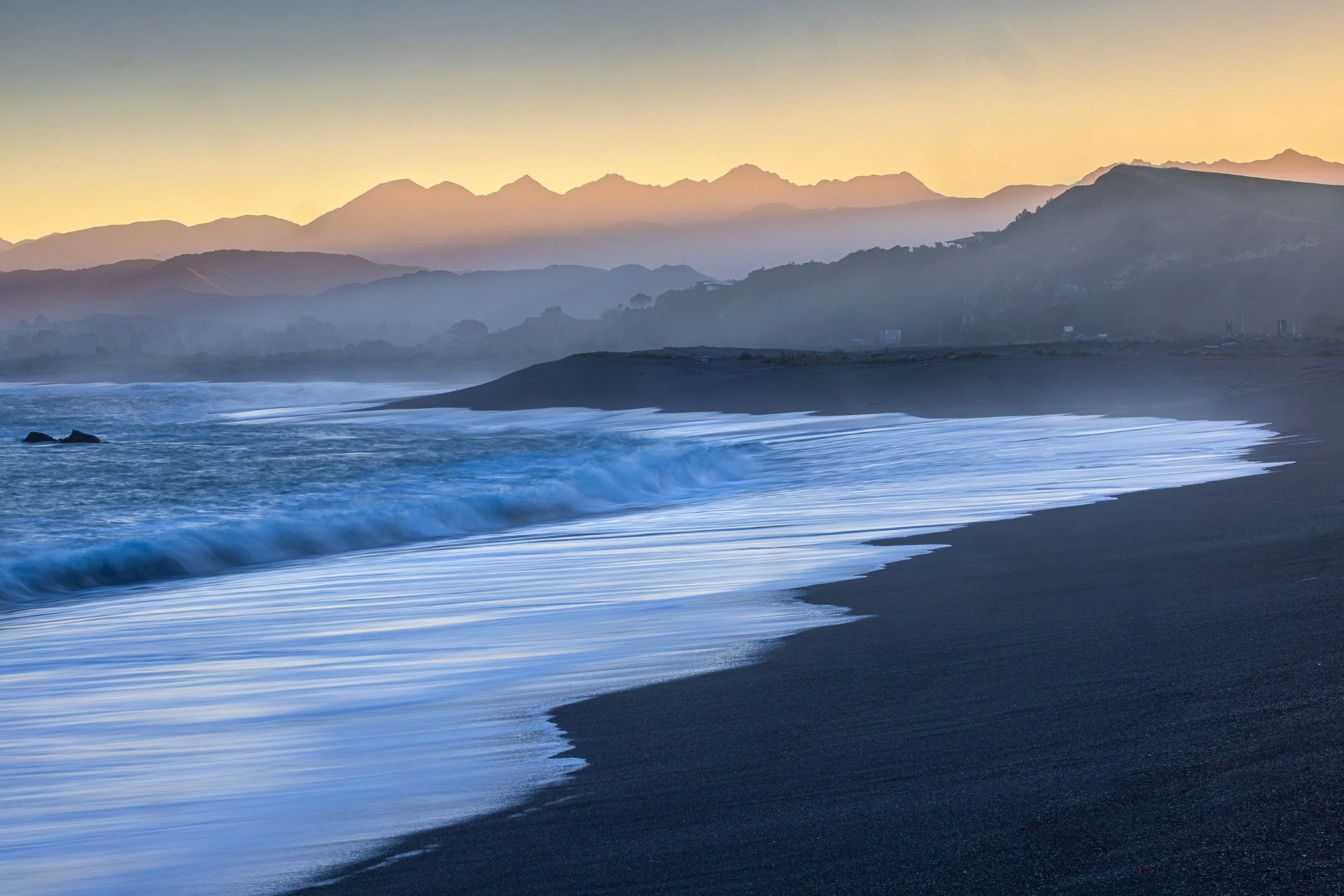
The Sea's Path Inland - South Bay
The sunset gave me spray rather than stillness. The sun hung low and bright above the mountains, its light catching the haze along the ranges until the whole ridge glowed gold instead of falling to silhouette. A stiff onshore wind made the sea rough, and where it broke over the reef, it threw up a long curtain of spray, backlit by the sun. On my first visit, I had photographed this coast as line and edge. Now it was all movement and light.
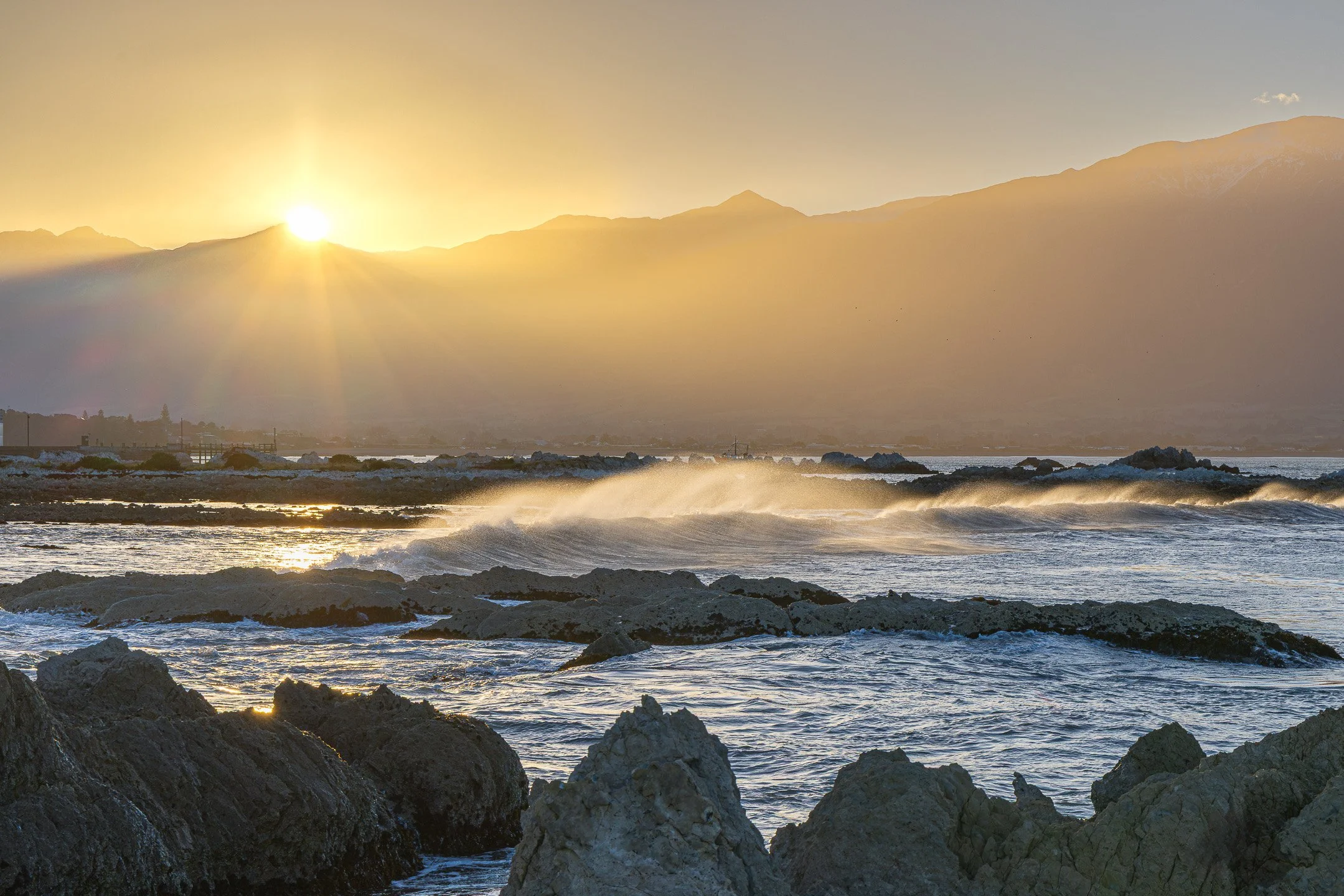
Backlit Spray
But my original spot pulled me back.
I was back at the same formation the next morning, and set up in almost the same spot as before, and waited to see what better light would do with a composition I already knew.
The light was richer this time, and the snow on the range caught a deeper gold. The tide was running fast through the channel between the rock shelves, enough for a long exposure to pull the water into pale ribbons against the dark stone. It wasn't a new discovery, just a better answer to a question I'd already asked it once. The rocks that had first stopped me on the walkway sat off to one side now, no longer the whole subject, just one part of a frame that had room for mountain, sea, and stone together. Nothing about the composition surprised me the way it had the first morning. What had changed was the light, and that alone was enough to make the return worth the early start.
Mountain, Sea, and Stone
I hadn't planned to stay for what came after. The storm arrived from the ocean while I was packing away the tripod, a long dark band of cloud sliding towards the mountains, making the sun disappear. Briefly, a gap opened low on the horizon, and the sun found its way through in long, hard rays that fell straight onto the water, the mountains reduced now to nothing more than a dark, layered silhouette holding the whole scene together at the base.
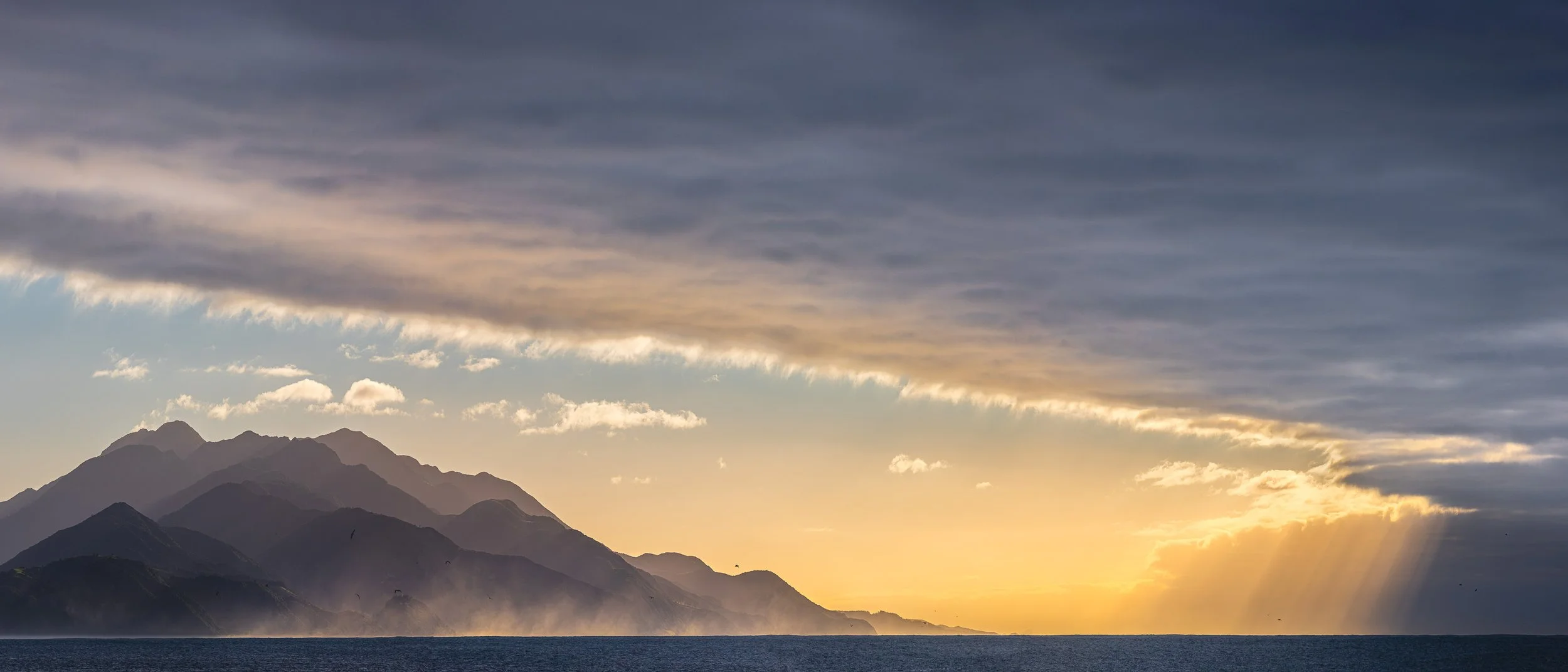
Weather Band
More Coastal Scenes
For more of the coast at close range, where the rock and its weathered surfaces are the subject, see the Coastal Edge gallery. For the wider view, where the sea and the horizon carry more of the frame, there is Open Coast.
This trip took me through the Ashburton Lakes and Arthur's Pass as well as the Kaikōura coast. More from the South Island is in the South Island gallery.
Share this article
Earlier Trips and Stories


Two visits, two weeks apart, to the flysch rocks of the Kaikōura coast. The same formation gave me a jagged sunrise the first time and a very different answer the second.