
Seeing the Landscape
The technical and creative practice of perception.
This workshop is less about finding the best view than learning to see past it. We'll work with atmosphere, light, and the quieter structures including reflections, patterns and geometry that sit underneath a scene, and talk through how composition itself can carry feeling, not just describe a place. We can also work at the level of a sequence rather than a single frame — how a small set of images, shot within one session or across several, builds into a story of its own.
Expect to wait for conditions, revisit a spot more than once, and come away with a stronger sense of your own photographic voice and the beginnings of a visual narrative, not just a stronger set of images.
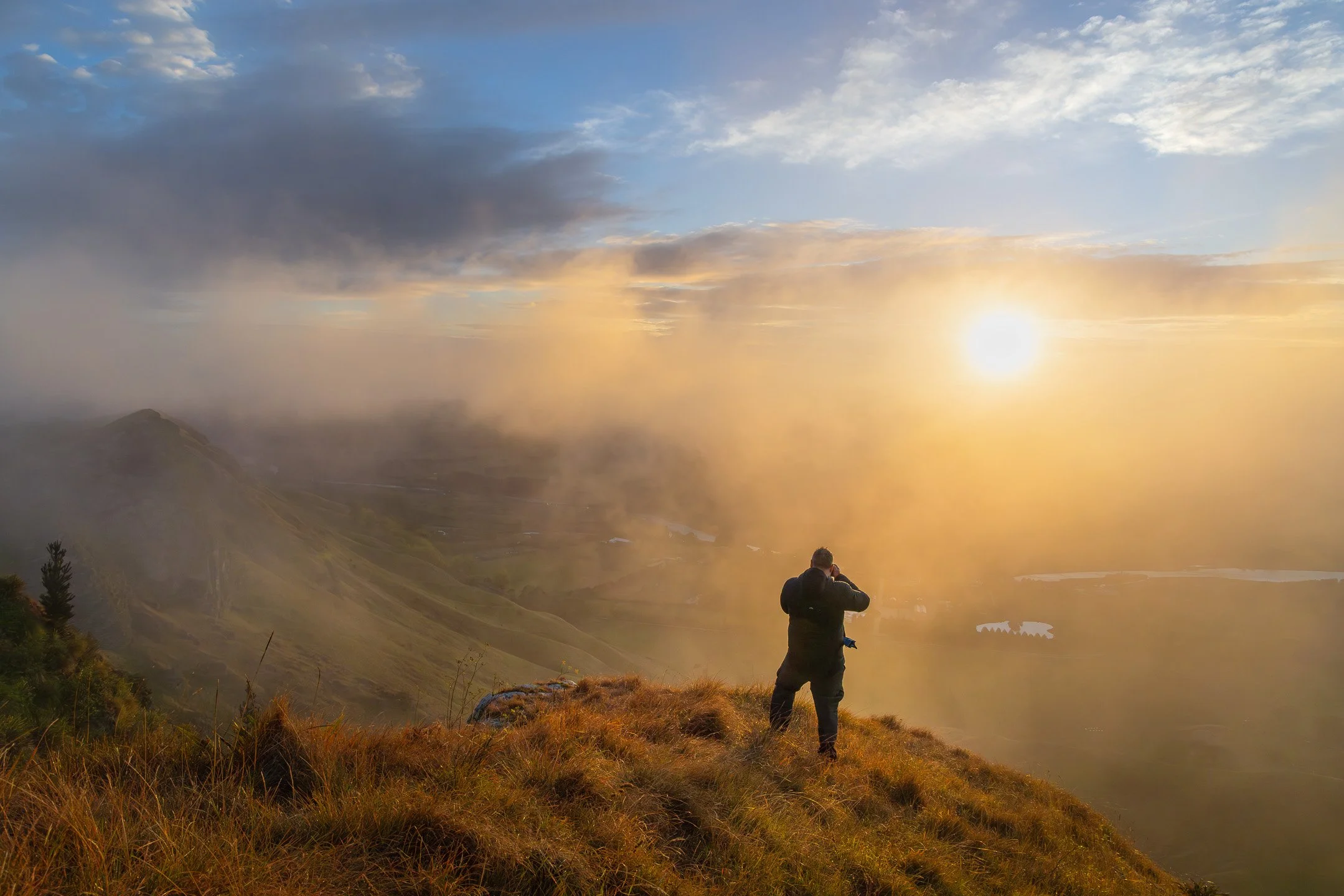
A photographer working backlit fog and low sun on a Hawke's Bay ridgeline — the kind of shifting, unpredictable conditions a Seeing the Landscape session is built around.
What We'll Explore
Depending on what draws you, we can lean the day toward one of three threads running through my own work:
Atmosphere — fog, mist, and shifting weather; the way conditions can soften and reveal a landscape in equal measure
Order — pattern, reflection, and the subtle geometries that organise a scene from within, rather than being imposed on it
Narrative — how a set of images, not just a single frame, builds a story; the way a sequence shot within a single session, or across several, can carry a mood or idea further than any one image on its own
Either way, the focus stays on why a composition works, not just how to achieve it technically.
Who It's For
This track is for photographers who already have a working grasp of their camera and basic composition, and want to move toward more expressive, personal image-making. If you're newer to photography, Camera Foundations will serve you better as a starting point. You'll get more out of this workshop once the technical side is second nature.
You might enjoy this workshop if you've read through my Stories — pieces like One Morning at Lake Tūtira or Golden Hours: Four Mornings in the Mist — and found yourself drawn to the way of looking described there, more than the destinations themselves.
What You Can Expect
Each session responds to conditions rather than a fixed plan, and is built from a small set of session types that we combine depending on the format you choose.
Before the workshop, we'll talk briefly about which thread — atmosphere, order, or narrative — draws you most, and whether you already have a location or condition in mind. That shapes where we go and what we're watching for.
Field Session — Our time in the landscape, working with whatever the day actually gives us: fog rolling in, a lake gone still, light catching a ridgeline in a particular way. Rather than working from a shot list, we'll spend time watching a scene change, and talking through what a shift in framing, light, or timing does to its meaning. If narrative is the thread you're drawn to, this is also where we can build a small sequence within the one session — working a single location or a short walk as a set of related images rather than one final shot. Expect to wait, and to stay longer at one spot than might feel natural at first.
Return Session — A second visit to the same location, timed to catch different conditions — sometimes later the same day (a sunrise Field Session followed by a sunset Return Session, for instance), sometimes a day or more apart. Conditions rarely repeat, and revisiting deliberately is how you start to see how much a single change — mist instead of clear air, morning instead of evening — can shift what a composition is actually saying. If you're building a visual narrative, a Return Session gives it room to grow further — extending a sequence across different conditions, the way a piece like Golden Hours: Four Mornings in the Mist grew from multiple mornings in the same place.
Expressive Processing Session — An optional session working with the images from the day, focused on how post-processing choices — dodging and burning, tonal balance, colour grading — can reinforce the mood you were responding to in the field, rather than simply correcting exposure. This is less about technical fixes and more about finishing the thought the composition started.
After the workshop, I'll send along anything relevant from my own writing on composition and perception that connects to what we worked on, in case you'd like to keep exploring the ideas afterward.
I'll pick you up and drop you off at the end — from home directly if you're local, or from your accommodation or vehicle otherwise.
Format
Half Day (approx. 4 hours) — A single Field Session, built around whatever conditions the day offers, plus an Expressive Processing Session if time allows.
Full Day (approx. 8 hours) — A Field Session, often paired with a same-day Return Session to catch a second set of conditions (sunrise and sunset, for instance), plus an Expressive Processing Session working with images from the day. The processing session can be swapped for more field time if you'd prefer.
Full Day, Spread Over Multiple Days — A Field Session, followed by another session on a later day. This can be a Return Session to the same location, timed around the forecast rather than a fixed date. Or it can be another Field Session to a different location with preferred conditions. An Expressive Processing Session can close things out, working across images from both visits.
Because this workshop depends on genuinely responding to conditions rather than working through a fixed itinerary, dates are best kept flexible where possible — this is especially true for the multi-day format, where the gap between sessions may need to shift with the weather.
The times above (4 / 8 hours) refer to the total duration of the workshop — driving, shooting, and any post-processing session included — not just time spent taking photos.
How much of the day the 4/8 hours spans depends on the season. In winter, sunrise and sunset sit close enough together that a Full Day session often runs as one continuous outing with a lunch break in between. In summer, with an early sunrise and a late sunset, the gap between the two sessions is much wider — the day includes breaks for breakfast, lunch, and dinner along the way, so we're not out shooting through the flattest hours of light. Either way, the two-session structure stays the same; only the number and length of breaks in between changes.


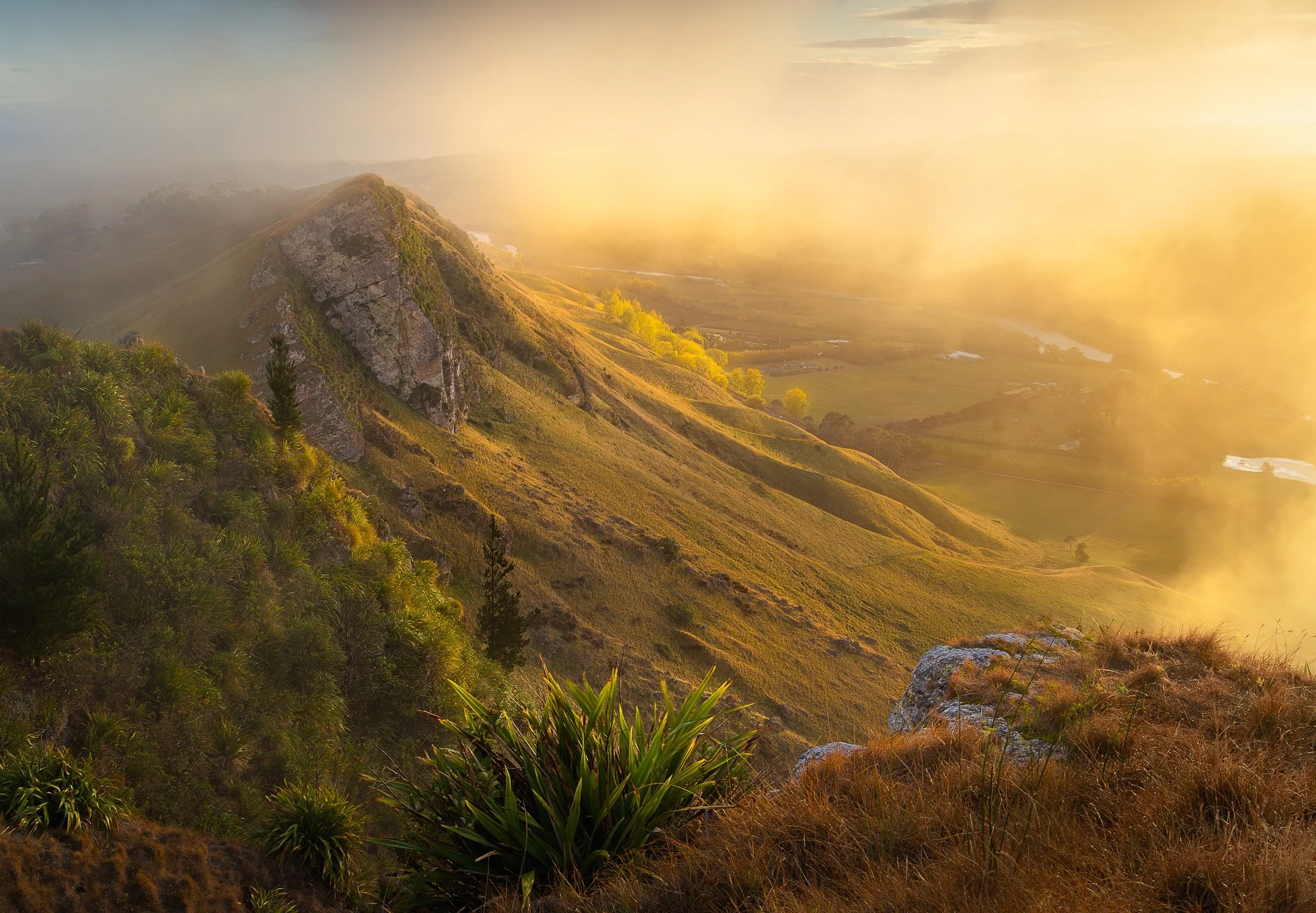


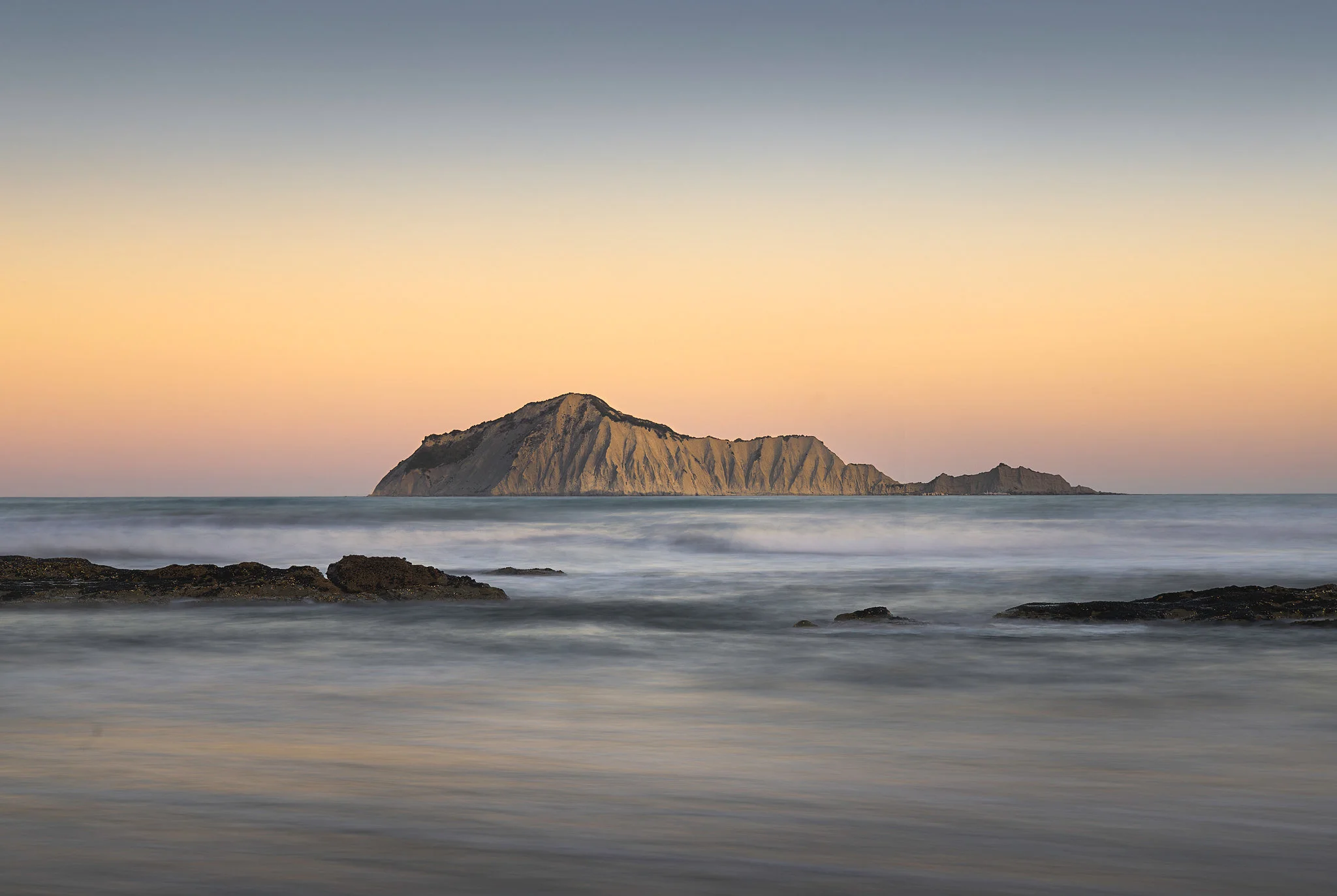
Fog, reflection, and pattern — the atmosphere and order this workshop is built around.
Locations
Where we go depends on which thread you're drawn to, the season, and what conditions are doing on the day — fog and mist favour the valleys and river flats around Havelock North, while pattern and order tend to lead toward lakes and wetlands. Some locations sit further out than others: Lake Tūtira, for instance, is one of the more reliable spots for still, reflective water, but it's a longer drive from Havelock North than most of our other options, so a session there will factor in extra travel time on either end. I'll factor this into planning once we know which conditions we're chasing.
What You'll Need
Appropriate outdoor clothing and footwear, your camera and gear (spare batteries, memory cards, tripod), and patience for weather that might not do what either of us expects. A full packing list is sent after booking.
Words from Workshop Participants
“I’m fairly fluent in Photoshop and Lightroom, and I found Jos’s private session both educational, productive, and entertaining. I picked up several useful tips to incorporate into my photography along with a fresh perspective on how to approach my photos in post-processing. ”
Prices
Half Day: $300 per person
Full Day: $560 per person
Full Day, Spread Over Multiple Days: $620 per person
A 20% deposit is required after we have set a date and full payment is due before the workshop.
Ready to book?
Complete the details below to book your workshop today. Or contact me if you’d like to know more.
I’ll never share your personal details with anyone: Privacy Policy
Want to keep developing this way of working over time? My 12-month 1-2-1 Mentoring programme is built for photographers who want to go deeper than a single session allows.
Or, alternatively, you can contact me and we can work out the right workshop for you.