
Living Topography: A Landscape Photographer’s Journey Through the Subantarctic
In February 2026, I travelled south from New Zealand toward the Ross Sea region of Antarctica, beginning with a passage through the remote Subantarctic Islands. Scattered across the Southern Ocean, these islands—raw, isolated, and shaped by wind and sea—form one of the most extraordinary wildlife and landscape environments on Earth. This first chapter traces that journey through a series of images, exploring what happens when the boundary between land and life dissolves entirely.
The Subantarctic Islands of New Zealand and Australia
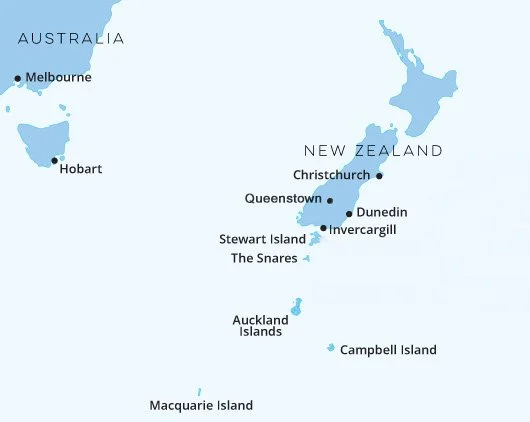
Our route followed a chain of remote islands south of New Zealand: the Snares Islands, Auckland Islands, and Campbell Island, before continuing to Macquarie Island, Australia. These islands sit in the path of the Southern Ocean’s prevailing winds, forming rugged landscapes of cliffs, tussock, megaherbs, and wildlife colonies.
I arrived expecting to find wildlife set against static geological forms — subjects in front of backgrounds. Instead, I encountered something more unsettling and more interesting: a world where terrain and life are not two things, but one. The animals don't occupy the landscape. They complete it.
The challenge wasn't finding order in what I was seeing. It was recognising that the apparent disorder was itself the order.
Subantarctic Landscapes – Light, Weather, and Isolation
The Subantarctic landscape is defined by constant, fluid change. Weather moves quickly across the islands. Light shifts with it—revealing and concealing the landscape in rapid succession. Vertical cliffs fall sharply into restless seas, while inland areas soften into rolling vegetation and saturated peat bogs. Nothing holds still long enough to be studied; everything must be read in motion.
For a landscape photographer trained in stillness and deliberate composition, this demands a fundamental shift. I was used to arriving early, setting up a tripod, and waiting for the light to come to me. Here, the light moved faster than I could follow, and waiting meant missing.
The landscape doesn't pause. You learn to move with it, or you go home empty-handed.
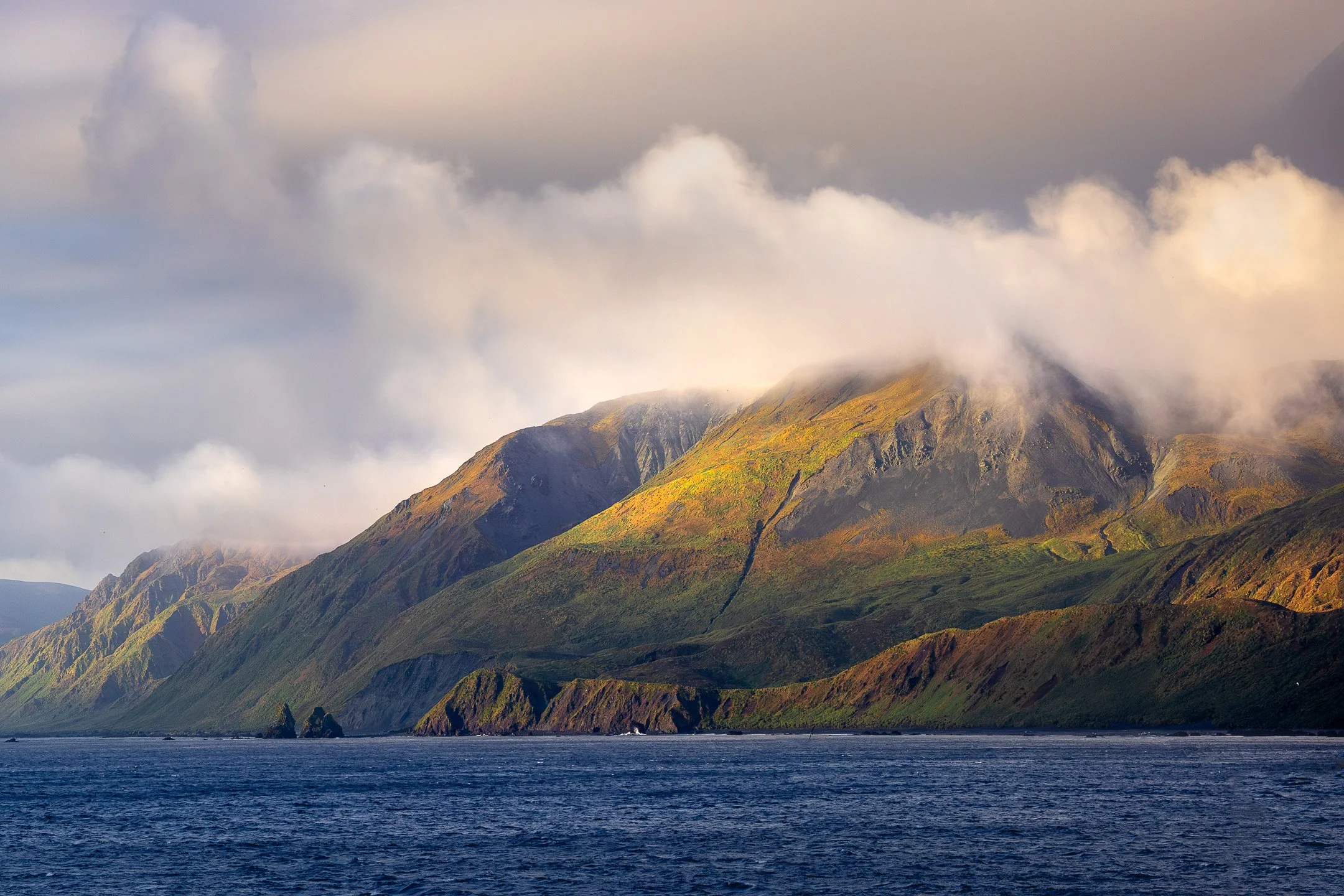
Fleeting Light at the Southern Threshold - Macquarie Island, Australia
A rare break in the overcast sky sends a shaft of light across the tussock-covered headland, illuminating a strip of coastline before vanishing within seconds.
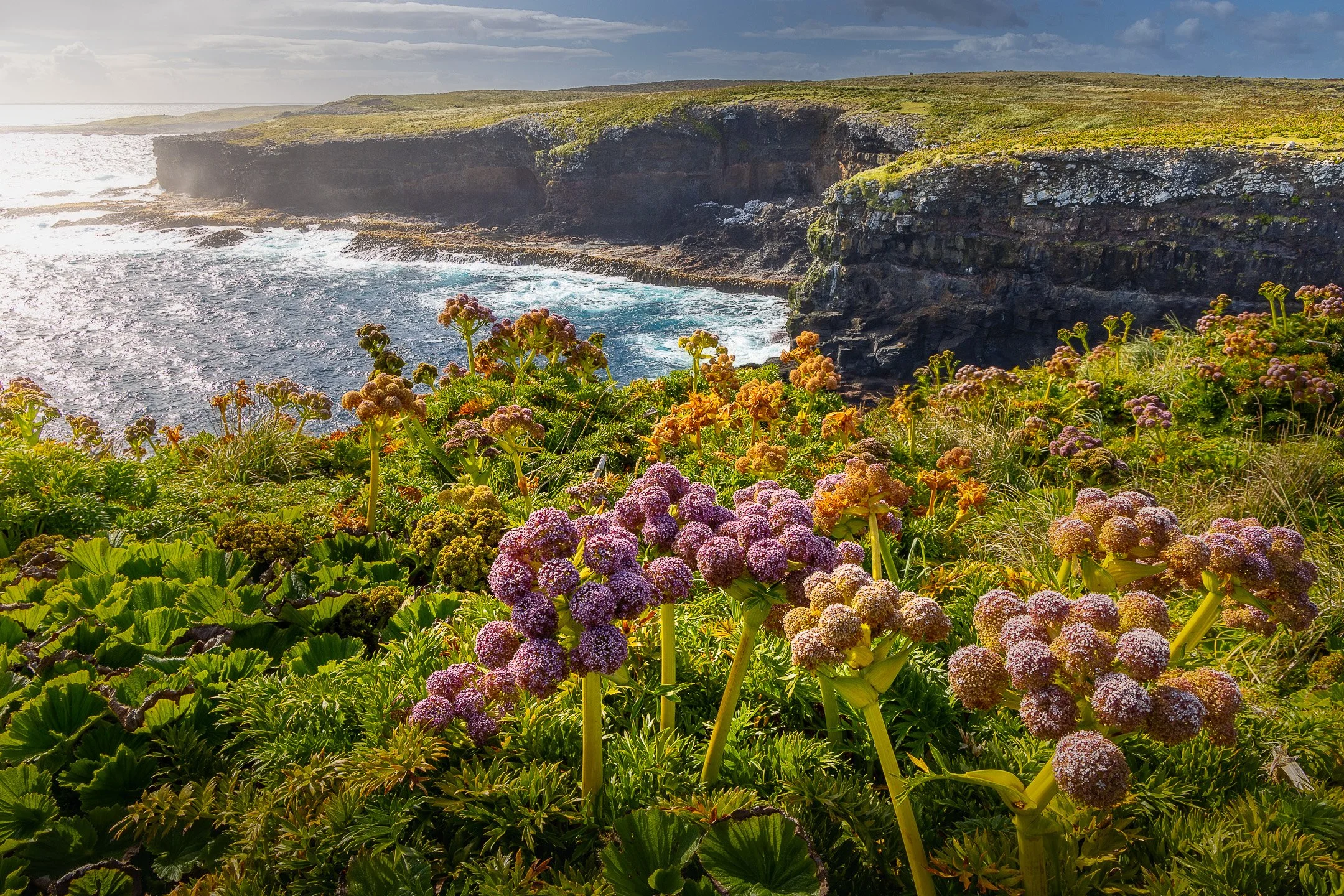
Megaherbs on Enderby Island - Auckland Islands
The extraordinary scale of Subantarctic megaherbs — plants that grow to human height in one of the world's most inhospitable environments — speaks to the fierce, concentrated life force of these islands.
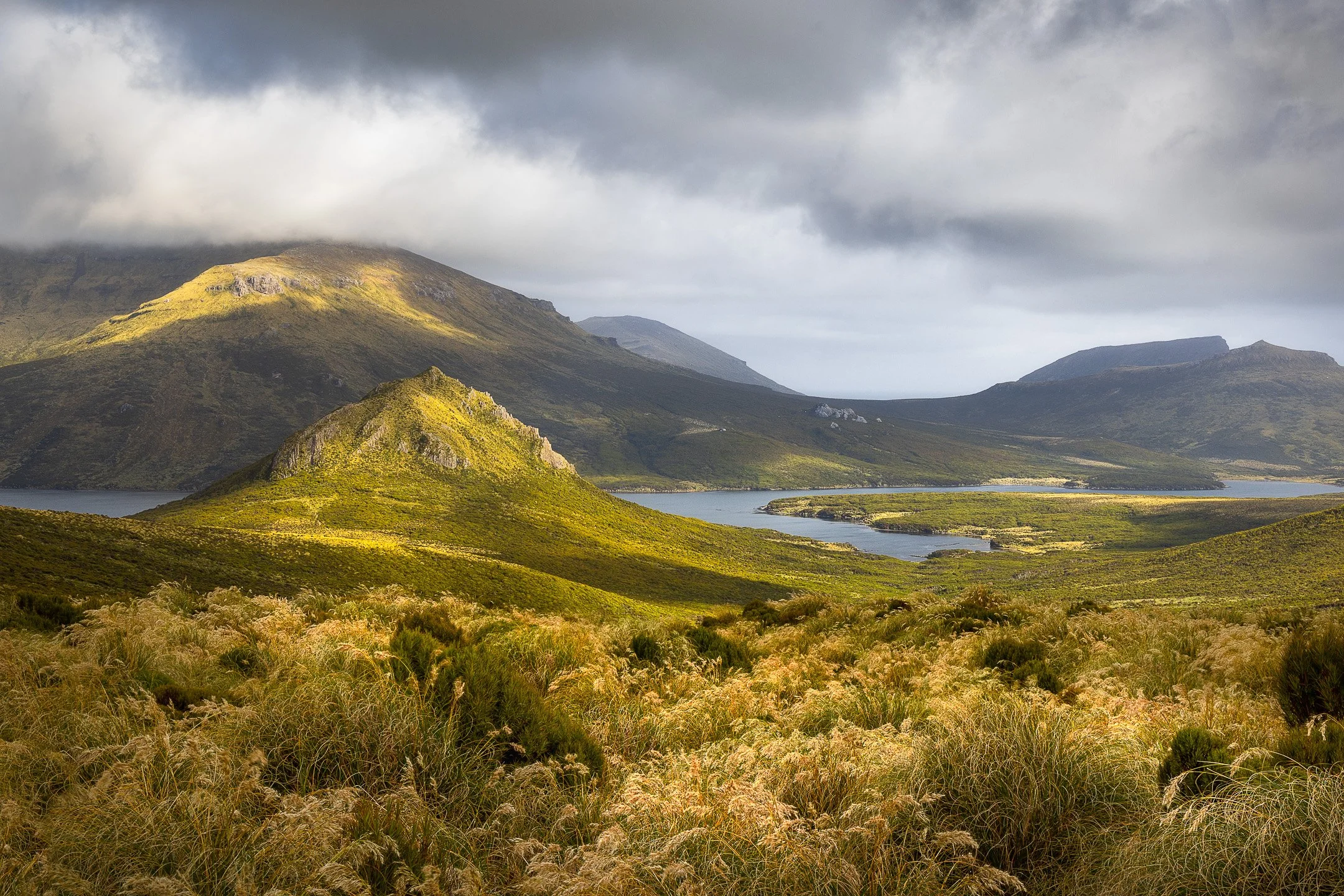
Fragments of a Shifting Sky - Campbell Island
A fractured sky above Campbell Island, where cloud and light trade places so rapidly that the landscape seems to breathe.
Animate Geography - Campbell Island
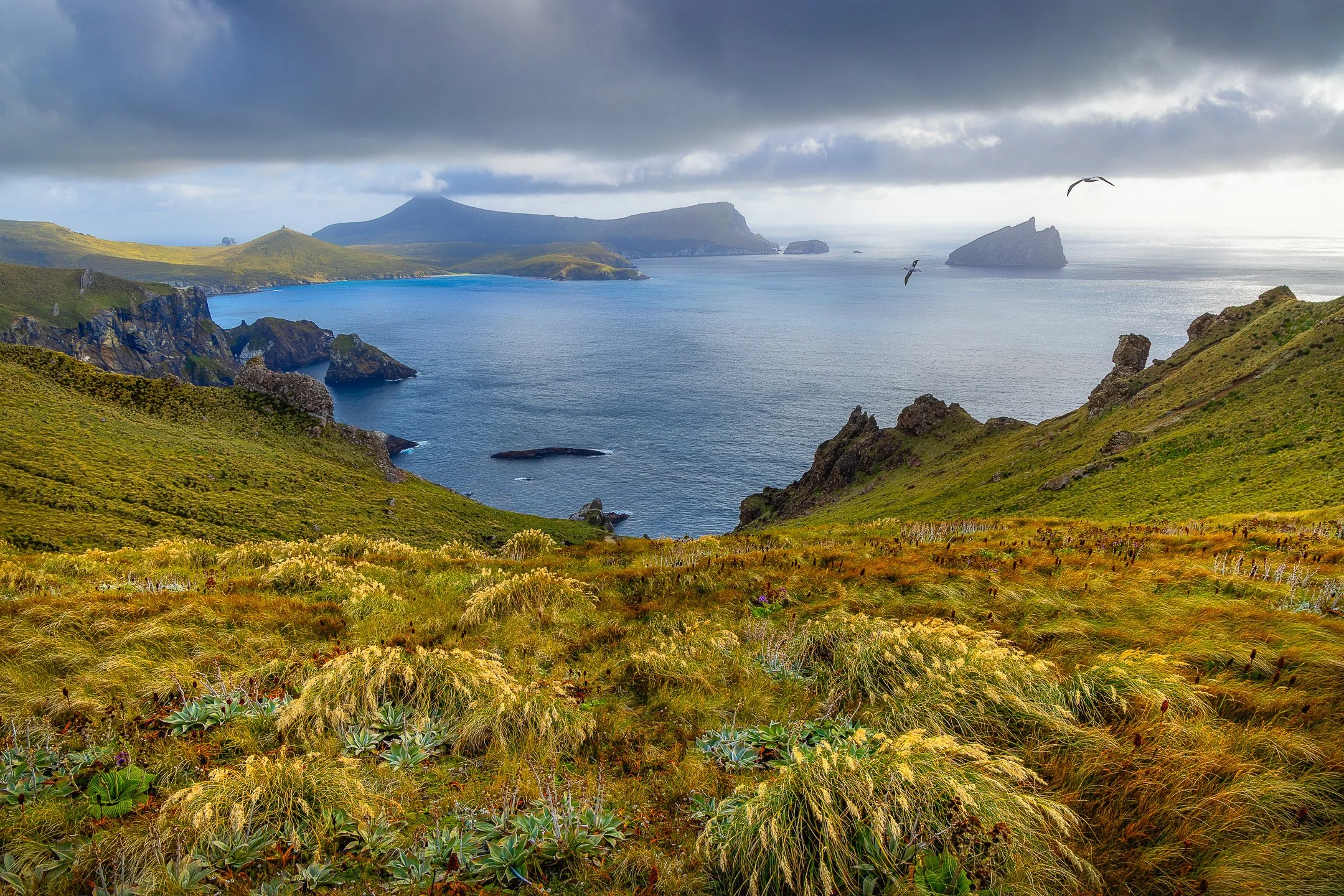
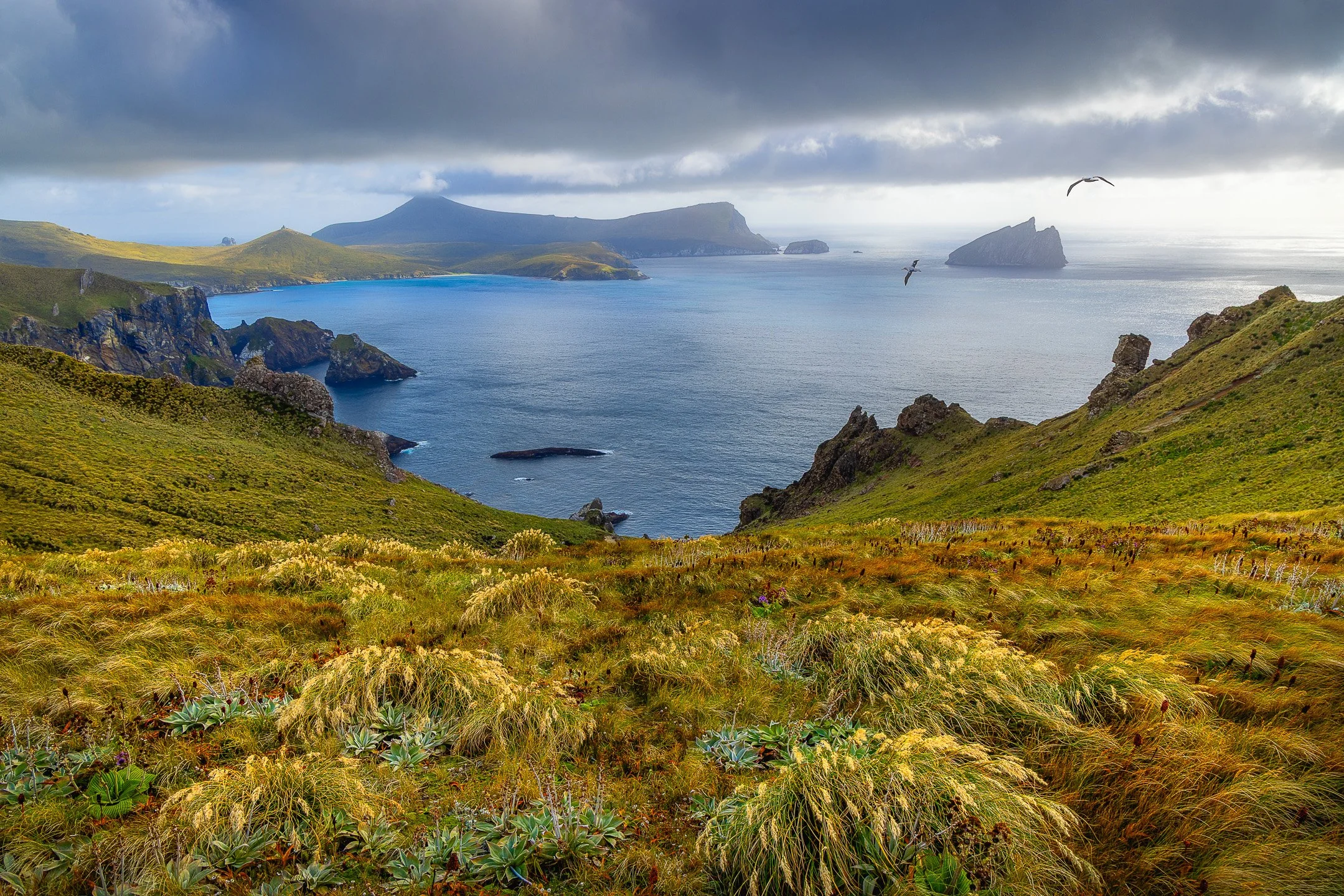
Wind moves through the grasses, then across the land, and out to sea. On Campbell Island, Southern Royal Albatross follow these unseen paths, gliding between land and sky as light shifts over the ridges. In their flight, the landscape comes alive—holding air, land, and ocean together. A living topography.
Atmospheric Strata – Seabirds and the Coastal Horizon
Along these coastlines, where ocean meets land in a dynamic vertical rhythm, albatross and petrels glide effortlessly along the cliff faces — not incidentally, but as though the air currents exist specifically for them, and they for the currents. They provide scale and movement, yes, but more than that: they are the connective tissue between land, sea, and sky. Without them, the cliffs feel inert. With them, the whole environment coheres.
I found myself no longer thinking of the birds as subjects to capture against a backdrop. They were another expression of the same forces — wind, terrain, and energy — that shaped the stone beneath them.
A seabird in flight is not an interruption of the landscape. It is the landscape, briefly airborne.
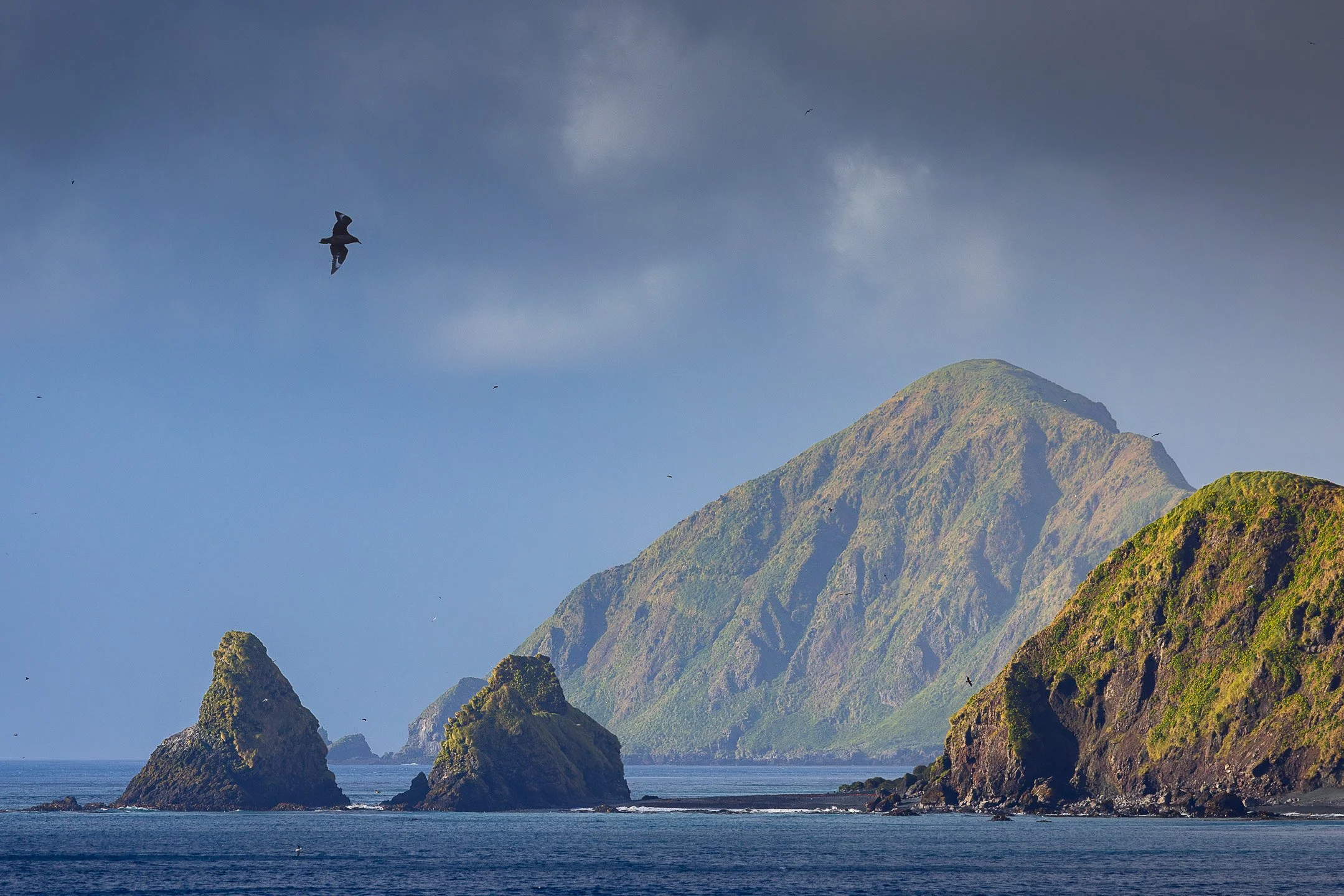
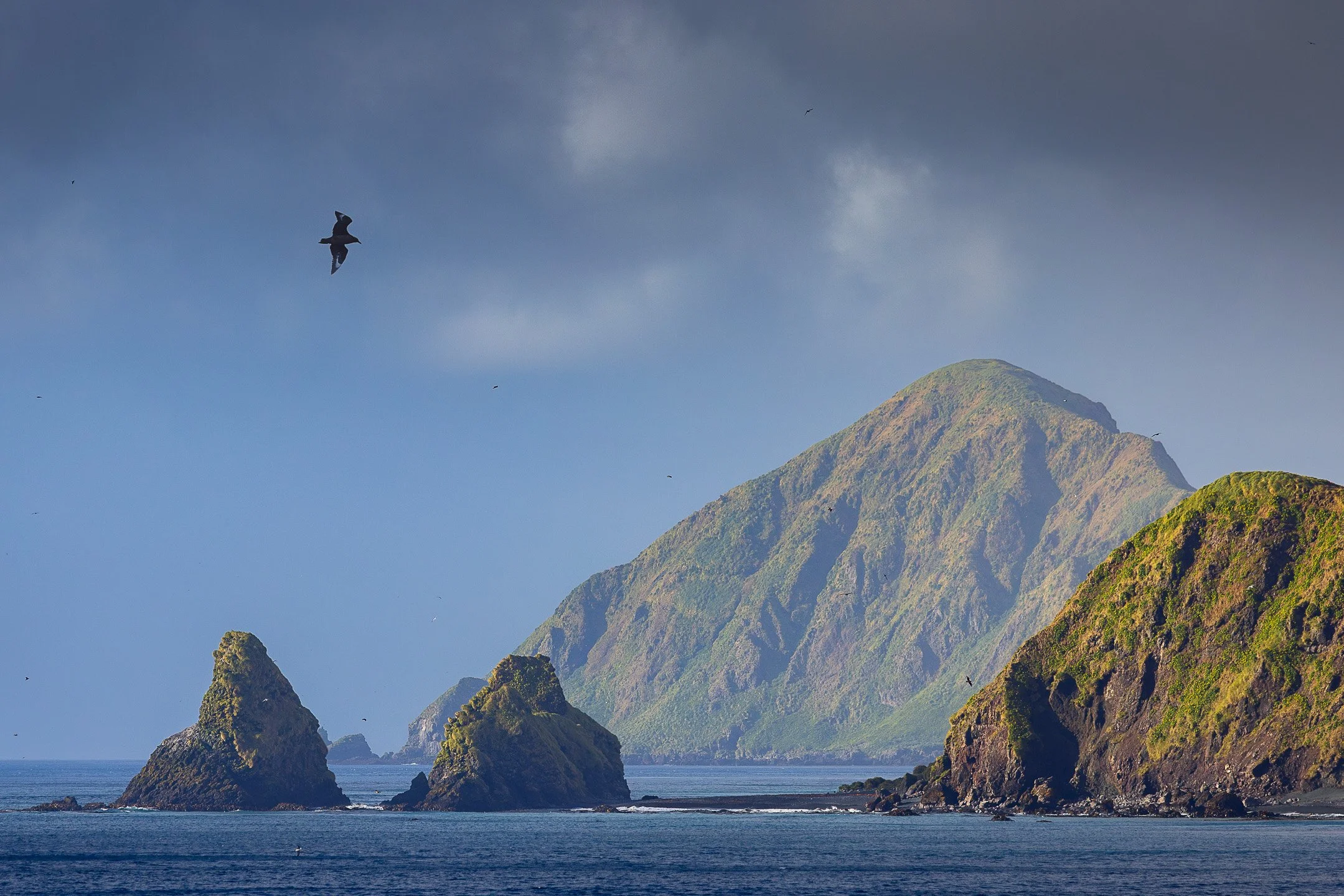
Wings over Triangular Stacks - Macquarie Island
Seabirds wheel above the geometric sea stacks off Macquarie's coast, their flight paths tracing the same angular energy as the rock forms below.
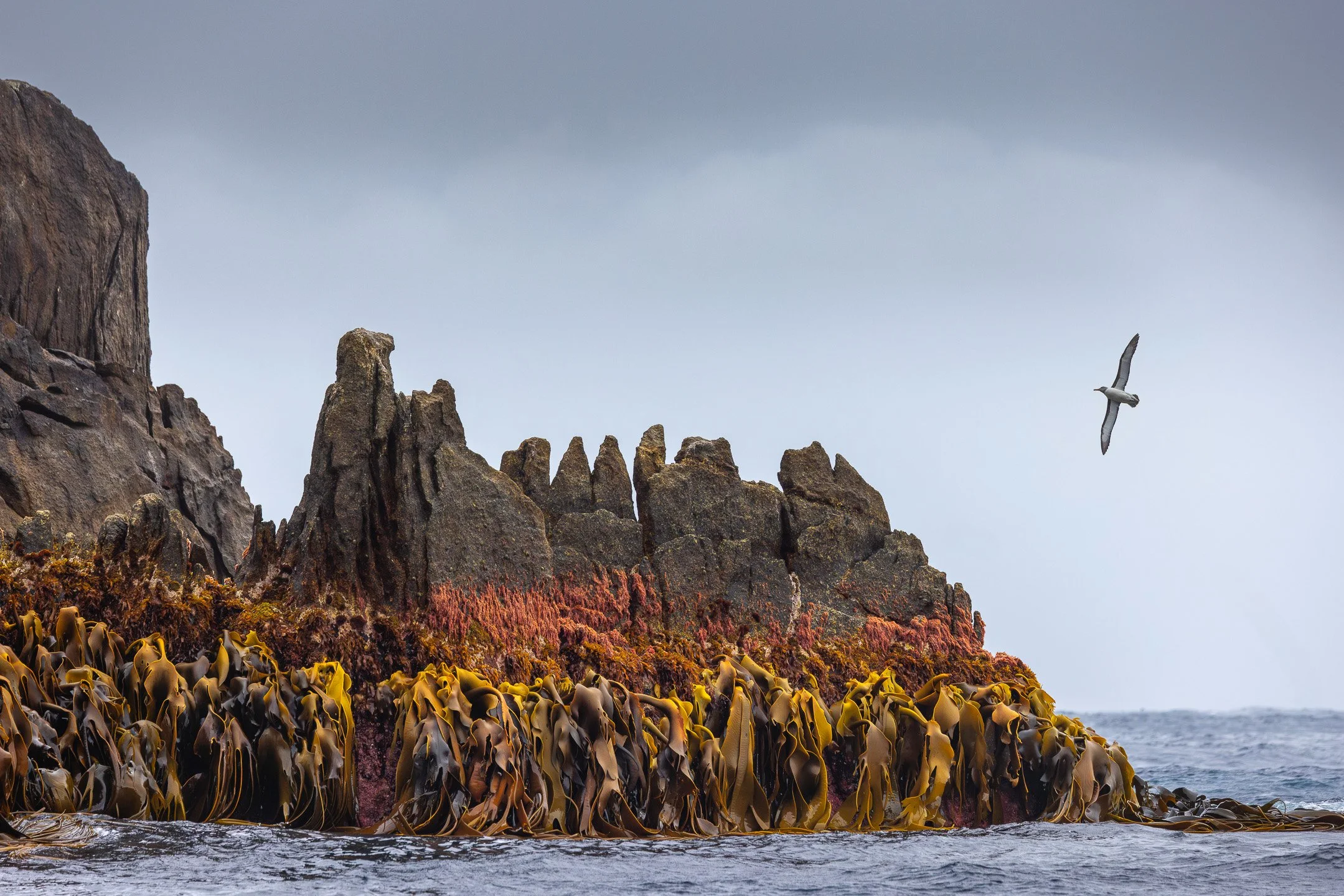
Wings over the Spires - Snares Island
The dark, jagged spires of the Snares rise from the sea like the teeth of some ancient creature. The birds move through this architecture as though they built it.
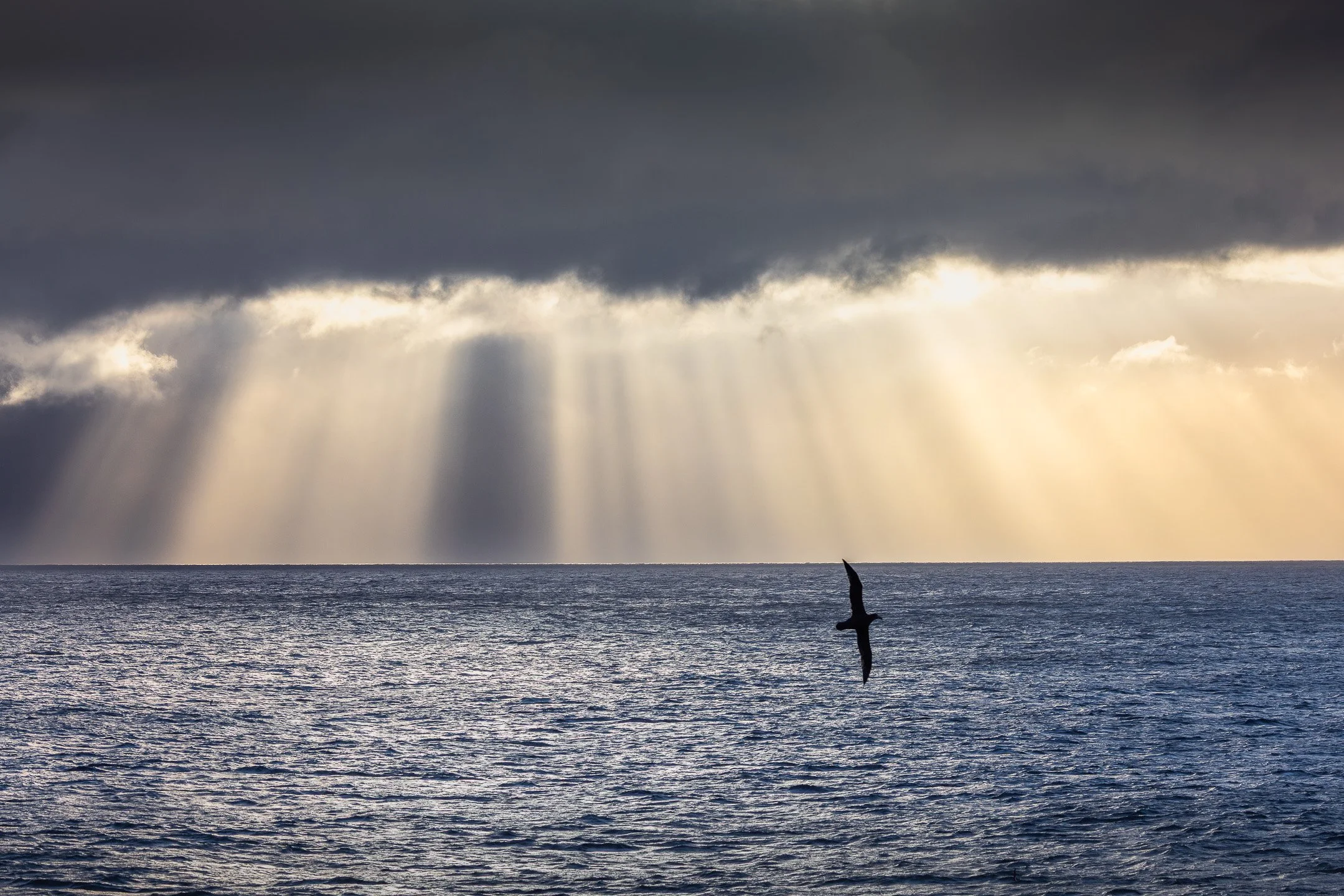
Sunbeams and Wings - Southern Ocean
A rare shaft of sunlight through storm cloud, and within it, the silhouettes of birds on the wing — a moment of coincidence that felt entirely inevitable.
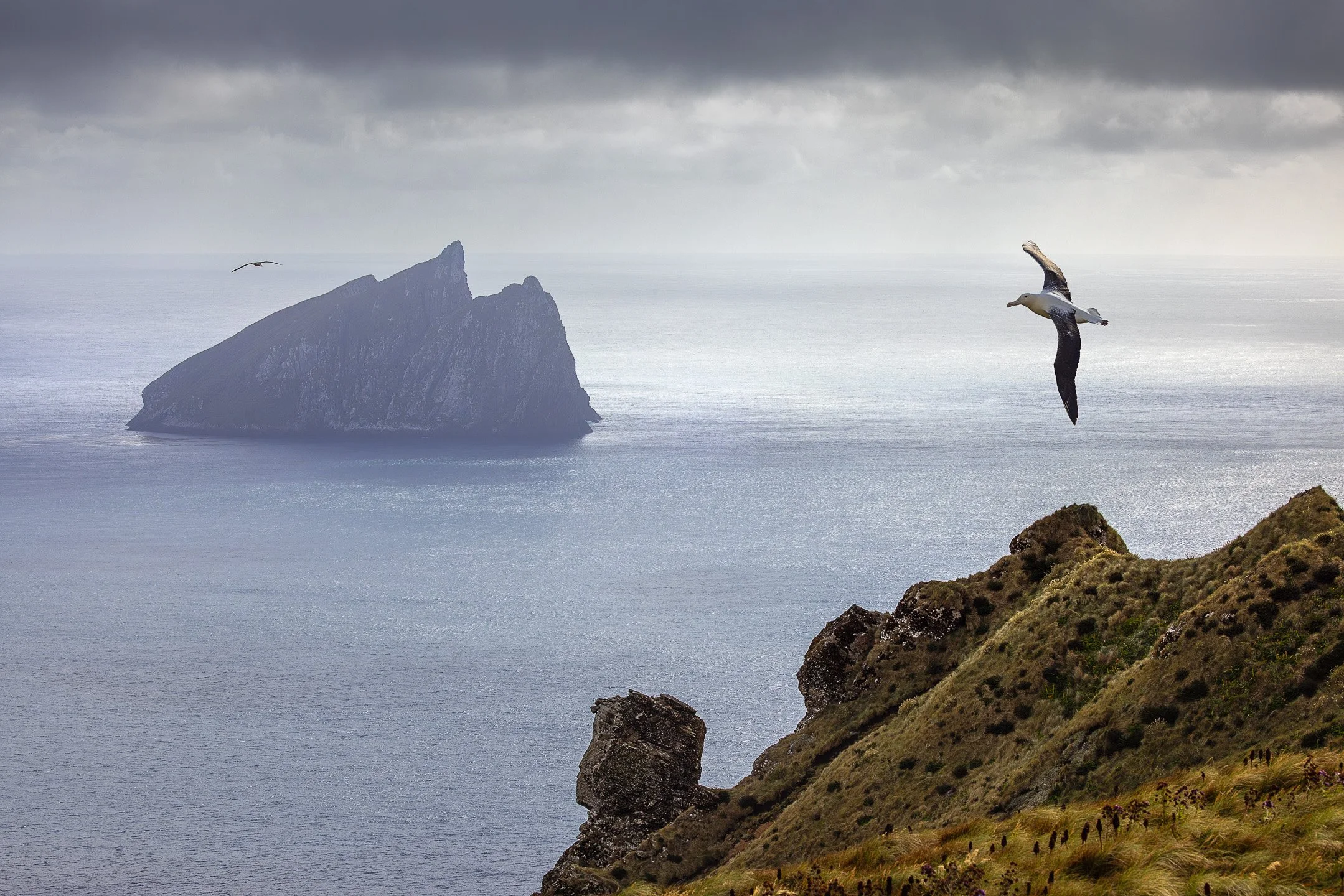
Wings beyond the Cliffs - Campbell Island
The sheer scale of Campbell Island's cliff faces is made legible only by the birds drifting past them. Without that reference point, the eye has no way to measure what it sees.
Animate Margins: Life as the Island’s Edge
In the Subantarctic, life gathers at the margins — clinging to the thresholds where the Southern Ocean meets the land. Steep cliffs, narrow ledges, and wave-lashed beaches are not merely backdrops; they are structures made meaningful by the dense colonies that drape across them.
Penguins, albatross, and seals do not just occupy these spaces. They define them. The shoreline at Lusitania Bay is not a beach that happens to have penguins on it — it is a King Penguin colony, and the beach is what lies beneath it. This is a genuine inversion of the figure-ground relationship that most landscape photography relies on.
I had to stop thinking in layers — foreground, subject, background — and start thinking in systems.
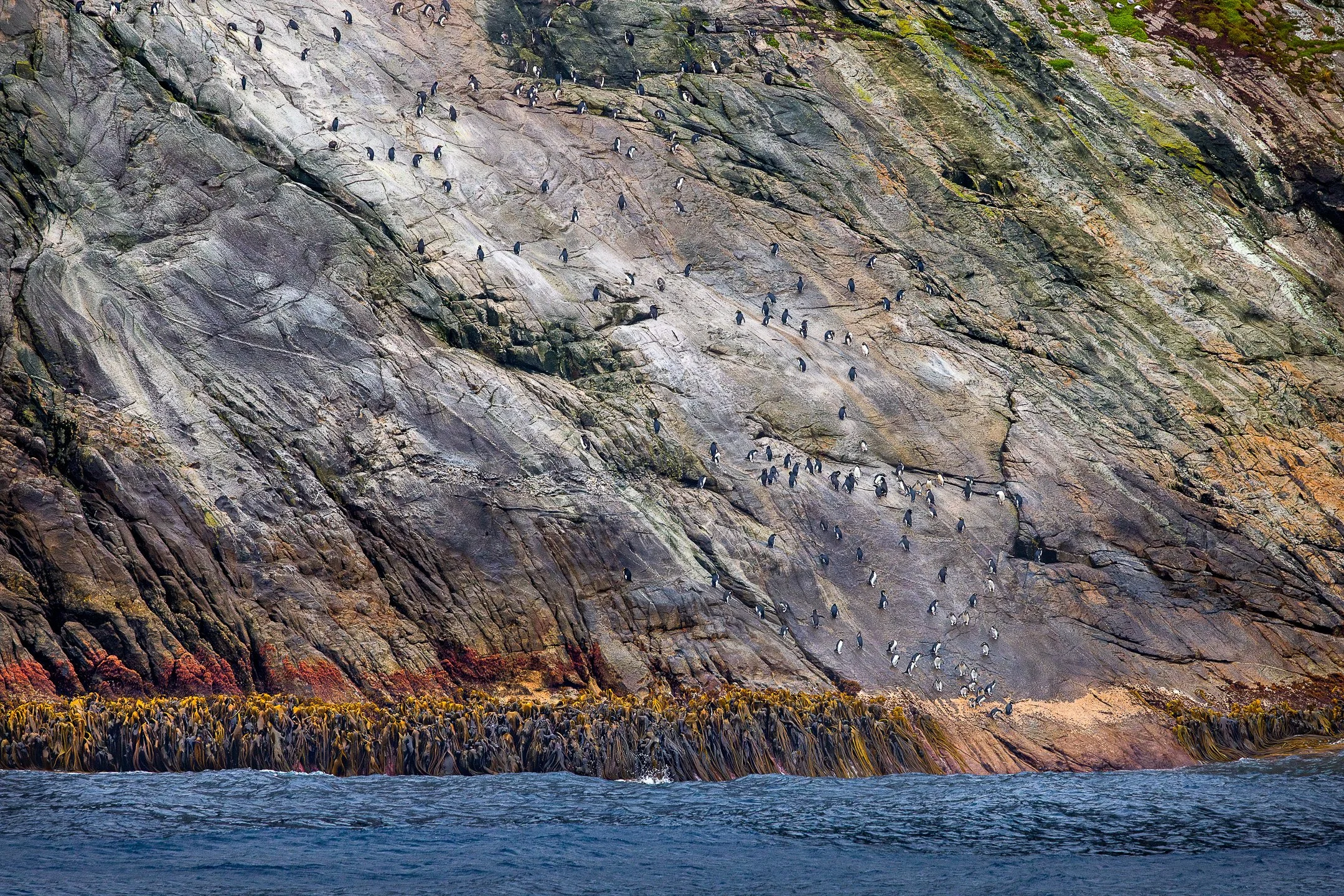
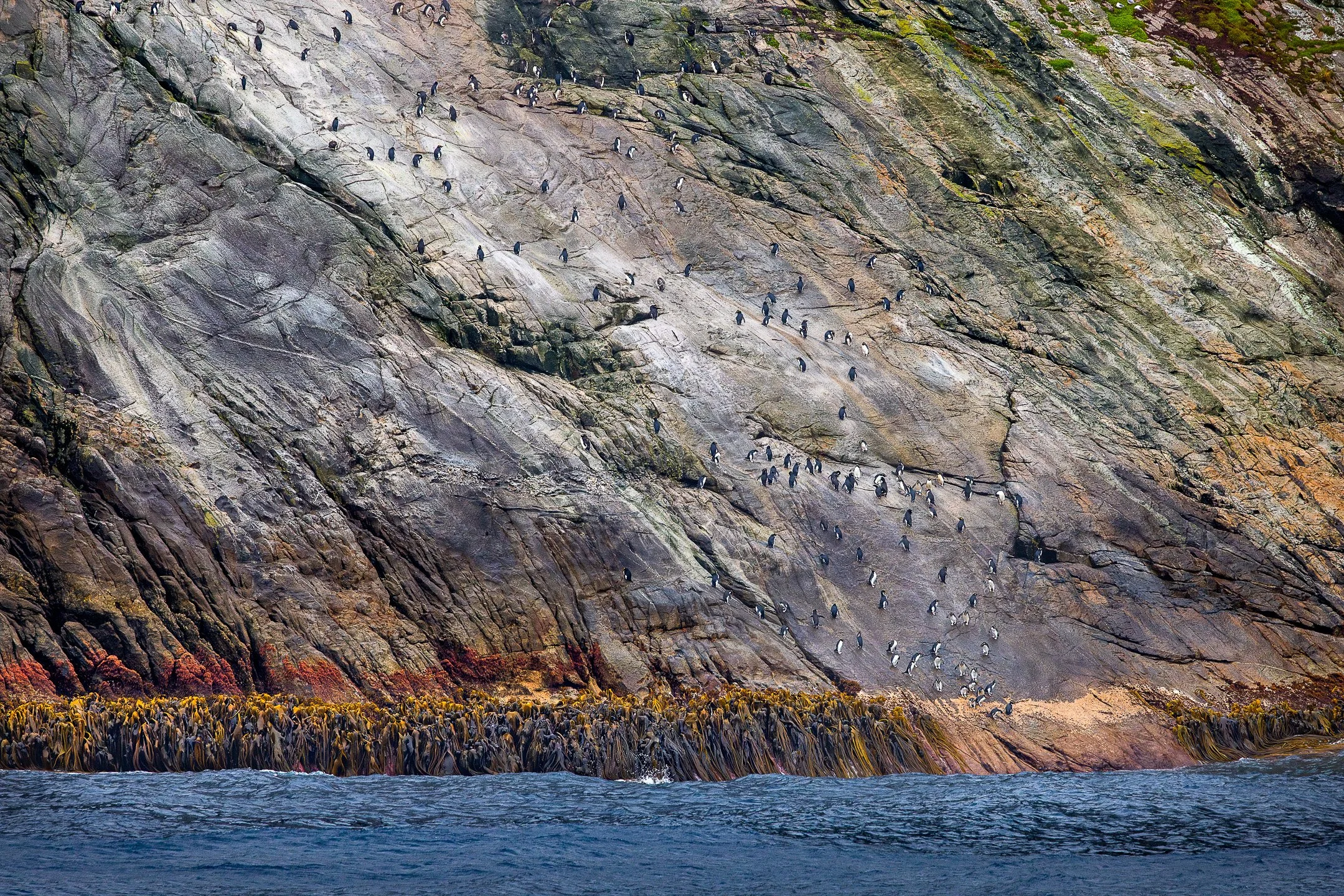
Snares Crested Penguins on Steep Cliffs - Snares Islands
Endemic to these isolated outposts, the Snares Crested Penguin navigates the cliff faces with an ease that makes the rock seem designed for them.
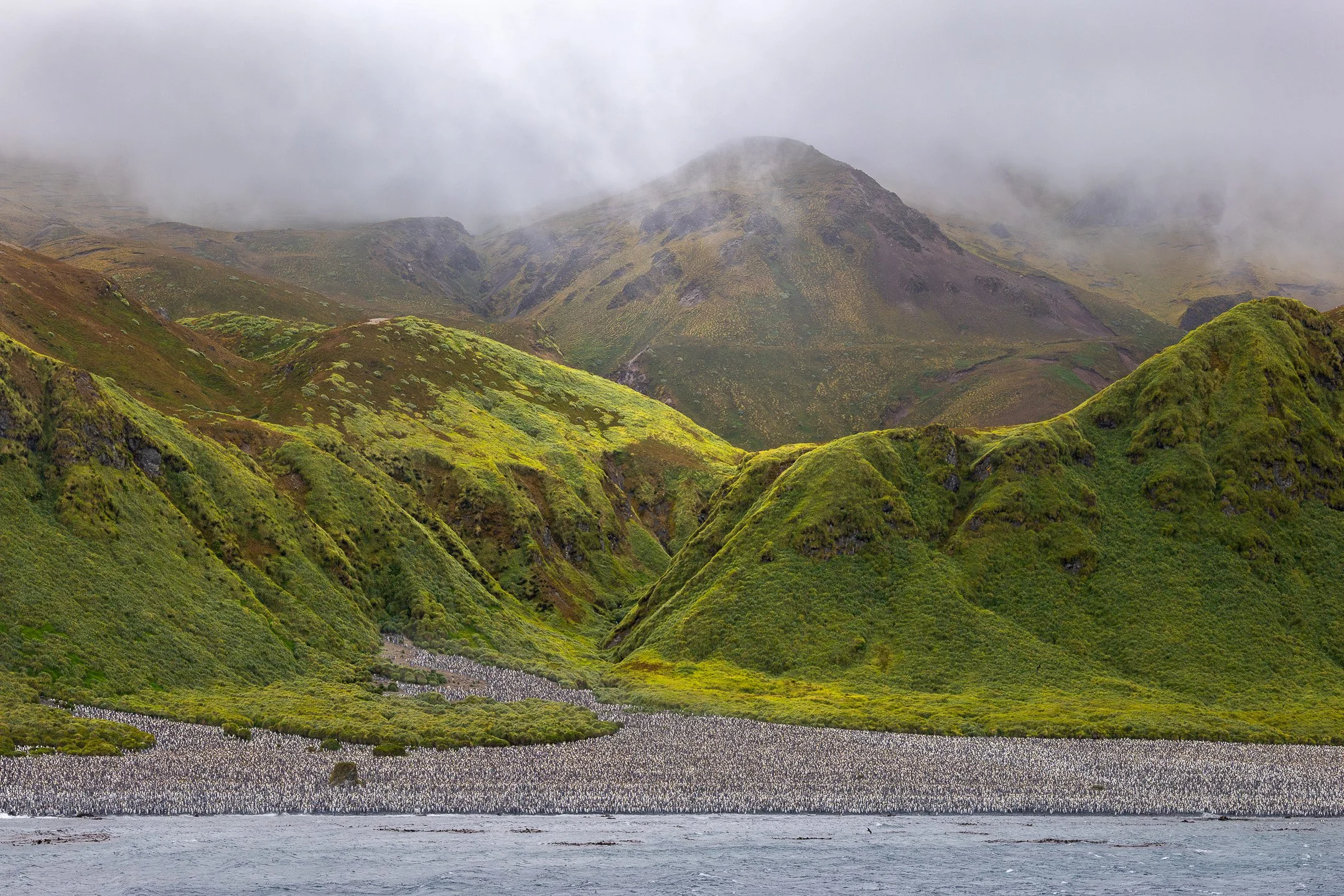
King Penguin Colony at Lusitania Bay - Macquarie Island
The density of life at Lusitania Bay is staggering — tens of thousands of King Penguins covering every surface of the shore. Here, the animals are not on the landscape; they are its surface. The living details that prove land and life are a single, unified system of heartbeat and bedrock.
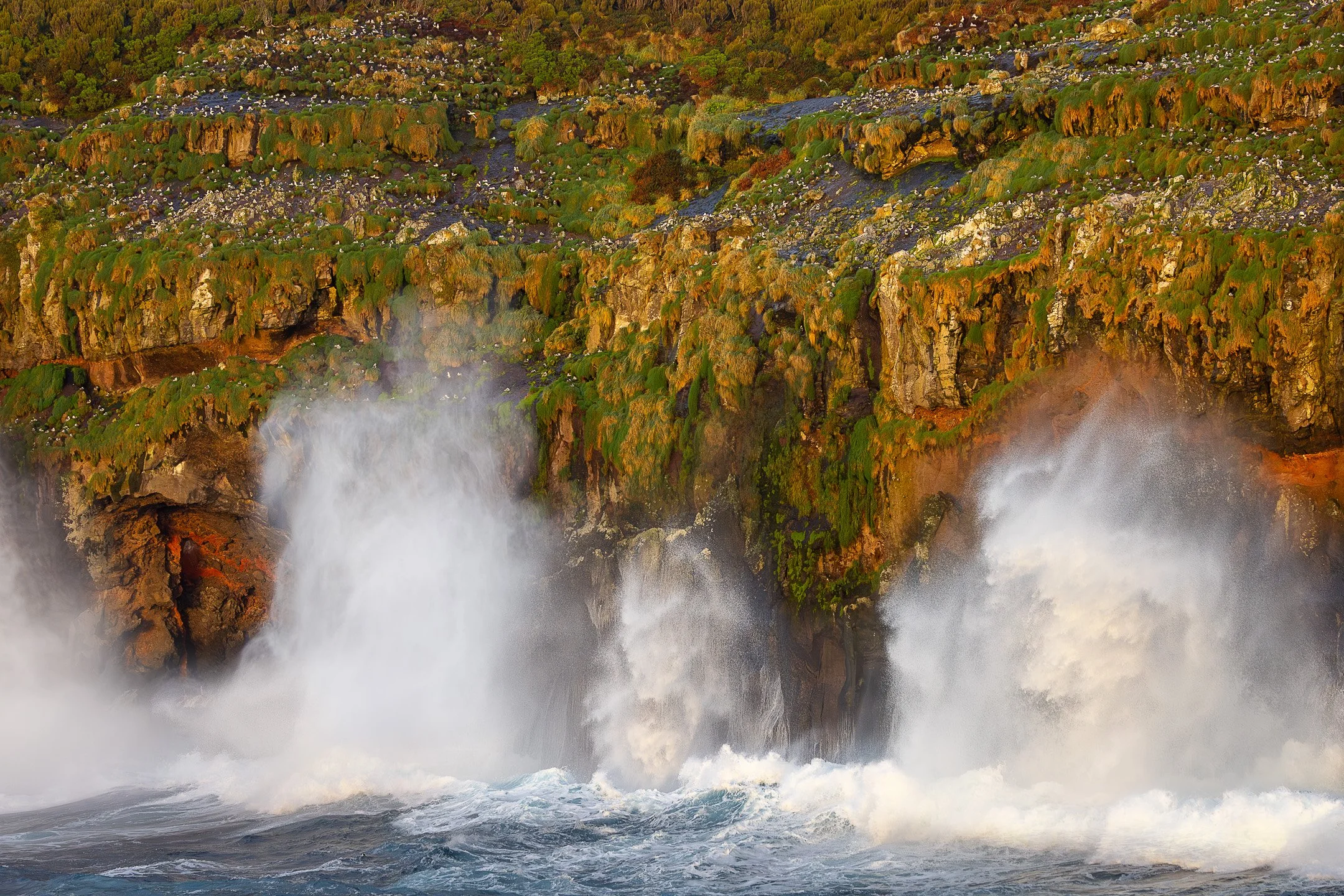
Campbell Mollymawks nesting along the cliffs at North Cape - Campbell Island
Row upon row of nesting albatross along the cliff edges, each pair occupying its own small territory in a vast shared architecture.
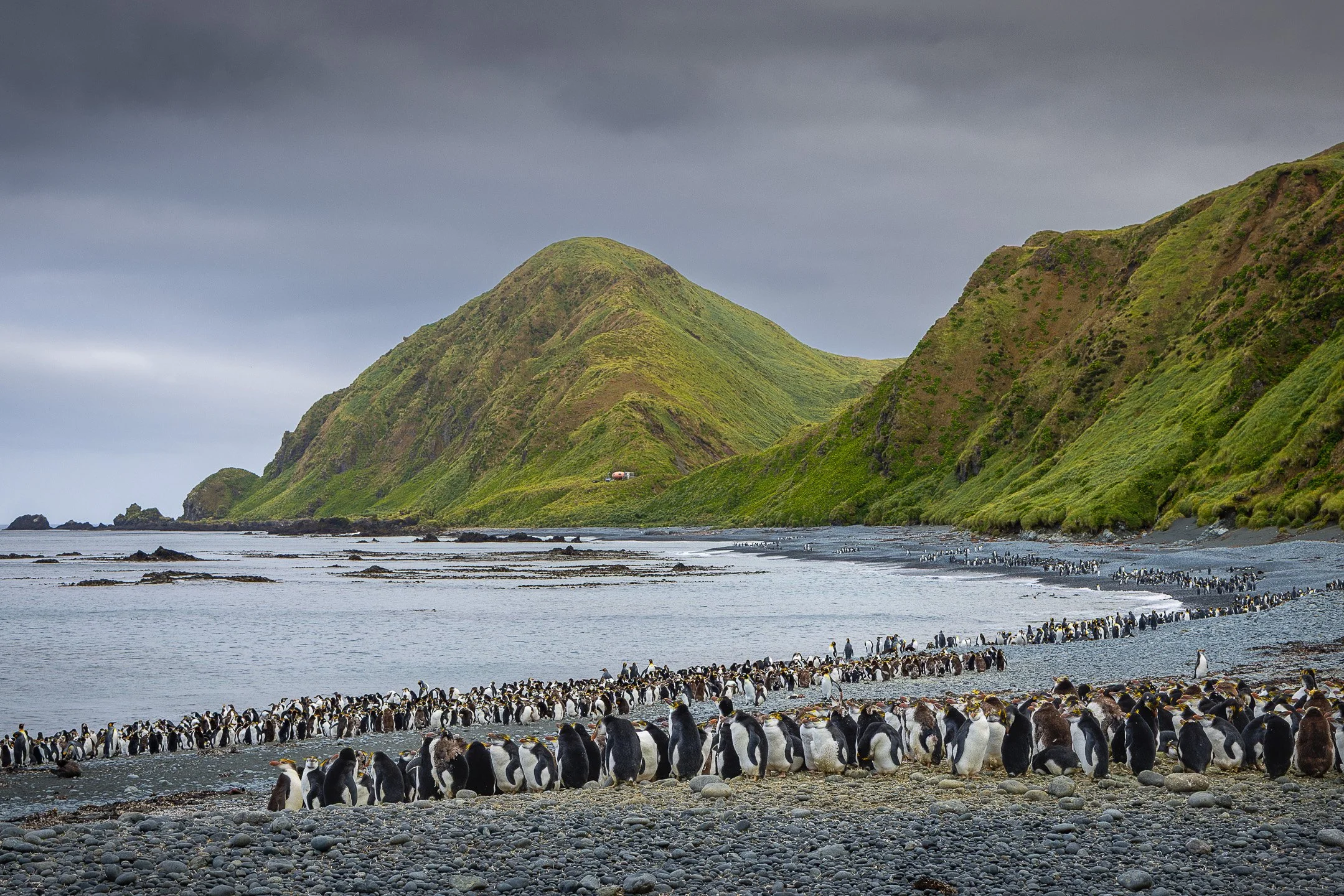
Royal Penguin Colony at Sandy Bay - Macquarie Island, Australia
A sweep of beach transformed by the collective presence of thousands of birds into something that reads more as texture than as wildlife.
Kelp Forests and Coastal Abstractions
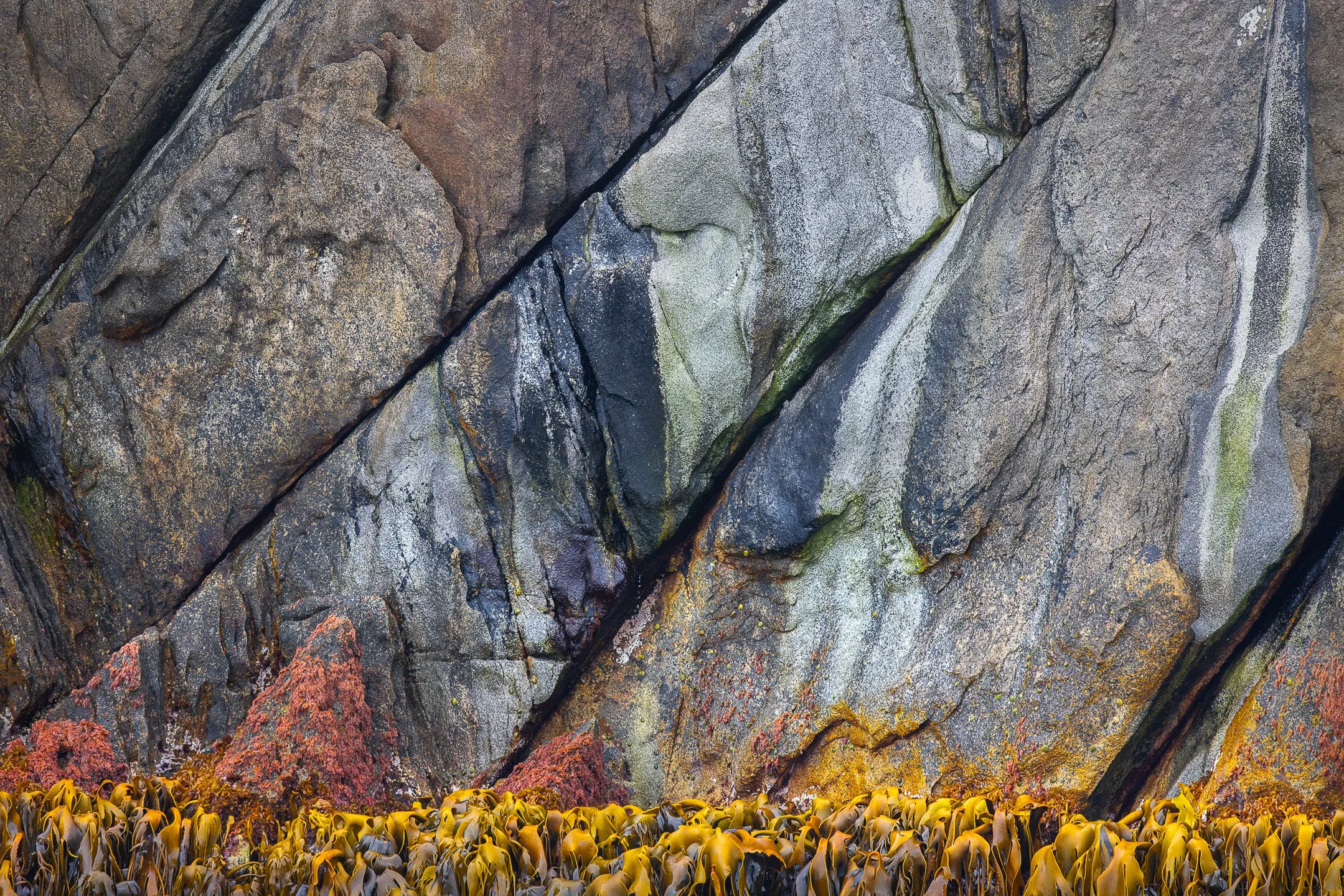
Along the Snares, the landscape shifts scale entirely. The cliffs and colonies give way to something more intimate: the dense, swaying forests of golden bull kelp that ring the island's granite coastline.
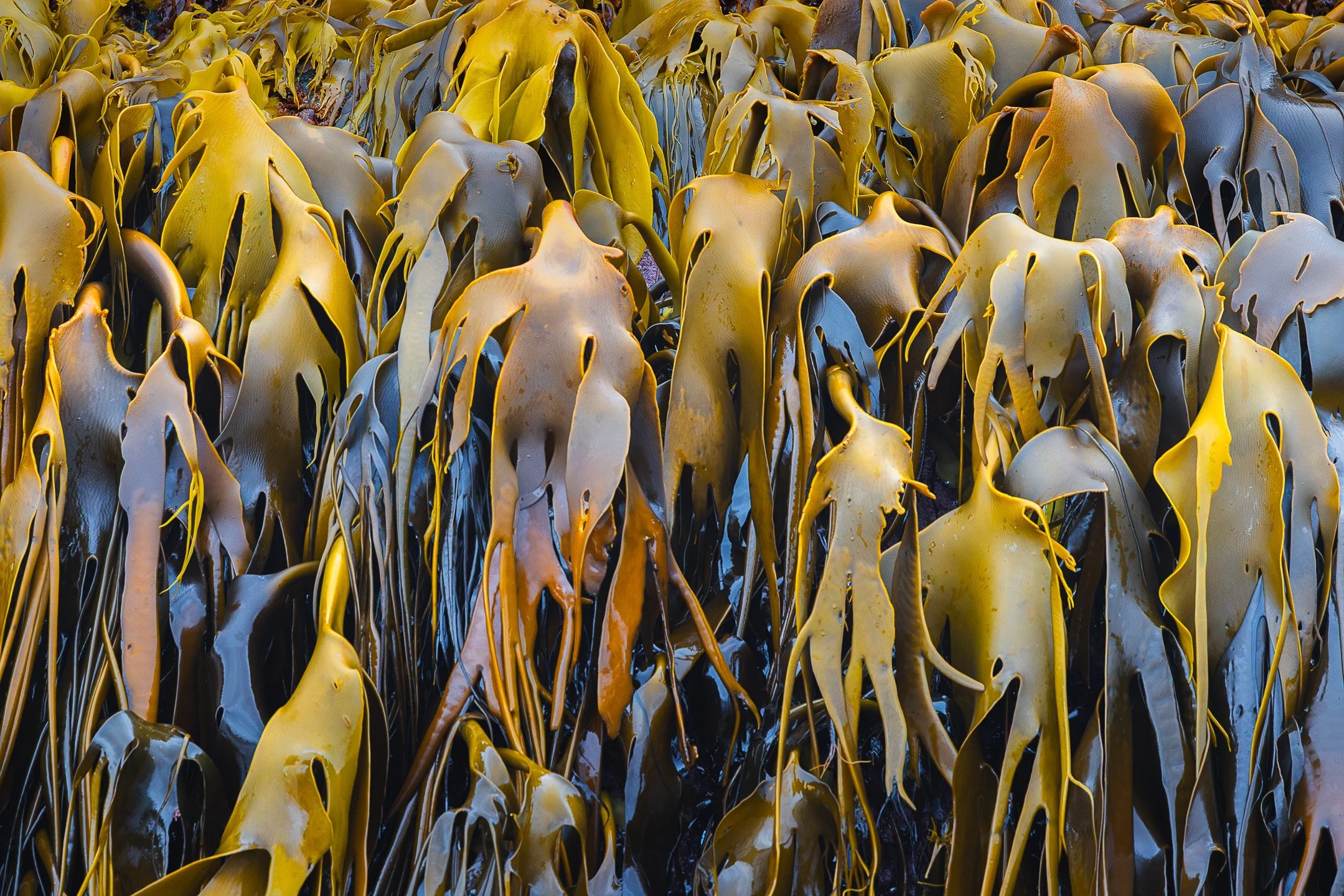
Here, texture and pattern become the primary language. Massive golden fronds fold over one another against rock streaked with mineral tones and algae, creating compositions where the organic and the geological are genuinely indistinguishable. The kelp moves with the swell — not passively, but with the purposeful rhythm of something that belongs to the sea as much as to the shore.
Photographing kelp felt less like photographing a plant and more like photographing a tide — something between solid and liquid, between still and moving.
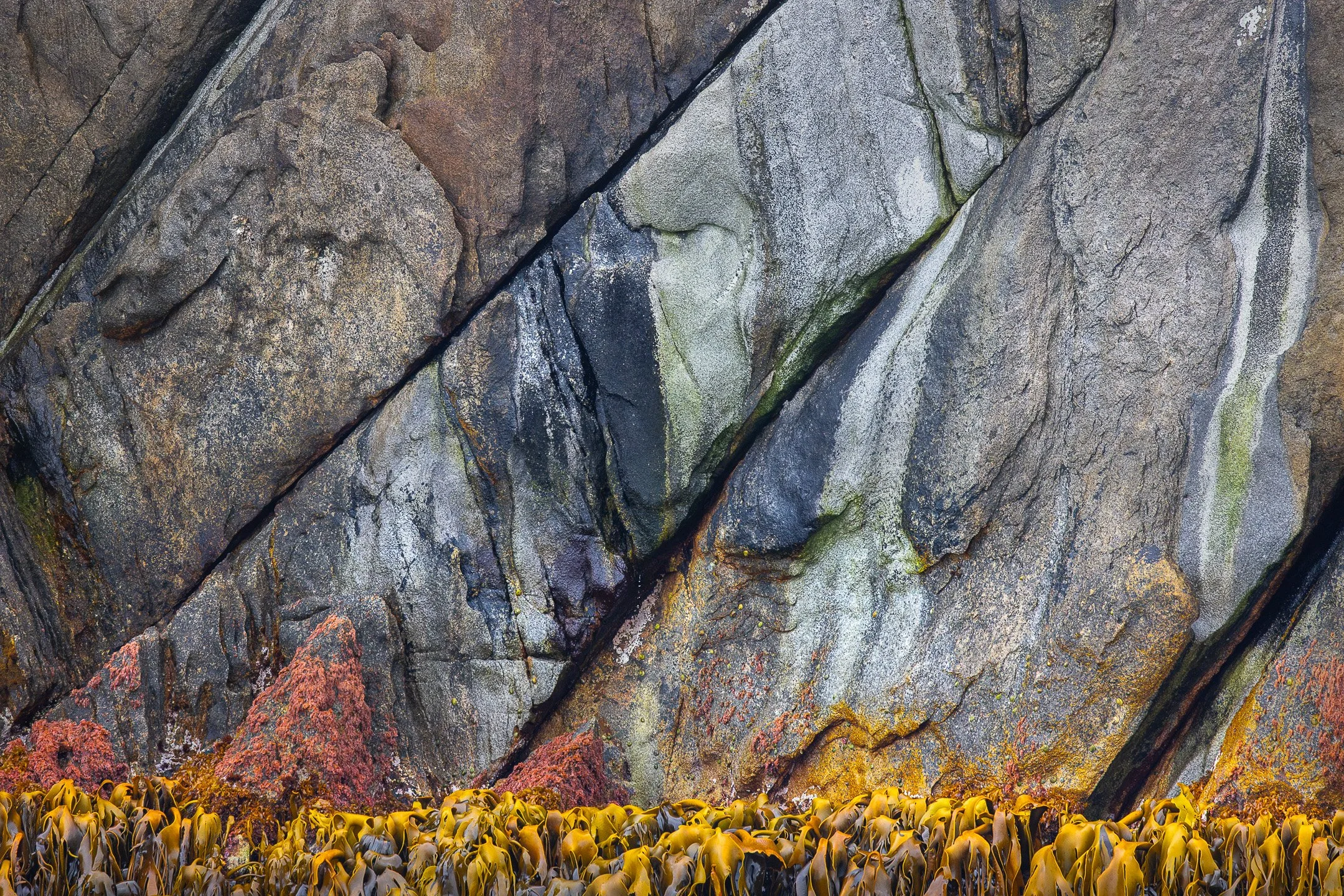
Kelp Abstract (1) - Snares Islands
The overlapping geometry of the fronds creates a visual rhythm that is almost architectural — folded, layered, and surprisingly orderly.
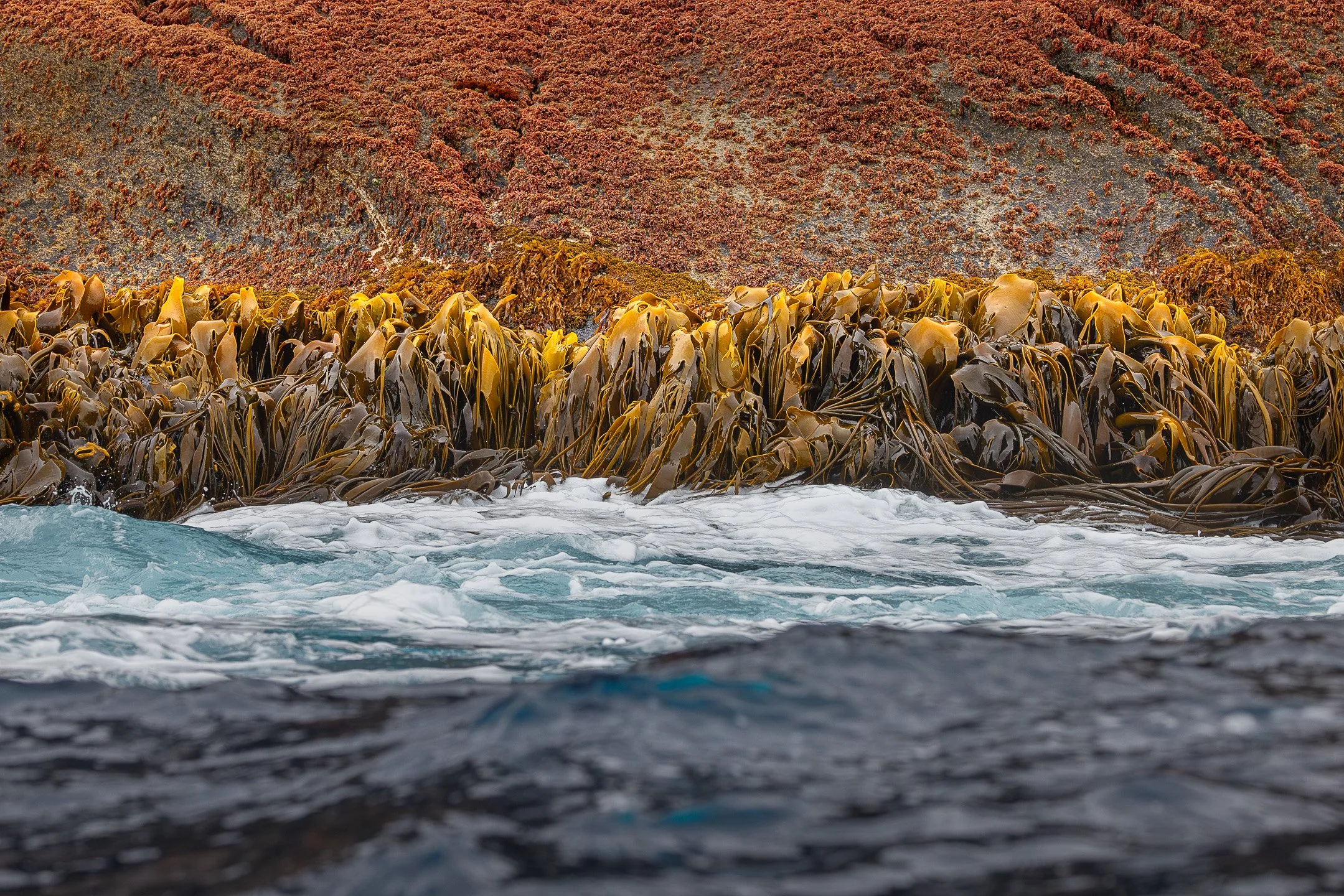
Kelp Abstract (2) - Snares Islands
Where the kelp meets the granite, the colour contrast is striking: deep ochre against grey-green rock stained with algae and lichen.
Kelp Abstract (3) - Snares Islands
The motion blur of fronds lifting in the swell introduces a softness against the hard grain of the stone.
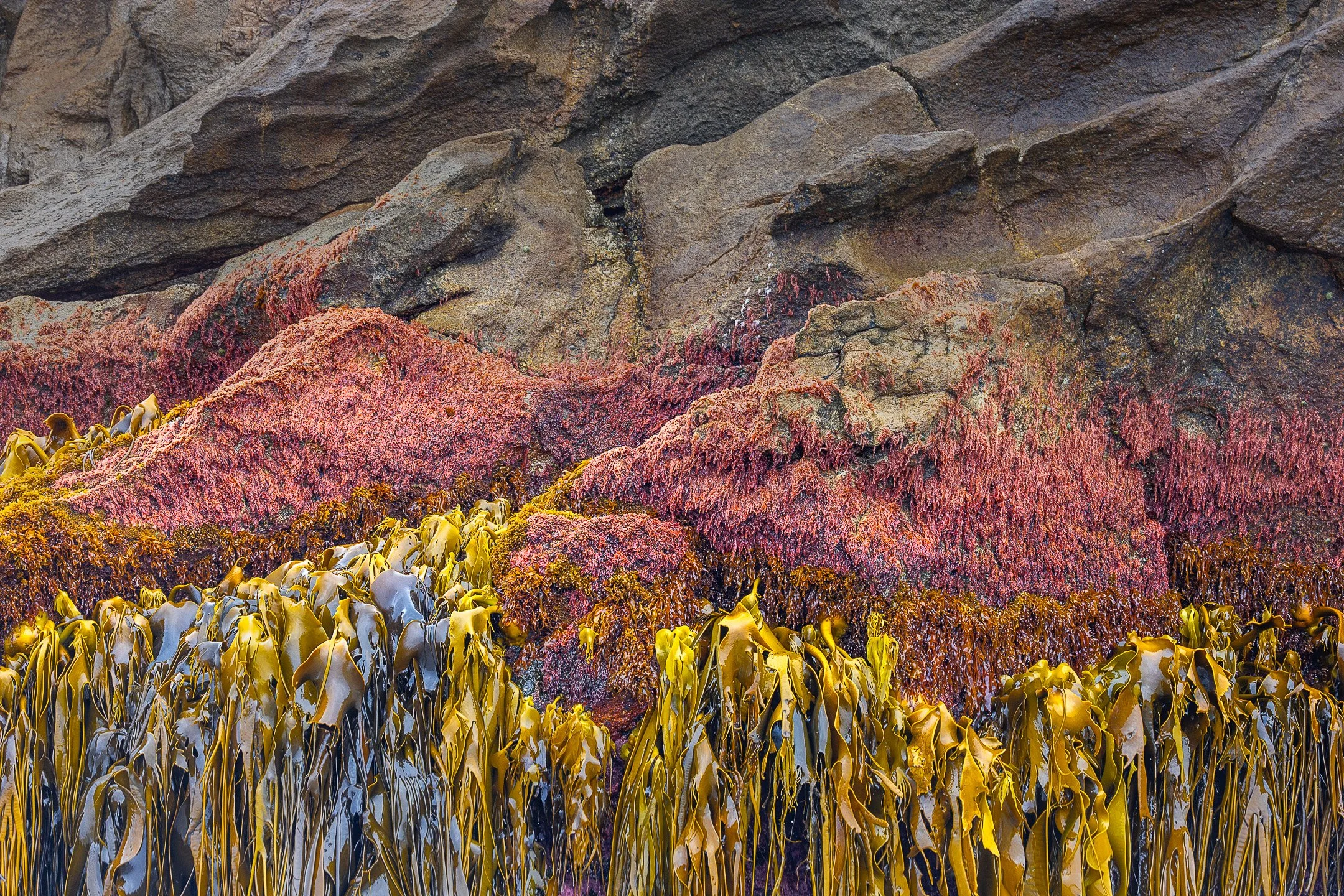
Kelp Abstract (4) - Snares Islands
Pulling back slightly, the full density of the forest becomes visible — a leathery, layered terrain that extends along the waterline like a biological reef.
A Tangle of Life and Stone: Kelp and Snares Crested Penguins
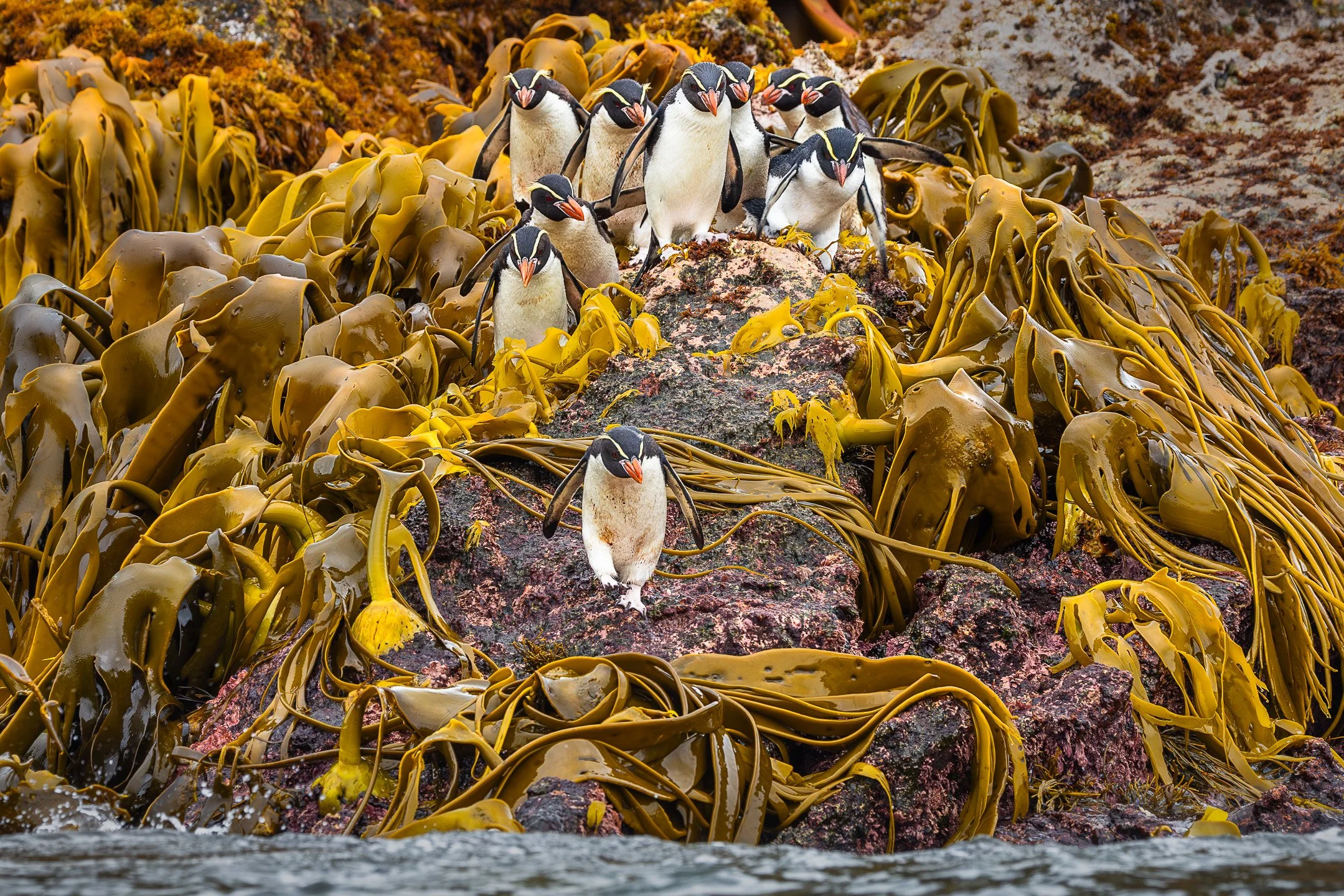
The Snares Crested Penguin completes the picture. Moving constantly between sea and shore — slipping from kelp-draped ledges into the water, porpoising through the swell, scrambling back onto the rocks — they animate the coastal fabric in a way no other element could. Their bright yellow crests and white chests stand out sharply against the deep ochre of the kelp, but it's their movement that matters most: restless, purposeful, and entirely at home in a landscape that seems designed to repel.
Sitting in the Zodiac watching them navigate this tangle of stone, kelp, and surge, I had a clear sense that I wasn't looking at a creature in a habitat. I was looking at a creature that was inseparable from it.
Remove the penguins and the shore becomes a pretty rock formation. With them, it becomes a place.
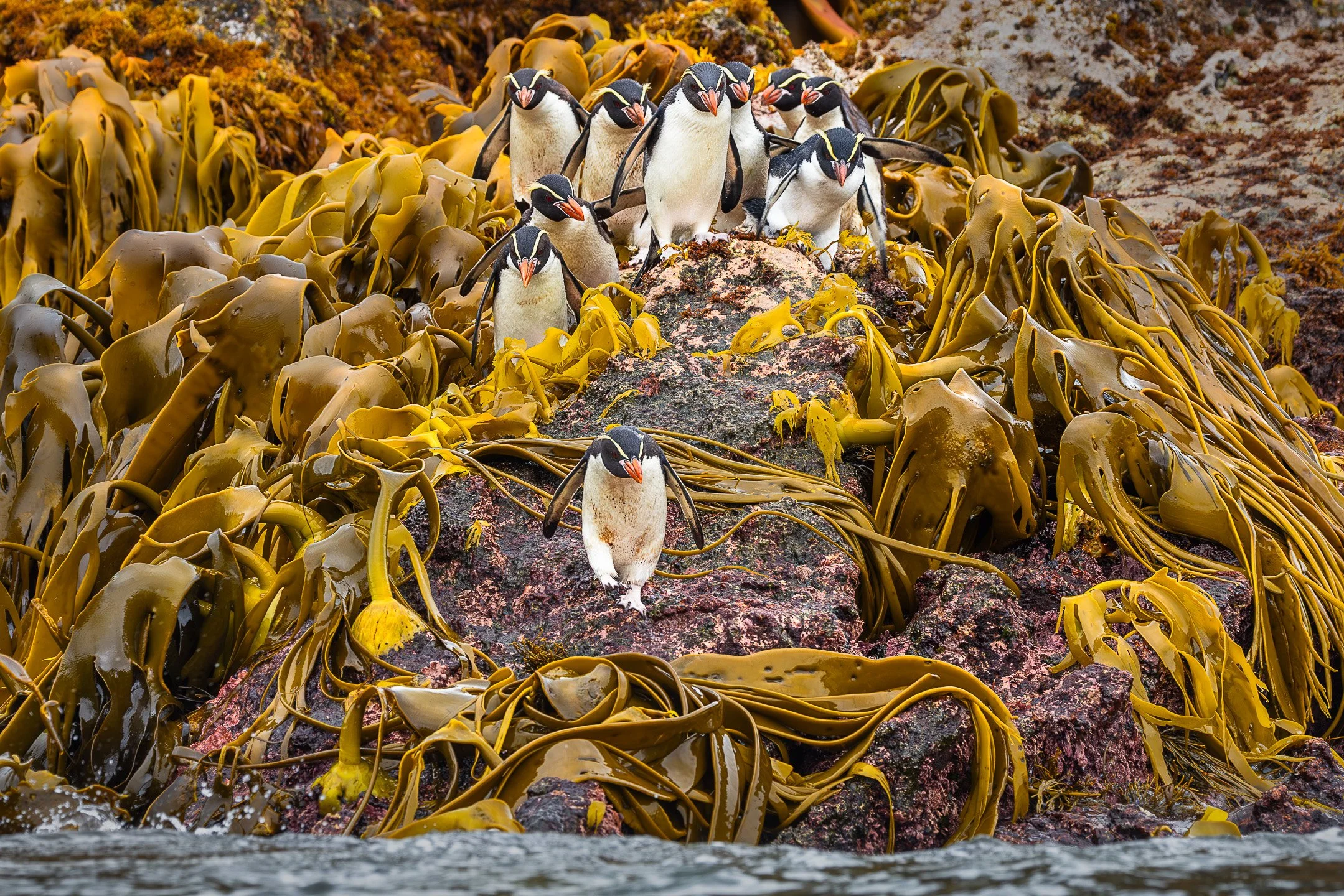
Leading the Way - Snares Islands
A single penguin picks its route through the kelp — unhurried, deliberate, indifferent to the chaos of water around it.
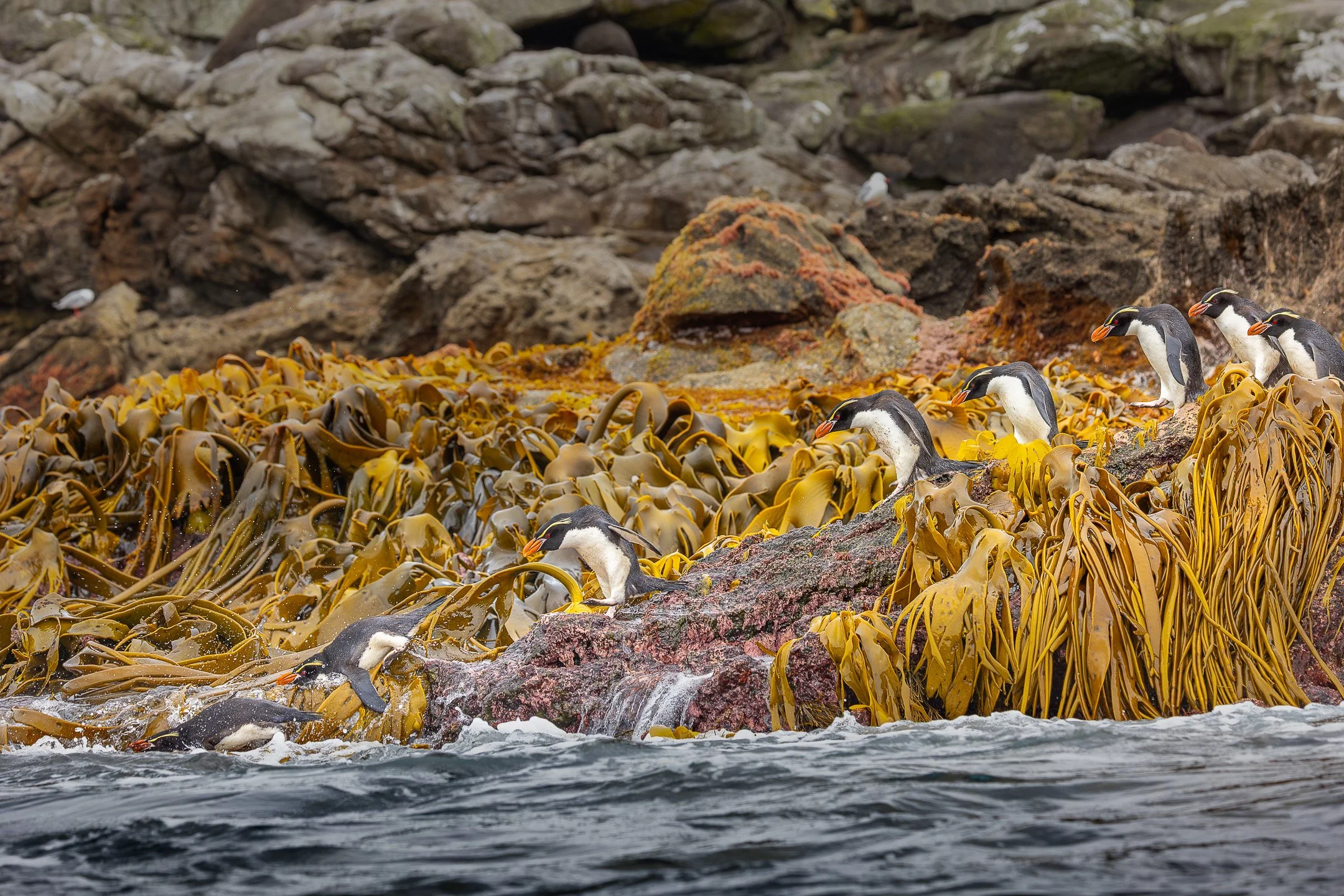
Procession of Penguins - Snares Islands
A line of birds moving in single file along a narrow ledge, as though following a path only they can see.
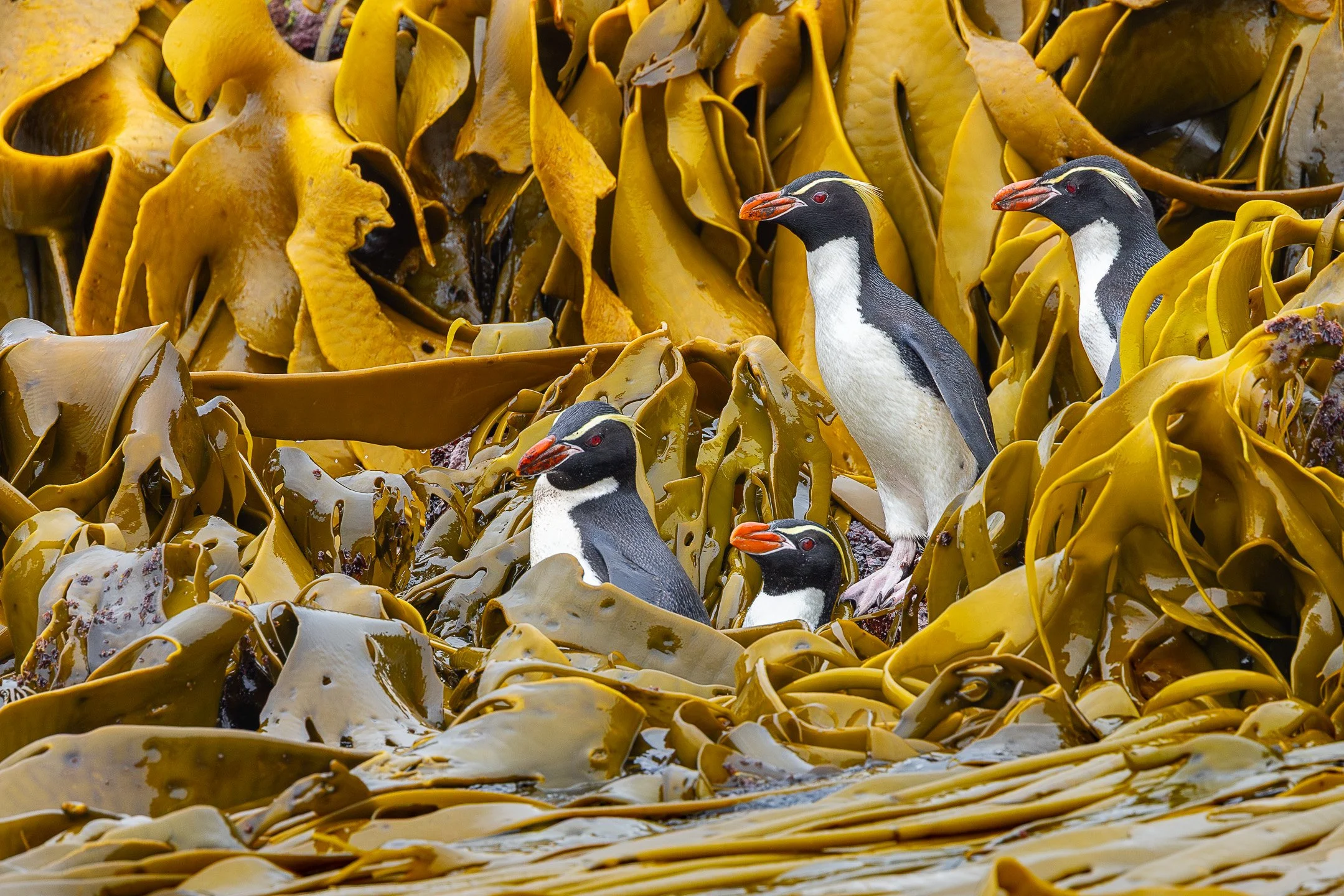
Sinking Penguins - Snares Islands
The moment of submersion — the instant before a bird disappears into the kelp and becomes part of the water.
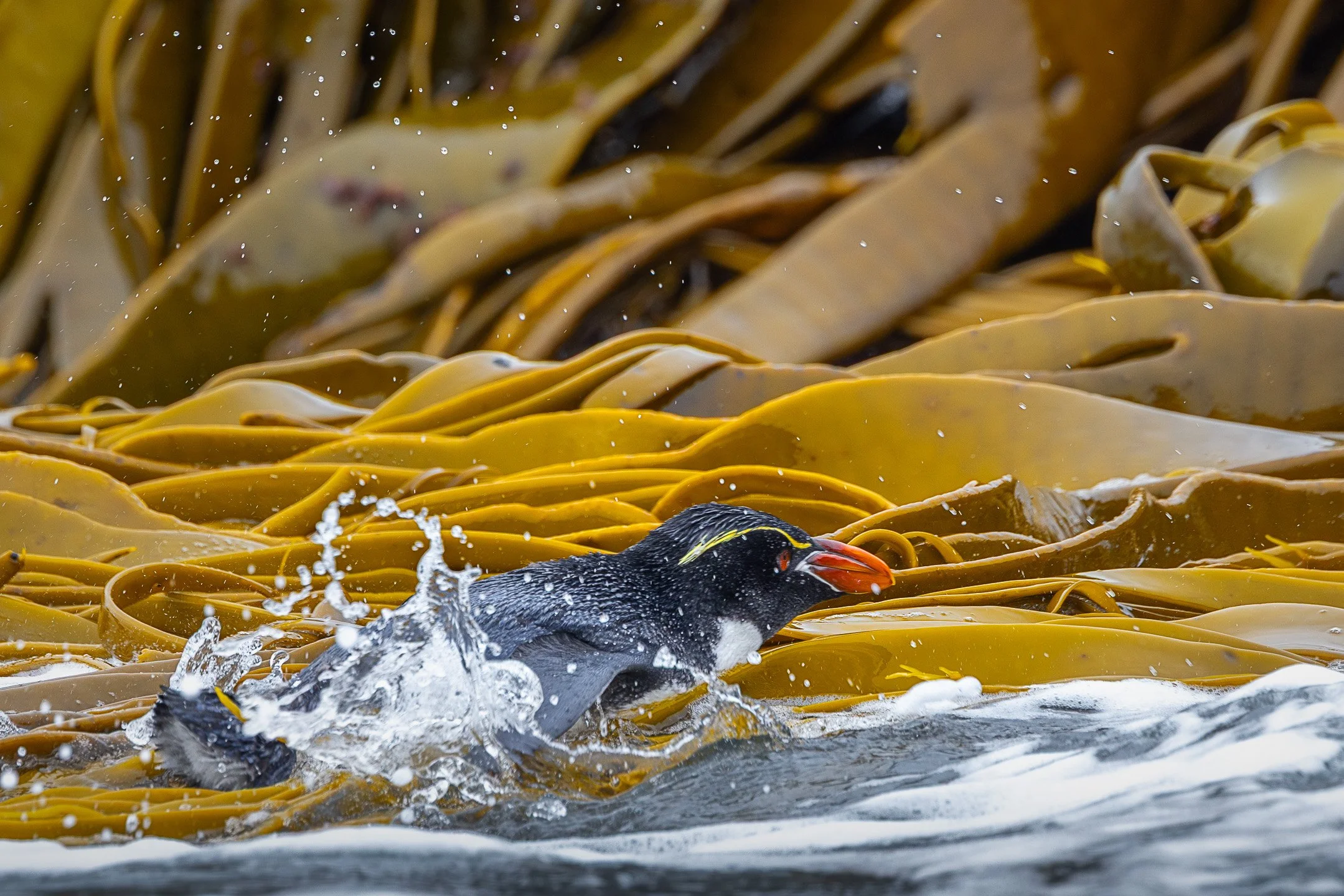
Swimming in Kelp - Snares Island
In the water, the penguins move with a fluid grace and speed that seems impossible given the density of the kelp around them.
The Animate Shore
Macquarie Island offers the most complete expression of what I came to call Living Topography. Here, the landscape is not a surface that life inhabits — it is a structure that life constructs.
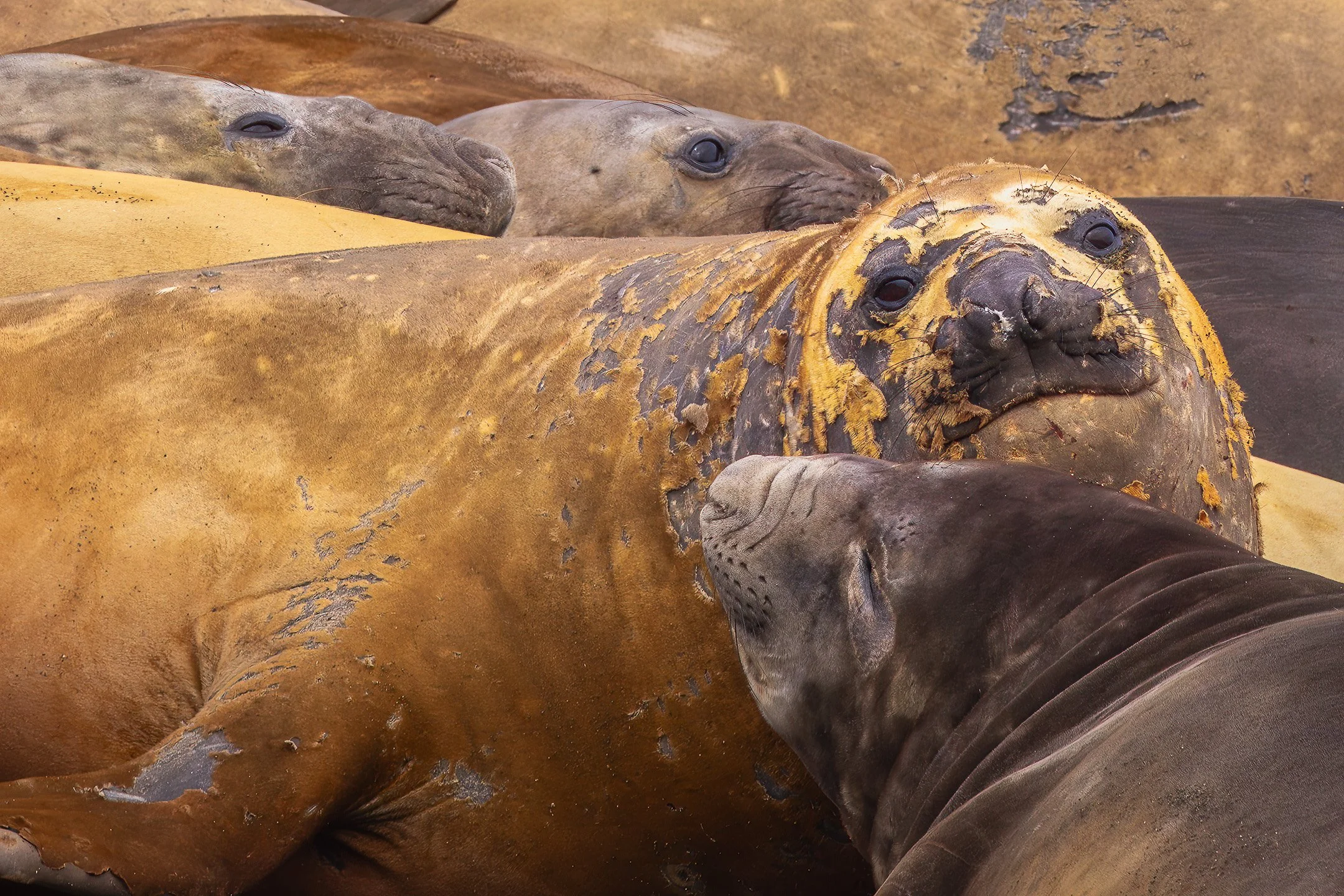
The Southern Elephant Seals at their moult are the most striking example. Gathered in dense, heaving masses, their peeling skin — in what biologists call the "catastrophic moult," a rapid, total shedding of the outer skin layer — mirrors the weathered, eroding surfaces of the island itself. The textures are almost identical: scarred, layered, golden-grey. In photographs, it becomes genuinely difficult to locate the boundary between animal and ground.
At the water's edge, a mass of bull kelp gives way to a King Penguin colony of such density that it reads as a single form — a slow-moving glacier of white and gold that extends to the horizon. And against the cliff faces, a solitary Rockhopper stands on a wave-polished pedestal, transformed by its own stillness into something that reads as geological: a living spire.
In every case, the animal doesn't add life to the landscape. It is the landscape's life — expressed in feather, fur, and motion.
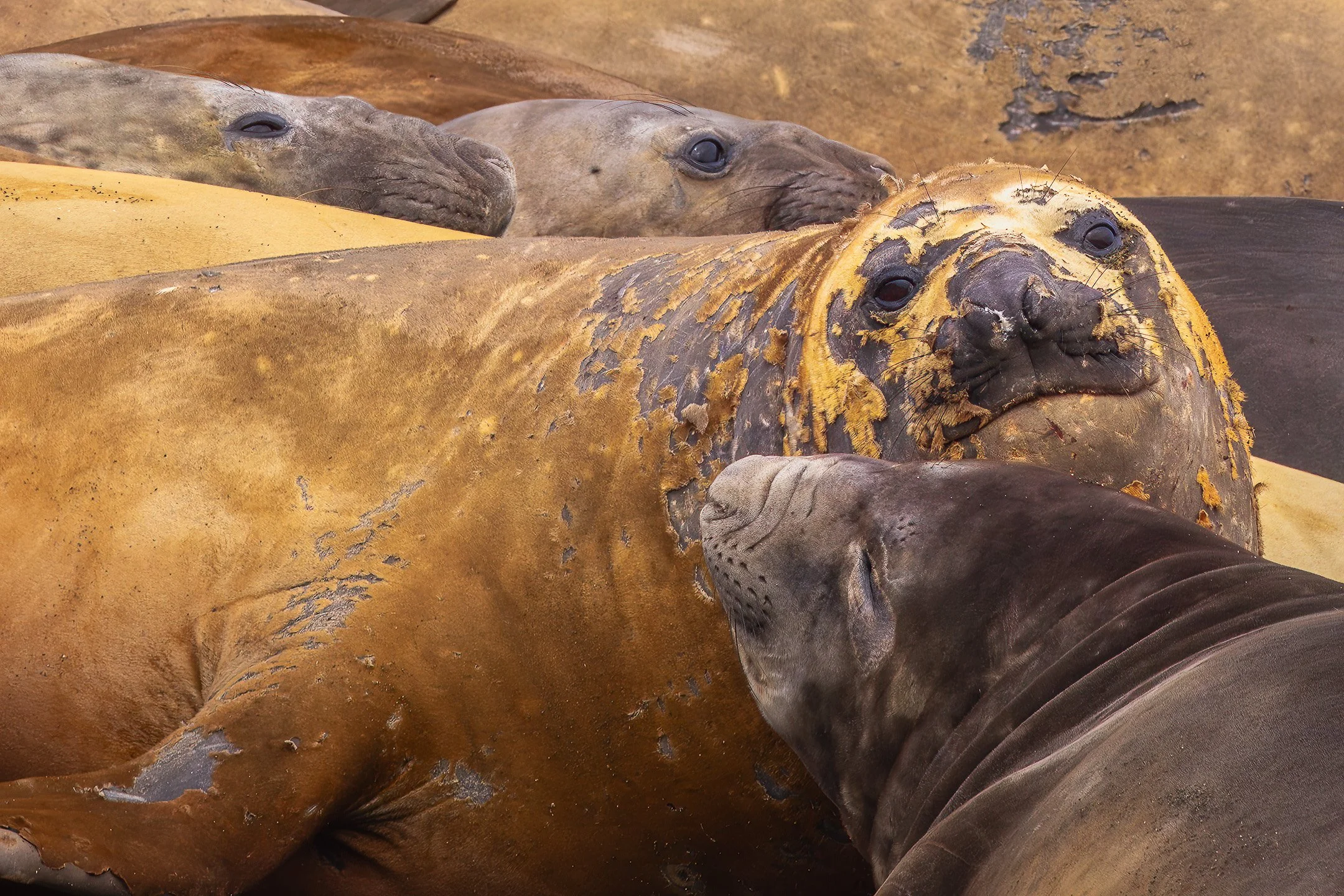
The Living Terrain of Macquarie - Macquarie Island
A huddle of Southern Elephant Seals in catastrophic moult — their peeling skin creating textures that mirror the eroding shoreline beneath them. The line between biology and geology is genuinely lost.
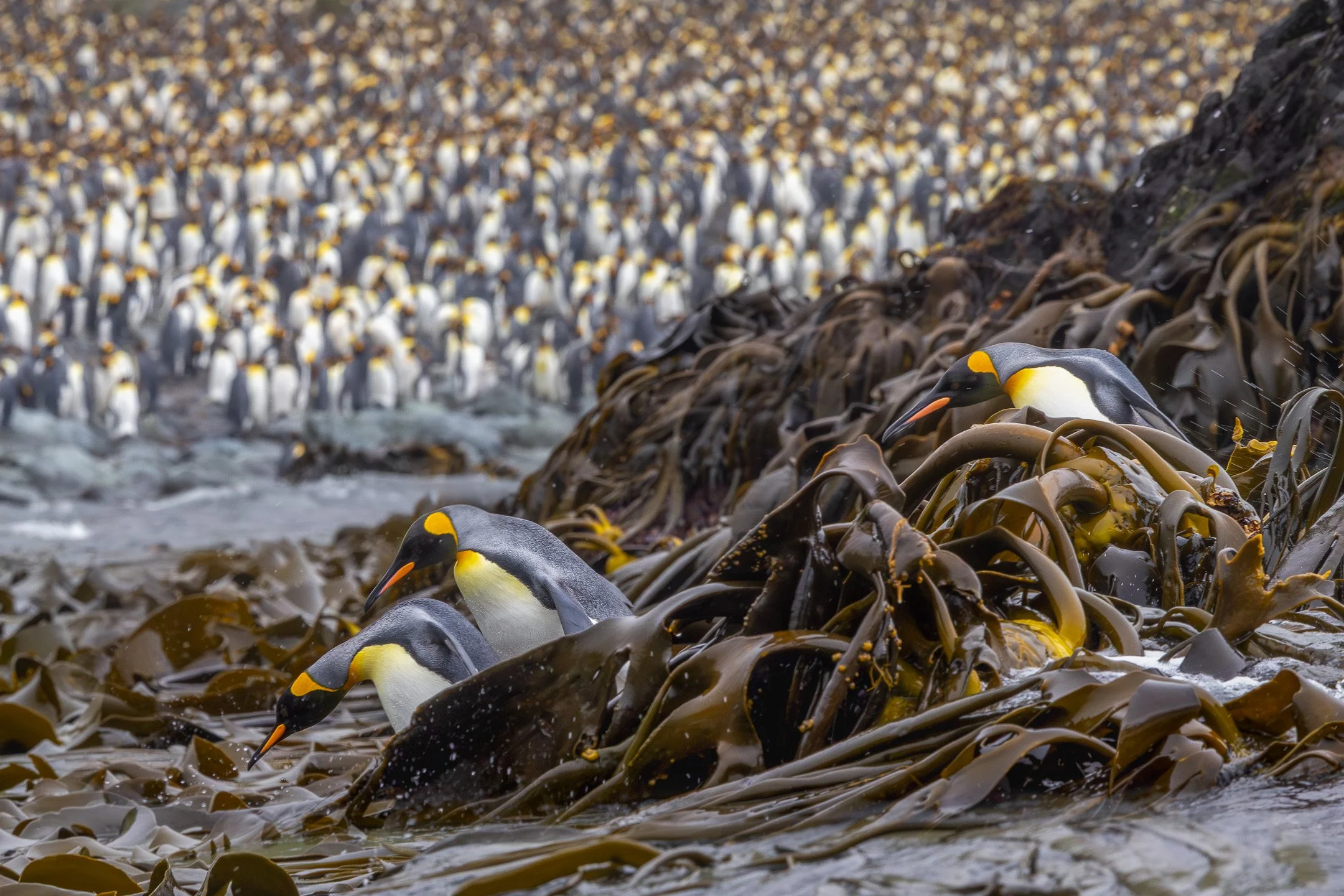
Living Glacier of King Penguins - Macquarie Island
From the bull kelp at the waterline to the furthest reach of the colony, the eye travels across an unbroken terrain of life. The penguins are not on the land. They are the land's surface — its living skin.
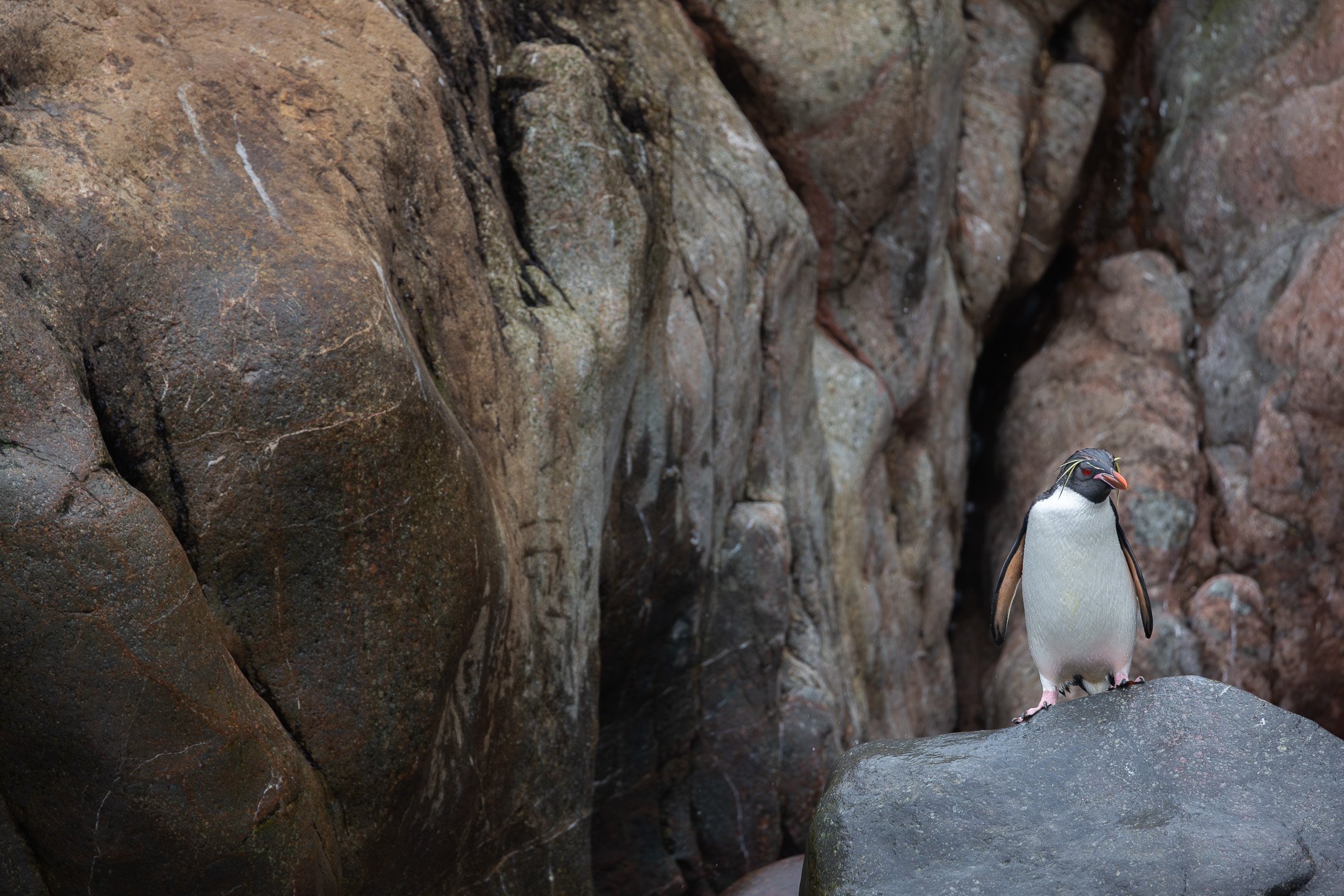
Animate Spire - Macquarie Island
A single Rockhopper, perched and still, on a dark wave-polished rock. Its stillness makes it read as stone; its presence makes the stone read as alive.
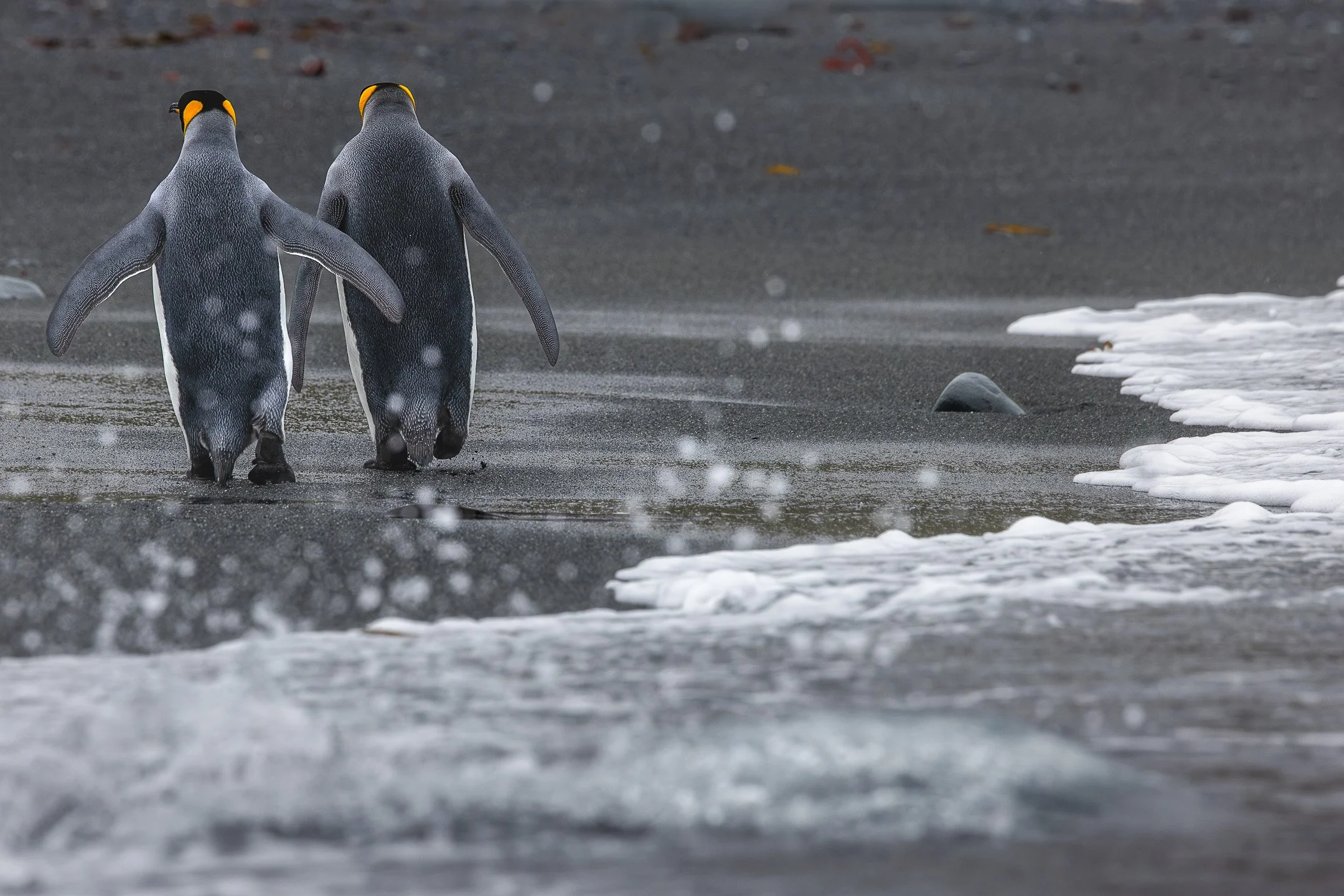
Moving Boulders - Macquarie Island
Two King Penguins walk the shoreline, their grey-and-white colouring blending with the volcanic sand and surf wash. They are the landscape in motion — boulders that have decided to go somewhere.
Photographing the Subantarctic Islands
Photographing here pushed me beyond familiar ways of working. Access was often limited to moving platforms — from the cruise ship to Zodiacs navigating the surge of the coastline. The stability I usually relied upon was gone, replaced by shifting frames and the unpredictable rhythm of the swell. High shutter speeds and elevated ISO levels became standard. Technically clean images stopped being the goal; clarity of intent and timing were what mattered.
But the deeper adjustment was conceptual. My previous landscape practice was built around the idea of an ideal moment — a conjunction of light, atmosphere, and composition that could be predicted, waited for, and captured deliberately. In the Subantarctic, that model doesn't hold. The environment is too dynamic, the light too fleeting, the wildlife too unpredictable. The approach has to become reactive rather than anticipatory.
Visual Cohesion through Narrative Sets
Because no single frame can contain the complexity of these islands, I began organising images into what I now call Narrative Sets — groups of four to six photographs linked by subject, theme, or visual approach, and sequenced to tell a story that no individual image could carry alone. The kelp abstracts, the seabird sequences, the shore life at Macquarie — each works as a set in a way that individual images do not. The Narrative Set became my primary unit of composition.
This approach changed not just how I edited, but how I shot — looking for coverage and variation within a theme rather than the single definitive image.
Conclusion: The Gateway to the Ice
The Subantarctic taught me to read a landscape differently. Land, sea, air, and life are not separate elements to be arranged in a frame — they are a single system, held in constant motion, each part shaping and revealing the others. Photographing here meant letting go of the habit of separation: foreground and background, subject and setting, animal and environment. What replaced it was something harder to name — a way of seeing the whole before the parts, and trusting that relationships between things carry as much meaning as the things themselves.
This is what I mean by Living Topography. Not a technique or a style, but a recognition: that in places like this, the landscape and its life are indistinguishable. The land breathes. The animals are its breath.
As I continue south toward Antarctica, I find myself wondering whether the ice will dismantle this way of seeing — returning me to a world of static geology and grand, empty vistas — or whether the Southern Ocean has permanently changed how I look at any landscape. The Ross Sea may yet have its own animate pulse.
Find out in my next article, where I cover my visit to the threshold of Antarctica: the Balleny Islands.
More from the Antarctica series
This article is the first in a series documenting a journey from the Subantarctic Islands to the Ross Sea.
Next →: Wild Light: A Landscape Photographer's Journey Through the Balleny Islands
Next →: Warm Ice: A Landscape Photographer's Journey Through the Ross Sea
This story is part of an ongoing collection from the same journey south. Wild Light, the second chapter in the series, tells the story about my experience of the Balleny Islands right on the edge of the Antarctic Circle. Warm Ice, the third chapter, captures the rare, golden transformation of the Ross Sea landscape.
Upcoming E-book: Exploring the Ross Sea of Antarctica
While this chapter concludes at the margins of the Southern Ocean, the journey continues into the frozen expanse of the Ross Sea. I am currently developing a comprehensive e-book that brings this body of work together as a singular study of the far south.
Alongside a curated collection of images, the book will expand in depth on the reactive approach developed in the Subantarctic, the technical adaptations required in these environments, and the use of Narrative Sets as a compositional framework for complex, dynamic landscapes.
It is intended for photographers who want to look further into both the craft and the quieter, less tangible dimensions of working in wild places.
To be the first to hear about its release, subscribe to my newsletter below.
Share this article
If you would like more of these visual stories, then scroll to the bottom and subscribe to my newsletter.
Other stories you may find interesting
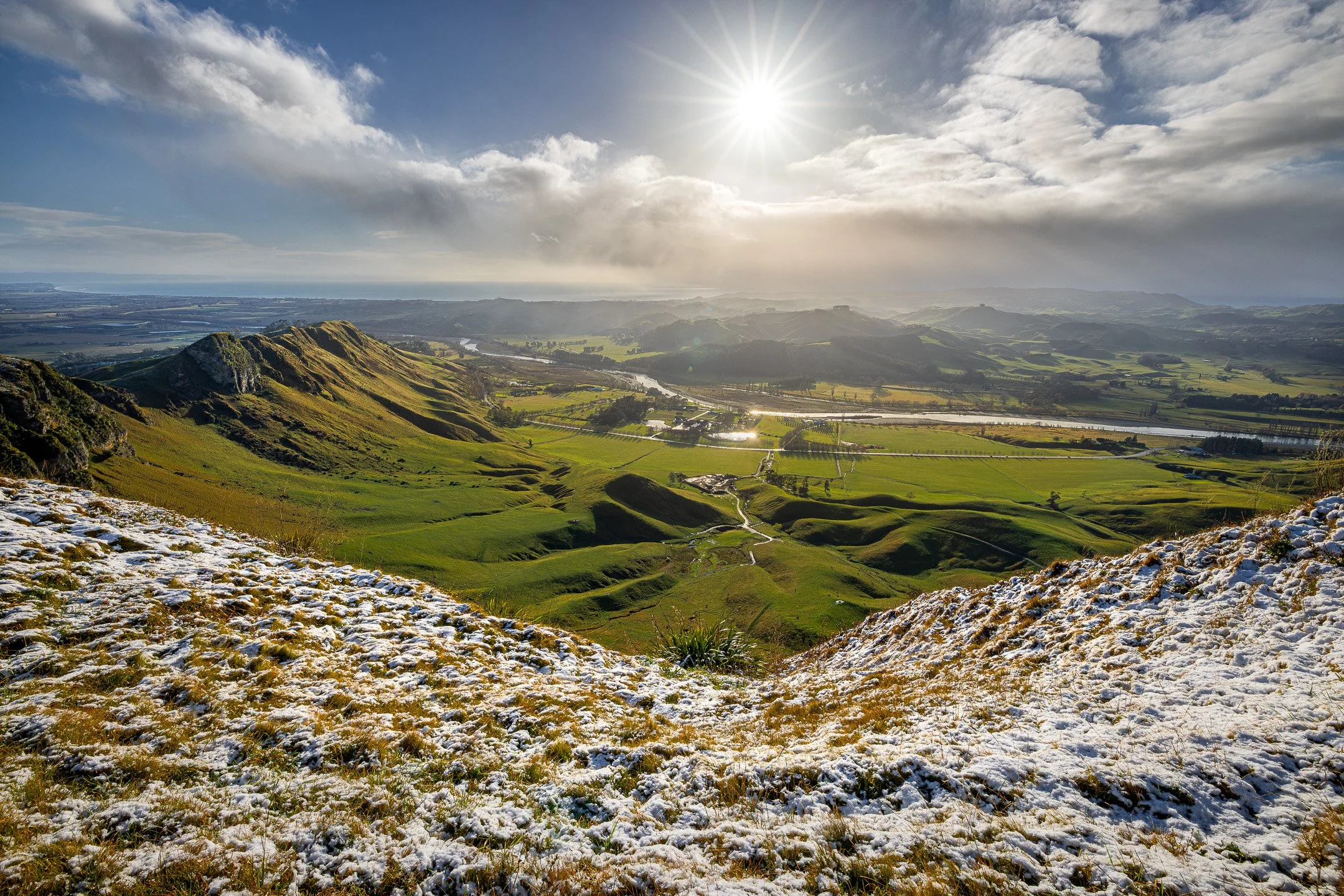
Two visits, two weeks apart, to the flysch rocks of the Kaikōura coast. The same formation gave me a jagged sunrise the first time and a very different answer the second.